![MaritimeJournal[Seawork]](https://www.maritimejournal.com/wp-content/uploads/2026/09/MaritimeJournalSeawork.svg)



Oil giants blown off course with offshore wind
Oil giant Equinor has abandoned another offshore wind project, this time in Japan, where it has closed its office.
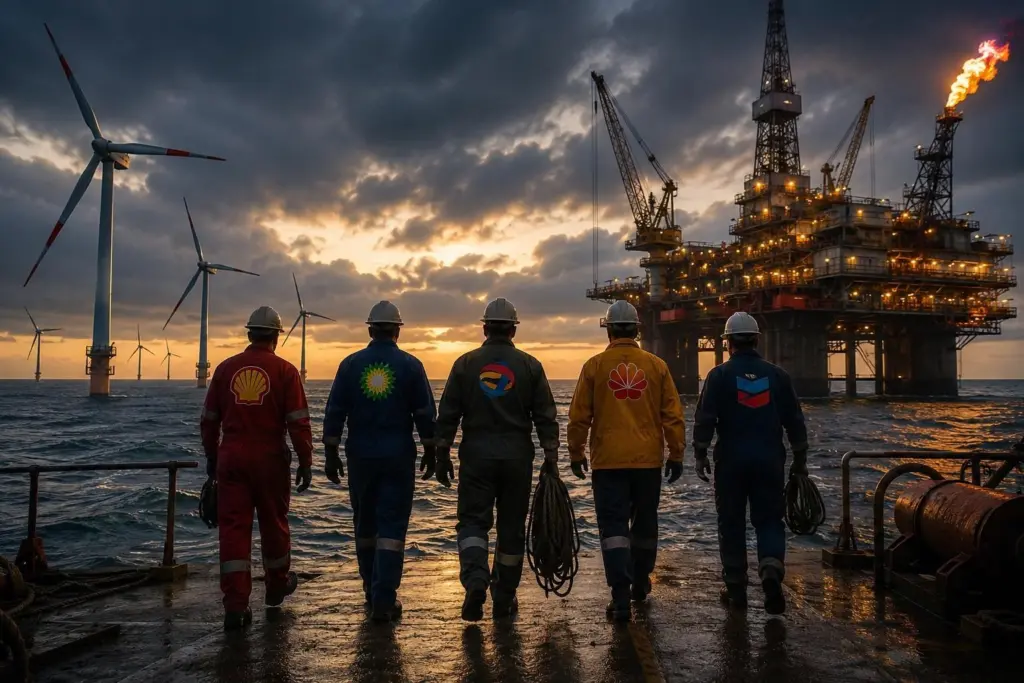
The decision follows a number of projects that the company is no longer going ahead with, such as Bandibuli floating offshore wind in South Korea, which it also cancelled this year.
In 2025, it decided not to go ahead with an Australian venture and in 2024 three projects were withdrawn in Spain, Portugal and Vietnam.
“Equinor has competed for opportunities within offshore wind in Japan but not been successful,” an Equinor spokeswoman told Maritime Journal. “Equinor will close the office in Tokyo by the end of the year. Unfortunately, this also means the end of employment for our dedicated team in Japan. This affects three people. We are grateful for their effort, contribution, and their high level of professionalism.
“We have the last years dialled back on some early phase activities, but we are not dropping offshore wind. In addition to our producing assets in the UK, Germany and Norway, we are currently developing large projects in the UK, the US and Poland.”
Fellow oil giant Shell has become increasingly selective in its offshore wind projects, and in December 2024 it confirmed it would no longer develop new projects.
“We will be focusing on maximising the value of our existing renewable generation platforms,” a company spokesman said. “While we will not lead new offshore wind developments, we remain interested in offtakes where commercial terms are acceptable and are cautiously open to equity positions, if there is a compelling investment case.”
Rather than pursuing capital-intensive project development, the company appears to have prioritised portfolio optimisation, energy trading and retail, while remaining open to selective renewable investments where commercial returns are considered sufficiently attractive.
BP has also shifted its investment strategy. While continuing to develop major offshore wind projects in the UK, Germany and the United States, it has slowed the pace of new developments and adopted a more selective approach to future investment.
In 2024, reports emerged that BP had paused new offshore wind developments as part of a wider review of its low-carbon business, with the company seeking to reduce costs and improve shareholder returns. The focus shifted towards progressing existing projects rather than pursuing additional lease opportunities.
In 2025, it announced significant reductions of planned investment in renewable energy while increasing investment in oil and gas.
Despite the reset, BP has not abandoned its principal offshore wind portfolio.
Major projects, including Morgan, Mona, Morven, Empire Wind and Beacon Wind, continue to progress, and BP has consistently maintained that offshore wind remains an important part of its integrated energy business.
Related Articles
 ENVIRONMENT
 DREDGING & FLOOD DEFENCE
 ENVIRONMENT