![MaritimeJournal[Seawork]](https://www.maritimejournal.com/wp-content/uploads/2026/09/MaritimeJournalSeawork.svg)




OSW cable failures could cost €billions – report
Failure rates of offshore wind cables and interconnectors could result in costs of up to €6.1 billion by 2035, a report by energy data firm TGS says.
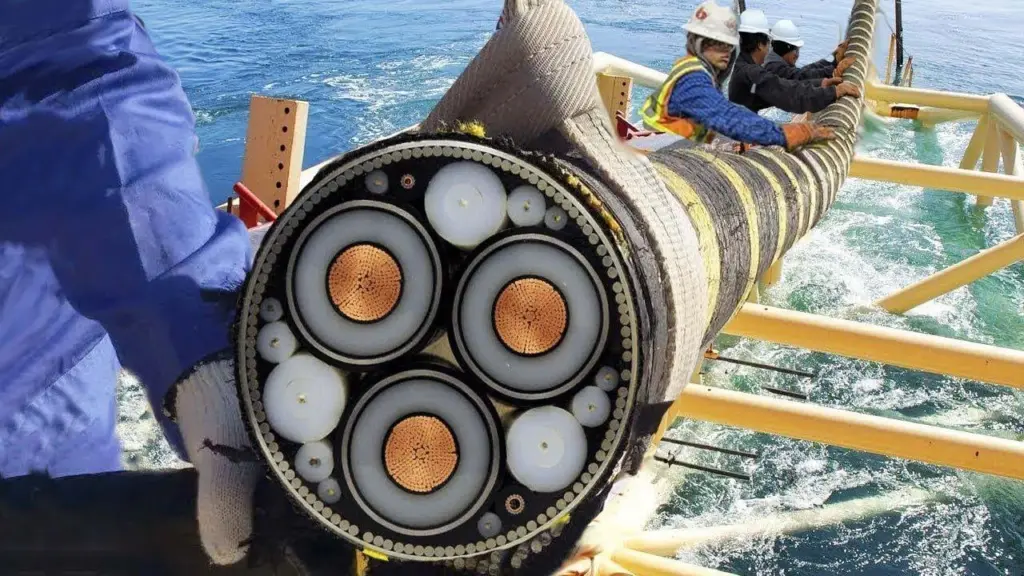
TGS, which owns the offshore wind market intelligence company 4C Offshore, has for the first time carried out a comprehensive analysis of cable failures in its quarterly Offshore Transmission and Cables report.
It predicts up to 3,600 cable failures between now and 2035, which could see costs of around €6.1 billion.
“This high number of potential cable failures poses a significant challenge for the vessel industry and could lead to vessel shortages, not to mention the cost implications that need to be considered in wind farm development decisions,” said Rameeza Duggal, senior researcher for 4C Offshore.
As demand rises, so will failures, TGS says. The report forecasts strong growth for offshore wind platforms, with about 830 substations being installed by 2040.
“The construction time for substations has doubled over the years – four years for AC substations and six years for DC substations,” said Jamie Bernthal-Hooker, Research Team manager at TGS. “Some experienced developers have chosen to finalise their manufacturing contracts well before time; however, this can push the project timeline significantly for new developers, who struggle to secure FID (Final Investment Decision) and whose supply chain decisions are FID dependent.”
While this report is new, the scenario was depicted in a 2019 report published by the open access publishing house MDPI.
Failure rates of offshore wind transmission systems, by researchers John Warnock, David McMillan, James Pilgrim and Sally Shenton, said installation practices were leading to low reliability in initial years of offshore wind operation, resulting in increased repair costs and decreased revenue for operators and owners.
“Proposed sites such as Dogger Bank will be up to 290km offshore, which is substantially further offshore than most current offshore wind farms,” the report says. “With these increasing distances come new challenges in many fields. One such challenge is the reliability of the offshore transmission system.
“In general, it is found that the experienced failure rates are subject to a much higher spread in practice than those published until now,” it says.
“Due to the nature of the environment in which a subsea cable is situated, the offshore wind farm it is connected to will expect a higher wind resource than its onshore counterpart. However, these conditions can also increase the mean time to repair due to the sea conditions, potentially leading to large reductions in availability for significant lengths of time.
“With a greater understanding of the reliability of subsea cables, fewer instances of unexpected downtime should occur, ultimately reducing the need for fossil fuels and lowering the cost of energy.”

Related Articles
 ENVIRONMENT
 DREDGING & FLOOD DEFENCE
 ENVIRONMENT