![MaritimeJournal[Seawork]](https://www.maritimejournal.com/wp-content/uploads/2026/09/MaritimeJournalSeawork.svg)


Port of Rotterdam rejects call for fossil fuel phase-out
Europe’s largest port has rejected demands from a Dutch legal climate campaigning charity that it sets out a plan to bring an end to the use of fossil fuels.
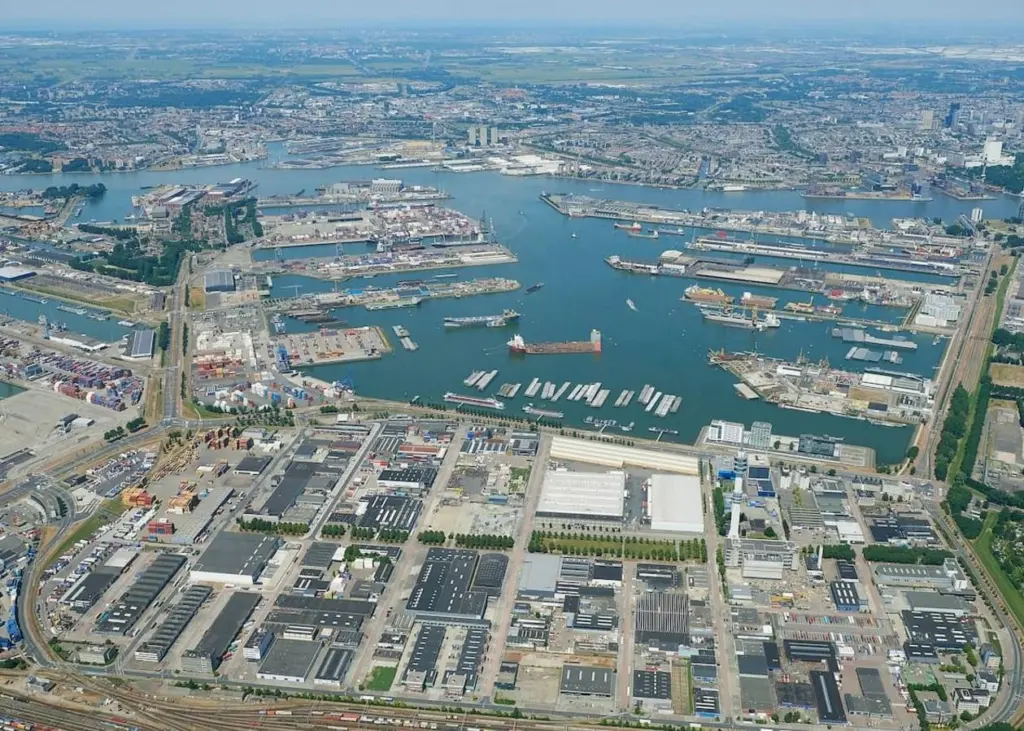
The Port of Rotterdam says demands from the NGO ‘Advocates for the Future’, which is comprised of lawyers, former Greenpeace members and campaigners who pursue climate objectives on behalf of ‘the interests of future generations’, are ‘a bridge too far’.
Advocates for the Future has set a number of demands on the port, such as bringing its climate policy into line with the Paris Agreement and developing a plan to phase out fossil fuel activities, or it threatens it will ‘commence civil proceedings’.
“The port’s dependence on fossil raw materials is not only harmful to people, nature and the climate,” it says. “Fossil fuels are also finite. A port that takes its future seriously cannot continue to build upon activities of which they need to be phased out.”
It does not provide any suggestions of how the port could reach ‘the ultimate goal of a fully climate-neutral port by 2050’, nor does it suggest any alternatives to fossil fuels, however Maikel van Wissen, founder and director of the NGO, told Maritime Journal that it was asking for a plan for ‘a controlled, but swift, phase out of fossil fuels in alignment with the goals of the Paris agreement’.
“We realise this will take time, but there is an urgent need if we want to limit the dangers of climate change,” he said.
“The Rotterdam Port Authority is acting contrary to its duty of care under international and Dutch law. In our legal submission, we set out that the Rotterdam Port Authority, as a state-owned entity, is under a legal obligation to reduce the facilitated greenhouse gas emissions. This is not limited to the emissions within the port area, but includes all emissions that stem from the activities in the part, including bunkering, refineries, coal transshipments, etc.”
In response the Port of Rotterdam says it is already ‘stimulating the transition to a climate-neutral port’, but ‘forcing companies to cease their activities in Rotterdam is a bridge too far.’
It says the port is already making efforts to stimulate and facilitate a transition and that ‘various projects have already been implemented or are ongoing’.
It also says forcing the issue is beyond its remit, and that it is governments who ‘determine the pace and method of the reduction of greenhouse gases’.
“At the moment the Port Authority is noticing that companies are postponing their investments in sustainability and suspending construction projects as a result of the unfavourable investment climate and the lack of demand for sustainable products,” it says. “For companies, it is crucial that they can earn back their investments in sustainability over time. The Port Authority’s influence over this is extremely limited.
“A substantial proportion of fossil fuel activities have been designated by the government as being vital to Dutch society, including the refining of crude oil into petrol, diesel and kerosene, the import of gas and the manufacturing of basic chemical products by the chemical industry. “The Port Authority is therefore convinced that it is not obliged to force companies to limit fossil fuel activities.”
The port also cautioned against what it described as a ‘waterbed effect’, arguing that imposing stricter requirements solely in Rotterdam could simply result in fossil fuel activities relocating to other ports without reducing global carbon emissions.

Related Articles
 ENVIRONMENT
 DREDGING & FLOOD DEFENCE
 ENVIRONMENT