

Shorepower switched on at Cruise Port Rotterdam
Cruise Port Rotterdam has switched on its shorepower supply facility on Holland Amerikakade, placing it well ahead of European law, which stipulates that all cruise ships in European ports must use shorepower by 2030.
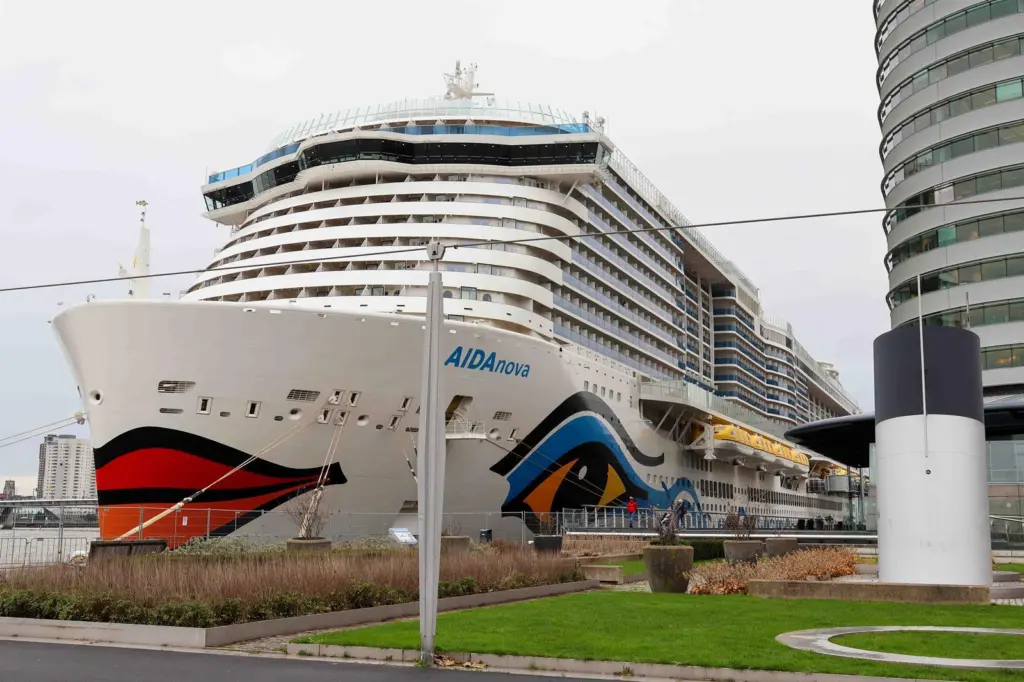
The commissioning and inaugural operation of the facility took place during a regular visit of the 337m long, 2,626 cabin cruise ship Aidanova, an already environmentally aware vessel powered by an LNG/diesel electric drive arrangement which, along with other vessels suitably equipped, will now be able to switch off its main and auxiliary machinery while alongside.
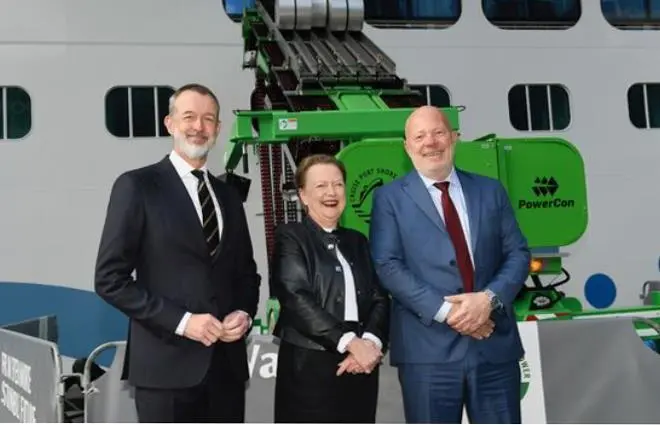
The official opening and live connection following an earlier ‘dry run’ was performed by Robert Simons, Alderman for Port & Economy, and Boudewijn Simeons, CEO of Port of Rotterdam Authority, and follows a 22-month construction period.
The installation was built by Denmark’s PowerCon in collaboration with Port of Rotterdam Authority, the municipality of Rotterdam, STEDIN, IGUS and project partners J.P. van Eesteren, Heijmans, Royal HaskoningDHV and Xylem on behalf of Cruise Port shorepower.
Power requirements for cruise ships are not insignificant (Aidanova develops 61,760kW including for its drive train and hotel services), and the shoreside power supply has to be up to the task. For this installation a separate 1.5km long electricity grid connection from Maashaven to Wilhelminakade was installed.
Flexibility
This facility is not the first example of cold ironing in Rotterdam.
Stena Line’s roro/passenger ferries at Hoek van Holland and Heerema’s crane ship berths in Caland Canal are just two examples where ships can plug into shoreside power supplies, in Heerema’s case with energy produced by wind turbines on the Rozenburg peninsular.
These examples involve specific vessels where the power connection point remains constant. For a location such as Rotterdam’s 500m long cruise terminal, however, a more flexible approach was demanded.
Cruise ships vary in length and can occupy different positions on the berth (heading up or downstream), including having to align with the terminal’s moveable passenger access walkway.
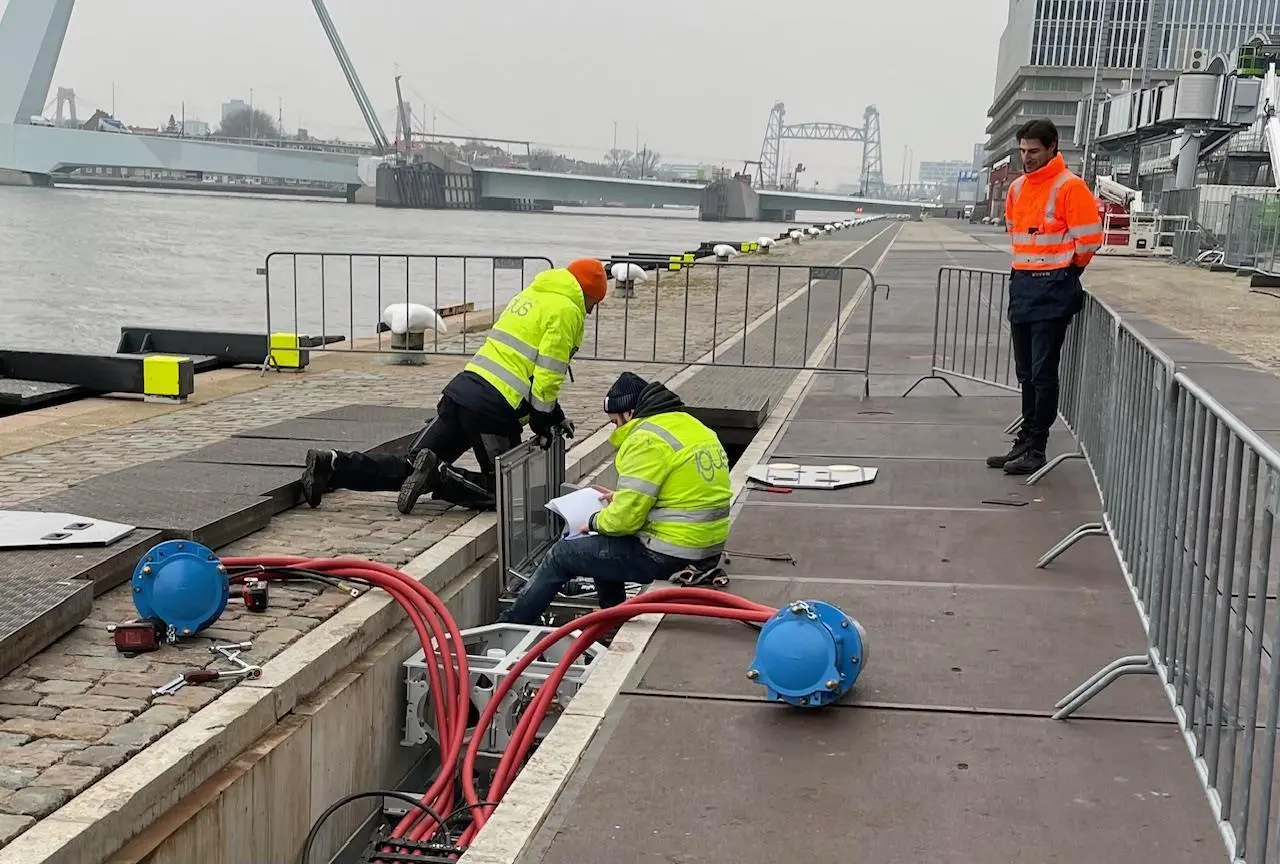
A fixed location for the shoreside connection is therefore not ideal and here a ‘unique’ and innovative solution was developed. A 230m long, 1m deep cable duct was installed on the quay, along with a new type of connection vehicle that transits rails within the duct until in position at the ship’s hatch, eliminating the requirement for the ship to align with the shoreside connection.
Metal covers to the duct are removed and the socket assembly rises above ground, whereby a wheeled, composite vehicle provides the connection to the ship, in effect an elaborate extension lead with the system cooled using water from the river Maas.
When not in use and the cruise terminal is unoccupied, the duct is fully covered and unobtrusive, allowing free public access to the quay, which is a popular area for locals and visitors alike.
Work was carried out while the terminal was operational, with cruise ships berthing on a weekly basis. Cruise Port shorepower expects to be able to connect 75% of visiting cruise ships in the first year.
As is typical in Rotterdam, the area around the cruise terminal has been developed extensively over recent years. In particular, the 150m high De Rotterdam tower block, home to offices, apartments and a hotel, can on occasion be less than 100m from ships’ funnels, so with onboard generators not required, no emissions from the otherwise very welcome visitors will be greatly appreciated by residents and workers in the neighbourhood.
“Cruise ships are a valuable source of income, and by disconnecting them from the power grid, we are improving the air quality and reducing noise pollution, said Alderman for Port & Economy Robert Simons.
“That is good for the quality of life and our economy. I am proud of this result and would like to thank everyone who worked towards this.”
The developers report the system is being copied at Copenhagen, Sydney and elsewhere.
“After an intensive construction period, we are today taking an important new step in making the port of Rotterdam and the city more sustainable,” said port authority CEO Boudewijn Siemons. “Shorepower for cruise ships is a crucial and necessary part of this.”
A video depicting the installation can be viewed here.
Related Articles
 ELECTRICAL SYSTEMS
 ENVIRONMENT
 ENVIRONMENT