

Solving the offshore power challenge with floating hubs
Dutch offshore solar developer SolarDuck is developing a floating platform designed to provide power, communications and control systems directly to remote subsea assets, potentially eliminating the need for long subsea cables, diesel generators and costly umbilicals.
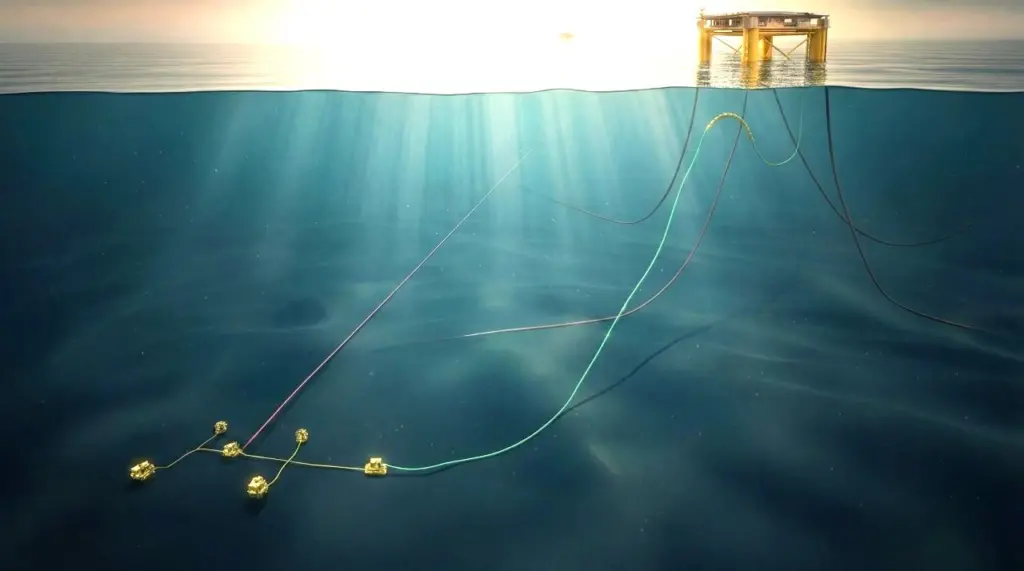
The technology, known as the Offshore Floating Power & Utility Hub (OFPH), has received a €3.2 million subsidy from the Netherlands Enterprise Agency (RVO) to support the Steady Seas research programme, which will refine the platform’s design and validate its performance in offshore conditions.
Rather than exporting electricity to shore like a conventional offshore energy project, the OFPH is intended to generate and store power where it is needed, supplying offshore oil and gas infrastructure, carbon capture and storage developments and other remote installations.
As offshore operations move further from land, providing reliable electrical power to subsea equipment is becoming an increasing technical and economic challenge. Existing solutions typically rely on long export cables, umbilicals or local diesel generation, all of which add cost, installation complexity and carbon emissions.
SolarDuck believes a redeployable floating platform could offer a more flexible alternative.
The concept combines offshore floating solar generation with integrated battery storage and utility systems, enabling continuous power supply while also supporting communications and other services required by remote offshore assets. The method could reduce lifecycle costs for CCS developments and subsea tie-back projects while improving deployment flexibility, SolarDuck says.
Building on experience
The latest programme builds on operational experience gained through SolarDuck’s Merganser offshore floating solar demonstrator in the Dutch North Sea.
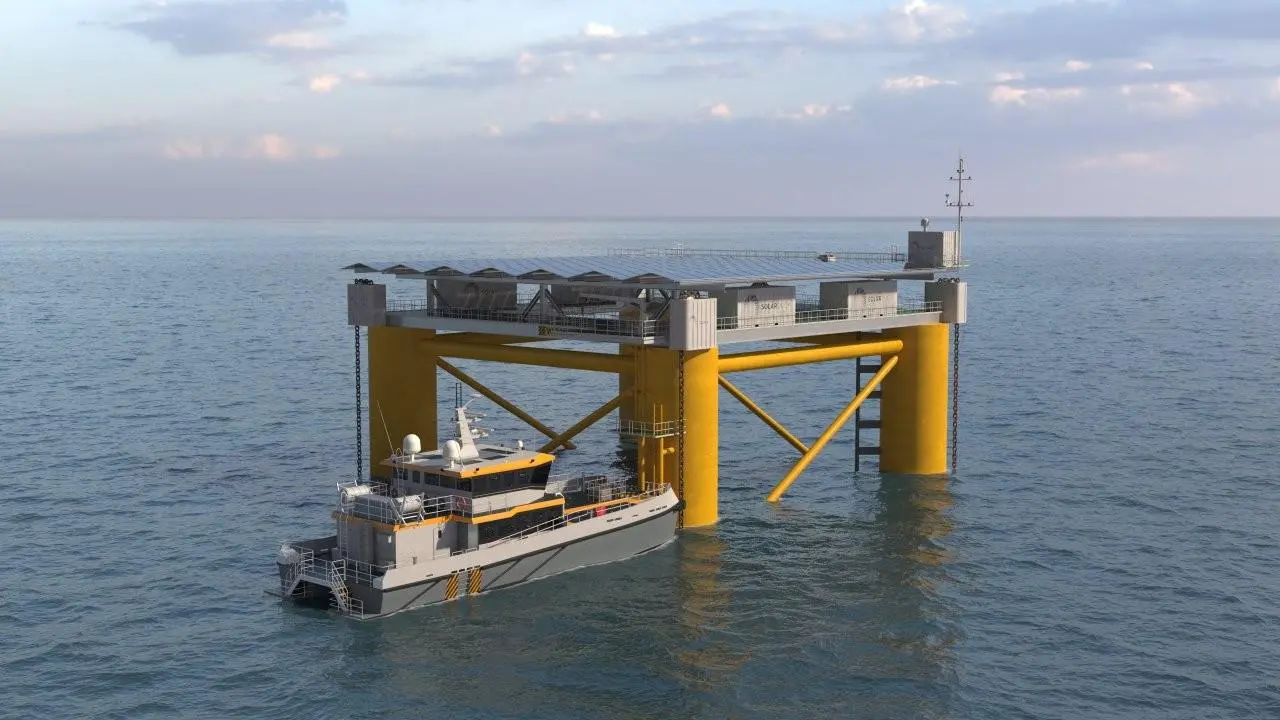
Under the Steady Seas project, SolarDuck will lead the overall platform design and systems integration, while the Maritime Research Institute Netherlands (MARIN) will undertake hydrodynamic analysis, numerical simulations and basin testing to evaluate how the structure behaves in realistic offshore conditions.
Research will focus on several key engineering challenges, including platform motion, mooring performance, structural behaviour, power and communications integration and the interface between the floating platform and subsea infrastructure.
Don Hoogendoorn, chief technology officer at SolarDuck, said the programme would build directly on knowledge gained from earlier offshore deployments.
“Steady Seas allows us to take the lessons learned from building and testing Merganser in the North Sea and apply them to a design tailored for single-platform offshore applications,” he said.
“The technical challenges of powering assets far offshore are significant, from mooring and motion behaviour to integration with subsea infrastructure. This programme gives us the means to engineer and validate robust answers before the solution is deployed at sea.”
MARIN will verify that the platform can withstand the demanding conditions expected in offshore environments.
William Otto of MARIN said the institute would investigate the influence of the platform’s configuration on its hydrodynamic behaviour while assessing structural loading in extreme wave conditions.
“This kind of rigorous, test-driven validation is essential to bring offshore solar technology confidently toward commercial deployment,” he said.
After the research programme is completed, SolarDuck intends to establish Joint Industry Projects to demonstrate the technology with offshore partners under operational conditions.
The company says these demonstration projects will validate the platform’s ability to power and control remote offshore assets before progressing towards commercial deployment.
Related Articles
 ELECTRICAL SYSTEMS
 ENVIRONMENT
 ENVIRONMENT