![MaritimeJournal[Seawork]](https://www.maritimejournal.com/wp-content/uploads/2026/09/MaritimeJournalSeawork.svg)





UK offshore auction shows glimmers of hope
The UK government has finally announced the results of this year’s auction for renewable energy Contracts for Difference (CfD) bids.

The results could not have been worse than last year’s round, which received no bids, but the offshore wind award of 5.34GW leaves a mountain for the UK to climb if it is to reach the summit – a target of 50GW by 2030.
Arguably this year’s round was only more successful because the government increased the budget four-fold – from £205 million to £800 million – and raised the strike price of the electricity sales price to £58.87/MWh, with a ceiling of £73/MWh.
“The 2030 target is ambitious, and we could see 50-60GW of OSW with CfDs secured by 2030 if auction budgets are big enough,” said Tom Quinn, head of Analysis & Insights at ORE Catapult, a public-private partnership that supports the development and commercialisation of offshore energy.
“And it is important to make rapid progress as any delay means more fossil fuel-fired power generation, and more emissions.
“Ideally we have a predictable and steady volume of deployment each year, and confidence provided to the supply chain in terms of contracts and clear design envelopes so they can make the investments required to meet future demand. There is a huge opportunity for jobs, economic growth and clean power, but we need to develop a sustainable industry and avoid the boom & bust of the early years of offshore wind.”
Calling the results ‘reasonably good’, WindEurope said the UK will need bigger volumes if it has any hope of hitting its target.
The UK’s last auction didn’t get any bids from offshore wind because the price ceiling was too low. The UK then raised the price ceiling for this auction by 66% to a more realistic £73/MWh, and the new Labour Government increased the budget for this auction, which helped get a few more projects through than looked likely a few months ago.
The overall result is a reasonably good auction for offshore wind. Nine bottom-fixed projects totalling 4.9GW of new capacity have won Contracts for Difference (CfDs). And one floating wind project of 400MW got a CfD too. But the UK will need bigger volumes from its next auctions if it’s going to meet its ambitious 2030 goals for offshore wind.”
AR6 offshore and floating wind awards
- Hornsea 3 (1.1GW) Ørsted
- Hornsea 4 (2.4GW) Ørsted
- East Anglia 2 (support awarded for 963MW) Iberdrola / ScottishPower Renewables
- East Anglia 3 (158.9MW) Iberdrola / ScottishPower Renewables
- Inch Cape A & B (266MW) ESB and Red Rock Renewables
- Moray West Offshore Wind Farm (73.5MW) OW Ocean Winds and Ignitis Group
- Green Volt Offshore Wind Farm (floating)
Tidal energy
A relative newcomer to offshore energy, tidal stream was also given a share of the CfD cake.
A total of 28MW was awarded among six projects around Scotland and Wales with £5 million more up for grabs this year, bringing the amount awarded to £15 million (€17.8 million).
“The high costs of delivery of tidal stream projects continues to require a high reference price from the government, which effectively reduces how far the ring-fenced budget for tidal stream will go,” says ORE Catapult. “The strong number of successful bids seen in AR6 sets the stage for further proving out the tidal stream technology, and validates the ring-fencing of budget specifically for tidal stream in facilitating a variety of project technologies and locations in this sector.”

John Macleod is managing director of Leask Marine, which is working in the tidal energy space from the north of Scotland.
He told Maritime Journal that while small in the grand scheme of things, ‘it is sufficient to manage to attract other stakeholders into their growth opportunities with the CfDs’.
“It continues to be encouraging,” he said. “We are working with three of the tidal companies that were awarded on five projects between Scotland and Wales, so it is welcome news for them, and provides steady work over the next few years for those currently involved in the installation and O&M of these devices.
“We would not suggest that it will have a great impact for the 2030 target, however achieving commercial realisation is a huge step forward for most, and to have the confidence to progress to arrays is a large step forward.”
Inyanga Marine Energy Group was awarded 10MW for its tidal energy project in Anglesey, Wales, which doubles the company’s capacity.
Inyanga uses a ‘HydroWing’ technology and CEO Richard Parkinson said the award would allow the firm to build on economies of scale ‘to achieve commercially viable generation projects’.
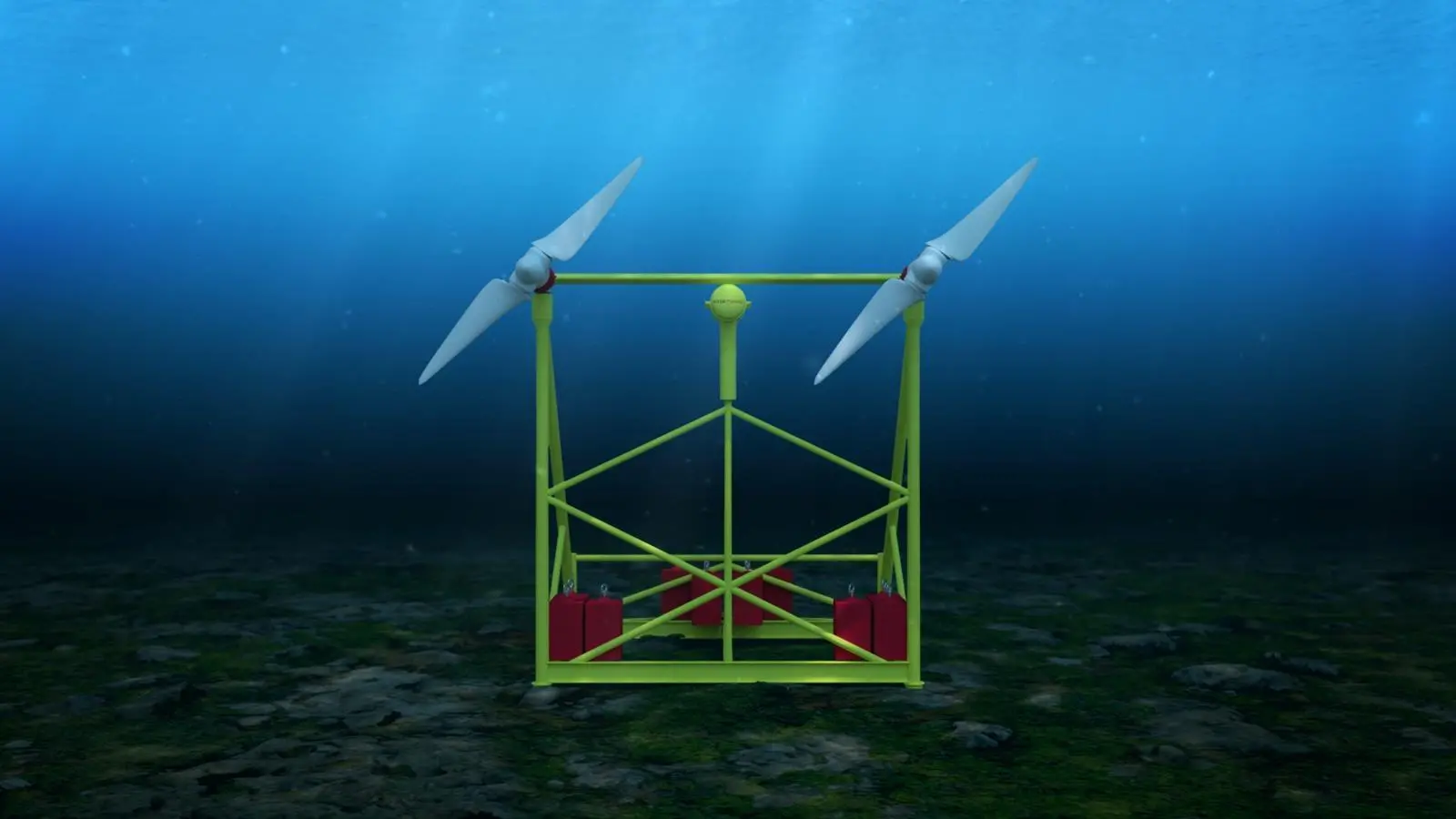
“The Morlais tidal energy project is unique, and the only one of its kind in the world,” says Parkinson. “Run by Menter Môn Morlais, all necessary infrastructure is already installed in the zone, including a connection to the national grid and two substations on the shore.
“This is a significant milestone for Inyanga Marine Energy Group and a big vote of confidence in our innovative tidal energy technology.”
“The results for tidal were good, considering the ring-fenced budget available,” said Quinn. “There are more projects which are ready to move to the deployment phase, but the main focus should be on getting projects already awarded CfDs operational, so we can make real progress in reducing costs. This should result in lower bids in future allocation rounds, meaning lower costs to consumers.”
AR6 tIdal stream awards
- · Oceanstar (1.5MW) Oceanstar Tidal (Scotland)
- · Seastar 1 (4MW) Seastar Tidal (Scotland)
- · Ynni’r Lleuad 2 (10MW) HydroWing Tidal (Wales)
- · Magallanes EMEC Berth 1 Extension (3MW)
- · Oceanstar 5 (0.5MW) Coeanstar Tidal (Scotland)
- · Meygen AR62 (9MW) Meygen (*Scotland)
Beyond 2030
The future is far from certain. Even if the UK were to hit its 50GW target, what then?
“It is important to consider what happens after 2030,” says Quinn. “We need to have a holistic view on the market – the CfD process can act as a bottleneck, but if we push e.g. 10GW through the next auction, will the grid and supply chain be able to cope with that level of demand?
“And do we end up with a flurry of activity (and job creation) followed by a slow down as we find solutions to other barriers?”
“These results are a vote of confidence in the UK’s offshore wind market, and it’s crucial that we focus next on maximising the amount of offshore wind capacity we secure in future annual auctions,” said Richard Sandford, co-chair of the Offshore Wind Industry Council.
“The sector’s Industrial Growth Plan demonstrates that we can triple our manufacturing capacity over the next 20 years by focusing on competitive supply chain areas including designing and manufacturing blades, turbine towers, foundations and cables.
“AR6 has increased confidence in the sector, which we aim to build on further in future auction rounds.”
Related Articles
 FEATURES & VIDEOS
 ENVIRONMENT
 OTHER NEWS