



Calls for maritime electrification safety standards
Certification society Bureau Veritas says safety regulations need to be clarified as maritime electrification technologies gain traction.
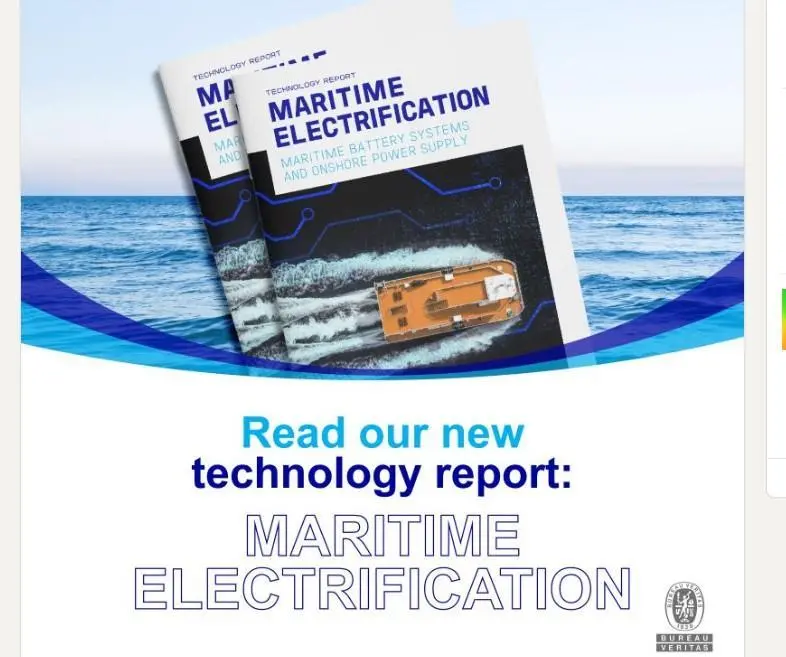
Its report Electrification: Maritime Battery Systems and Onshore Power Supply says battery systems remain under-regulated despite growing safety concerns from issues like thermal runaway, a common risk with lithium-ion batteries.
”Thermal runaway, a rapid, uncontrollable increase in battery temperature can lead to fires that are difficult to extinguish and poses a significant hazard to crew welfare,” it says. ”Despite the increasing deployment of ESS (Energy Storage Systems) across the global fleet, current safety guidance remains fragmented and largely non-mandatory.”
The issue is a double-edged sword because BV also believes that batteries and electrification are vital to the zero emissions drive, saying such solutions ‘can act as a viable solution to support maritime decarbonisation strategies’.
While battery-powered ships are increasing in number, with 1,000 in service globally, it says, they are not regulated in the same way that Onshore Power Supply (OPS) already is.
“OPS systems are already support by EU regulation, with FuelEU Maritime establishing the mandatory use of OPS systems for container and passenger ships docked at EU ports from 2030, followed by all EU ports with OPS facilities by 2035,” it says.
BV’s report follows the International Maritime Organisation’s MEPC 83 emission reduction targets up to 2040.
“However, current projections indicate the measures may fall short of the 2030 goals, prompting renewed focus on all viable low-emission technologies,” BV says. “While existing policies and regulations have provided a foundation for safety and standardisation, the technology report acknowledges that there is still work to be done at an international regulatory level to instil confidence in ESS and OPS. Comprehensive, enforceable international standards are needed to ensure the safe deployment of lithium-ion technologies at scale and pace.”