

Data-driven routing cuts heavy-lift vessel’s Atlantic transit by 2.5 days
A voyage optimisation trial has cut the Atlantic crossing of one of the offshore industry’s largest crane vessels by 2.5 days, highlighting the potential for offshore contractors to reduce mobilisation costs as well as fuel consumption through vessel-specific routing.
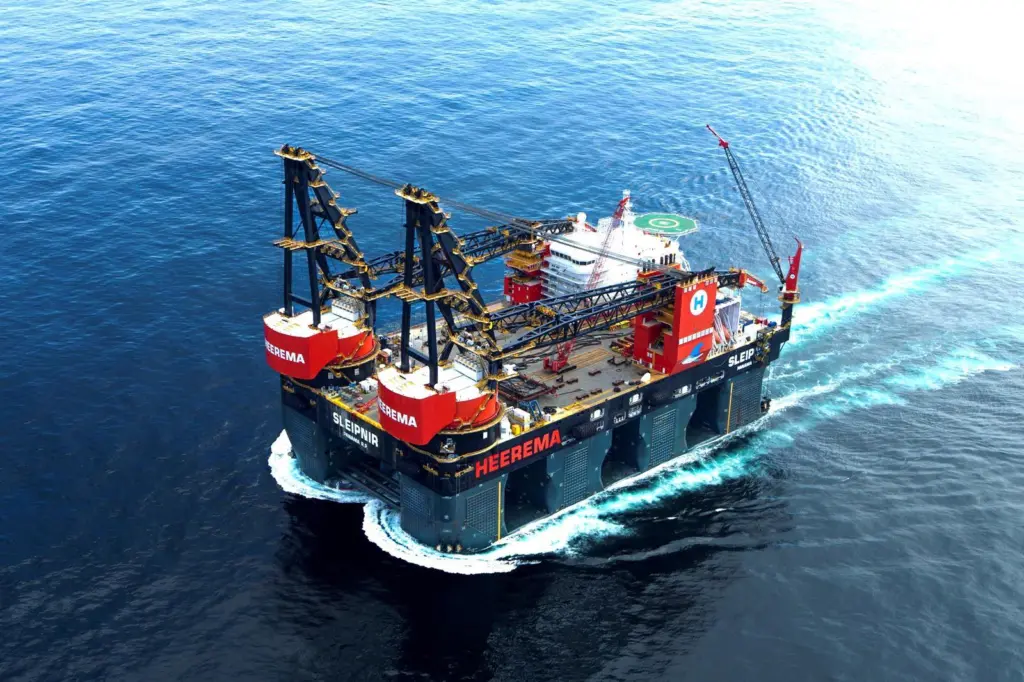
The pilot enabled Heerema Marine Contractors’ semi-submersible crane vessel Sleipnir to shave 240 nautical miles off a transatlantic voyage without increasing fuel consumption.
For offshore contractors, where large construction vessels can incur operating costs running into hundreds of thousands of dollars a day, reducing mobilisation time can generate substantial savings while bringing installation assets to project sites sooner.
The trial, carried out with French ocean intelligence company Amphitrite, used five years of Sleipnir operational data to build a digital model of the vessel’s performance. Rather than relying solely on conventional weather routing, the system combined vessel-specific performance modelling with high-resolution forecasts of weather, waves and ocean currents to identify the most efficient route throughout the voyage.
Voyage detours
On the outbound crossing from Rotterdam to New York, the software identified the optimum departure window to exploit favourable tidal currents through the English Channel before directing the vessel north of a developing storm to benefit from following winds while remaining close to the great-circle route.
The return voyage illustrated that the shortest route is not necessarily the quickest. Instead of steering directly across the Atlantic, the optimisation model routed Sleipnir into the Gulf Stream. Although the vessel travelled a greater distance, the stronger following current increased its speed over ground to 14.6 knots, resulting in a shorter overall passage.
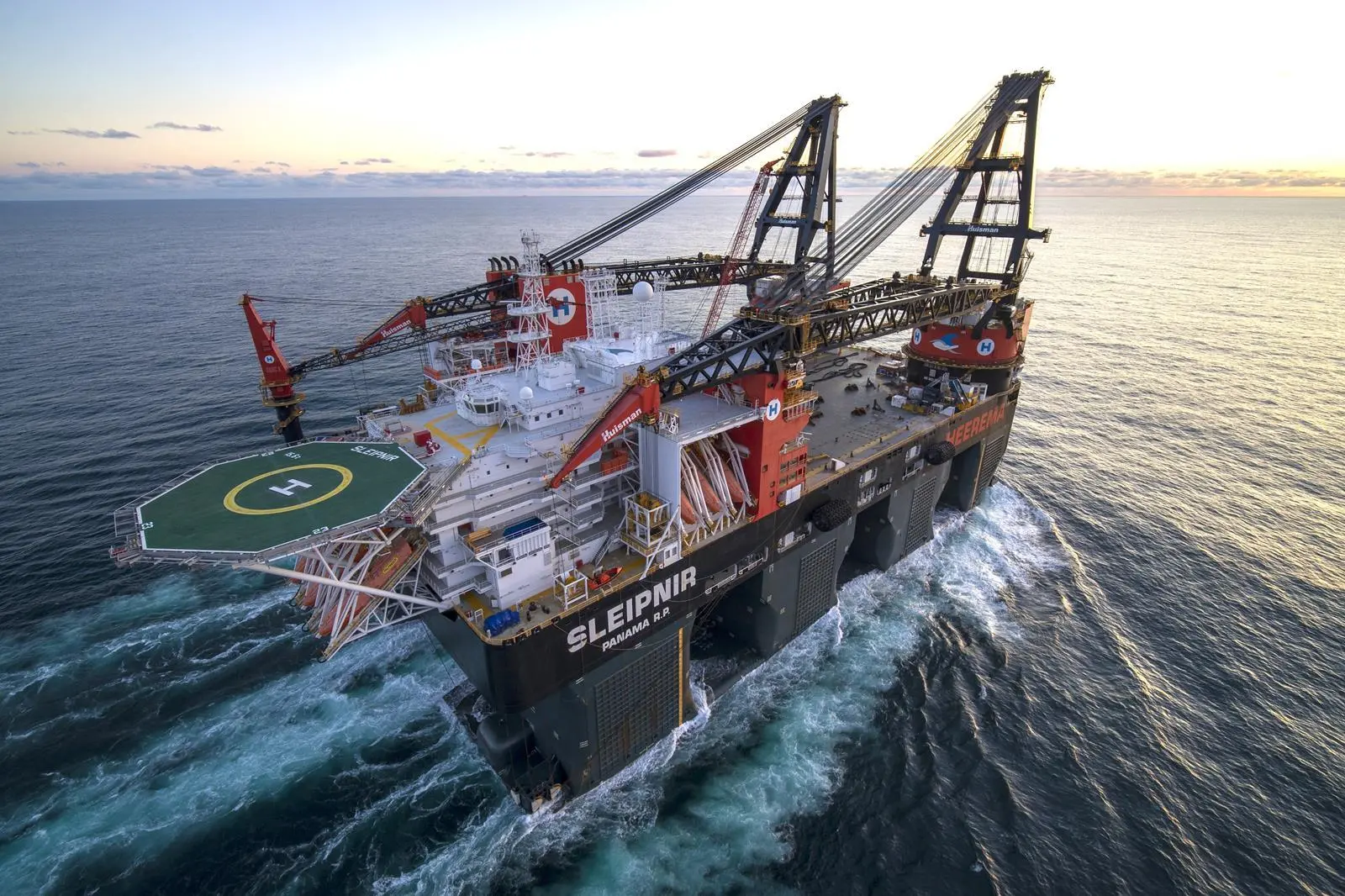
Alejandro Velez Isaza, Decarbonisation Engineer at Heerema Marine Contractors, said the project had delivered operational insights beyond the immediate voyage.
“Improving fleet efficiency is fundamental to our decarbonisation strategy,” he said. “Working with Amphitrite not only demonstrated the value of vessel-specific voyage optimisation, but also gave us a better understanding of how Sleipnir behaves during transit. Those insights create further opportunities to optimise fuel consumption during one of the most energy-intensive phases of our operations.”
Thomas Joyce, Head of Business Development at Amphitrite, said the project demonstrated the value of tailoring routing decisions to an individual vessel’s characteristics rather than relying solely on generic weather forecasts.
“By bringing these factors into routing decisions, we can help crews and operators make better-informed choices that reduce transit time, fuel consumption and emissions,” he said.
Although weather routing has long been used by commercial shipping, the trial suggests that combining vessel-specific performance models with detailed ocean intelligence could unlock additional savings for offshore construction vessels, where every day saved on mobilisation can translate into major reductions in project costs.