



OPINION: Ditch pyrotechnics for electronic flares
It’s time for electronic flares to replace unsafe and toxic pyrotechnics from a bygone era, says Chris Hoffman, the director of Technology Strategy at ACR Electronics.

With the array of advanced modern alerting and locating systems now available for workboats and other vessels, he outlines the evidence behind growing industry pressure calling for recognition of eVDSDs as the safer, cleaner and longer-lasting alternative to pyrotechnic flares.
In an emergency situation, whether it’s a tug, offshore support vessel or patrol boat in distress, the captain and crew will be facing challenges, distractions and anxiety.
For decades, with pyrotechnic flares as the accepted standard, a crew member has been expected to fumble for a flare pack, remove the cap, pull the string to ignite the flare while moving hands quickly out of the way, and hold the flare overboard, ensuring it is downwind.
Failure to perform these actions correctly could result in injury or damage to the vessel or the liferaft keeping survivors afloat.
Today there are alternatives that offer an easier, less dangerous, toxic and outdated solution in an age bristling with reliable electronic safety equipment that will locate the survivors to within a 110-metre radius.
Is it not time for regulators to embrace the alternatives and make electronic flares permissible?
The problem with pyrotechnics
First, the safety issue is critical. Pyrotechnic flares burn at more than 1,000oC, often emitting molten slag and sparks together with smoke and a flame – all of which can come back at the user in high winds.
Toxicity must also be considered. Most red hand-held and rocket flares rely on strontium nitrate and similar chemicals that are both toxic and environmentally persistent.
Disposal is a serious problem. Once expired – usually after three years – they cannot be tossed in the bin or recycled. Instead, they become hazardous waste.
In terms of reliability, the fact is that pyrotechnic flares can fail. They can get damp, be damaged in storage, or simply not ignite when needed, or, worse still, in rare cases explode when ignited. Even when they function correctly, their window of effectiveness is fleeting.
Finally, there is transport and storage. Flares contain explosives and are therefore classified as Class 1 dangerous goods, which means shipping and transport is difficult and expensive. The same rules and regulations apply to time-expired flares. Flare canisters clutter lockers and demand careful storage away from damp conditions and potential heat sources.
The modern toolkit of safety
Emergency Position Indicating Radio Beacons (EPIRBs) use satellite constellations like Cospas-Sarsat, GPS and Galileo to transmit a vessel’s position to rescue coordination centres anywhere on the globe.
Automatic Identification System (AIS) transponders broadcast a message and vessel position to every nearby ship equipped with AIS. GMDSS DSC radios provide voice communication to coastguards and other vessels together with their location, while Survival Craft VHF radios, acting as GMDSS portable radios, although with no locating capability, are designed to be taken from the ship into the liferaft and then used to either call for help on VHF Channel 16 or talk to rescuers. SARTs (Search and Rescue Transponders) create either a radar or AIS target, allowing searchers to home in precisely on a vessel or life-raft.
Enter the electronic flare
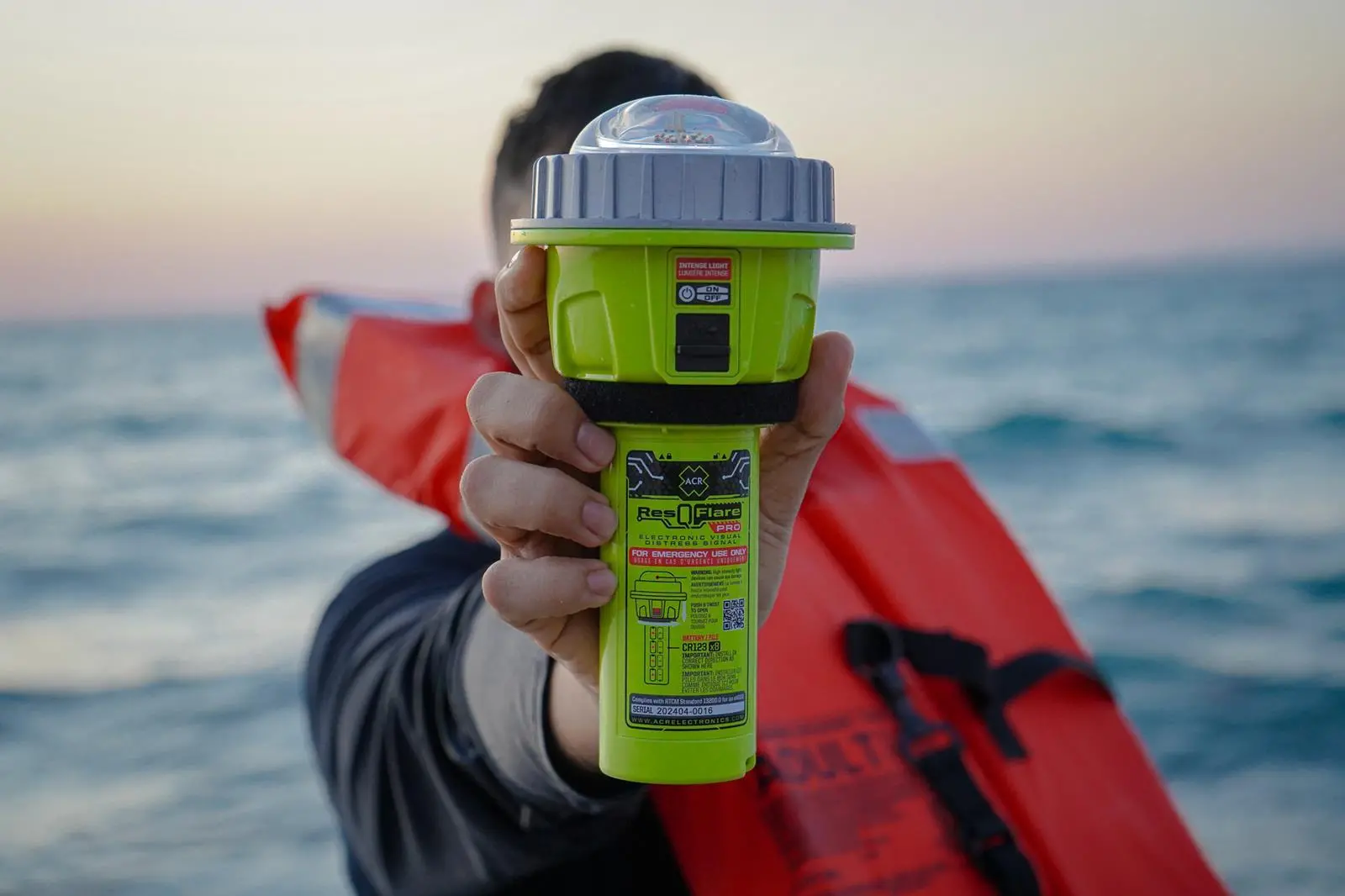
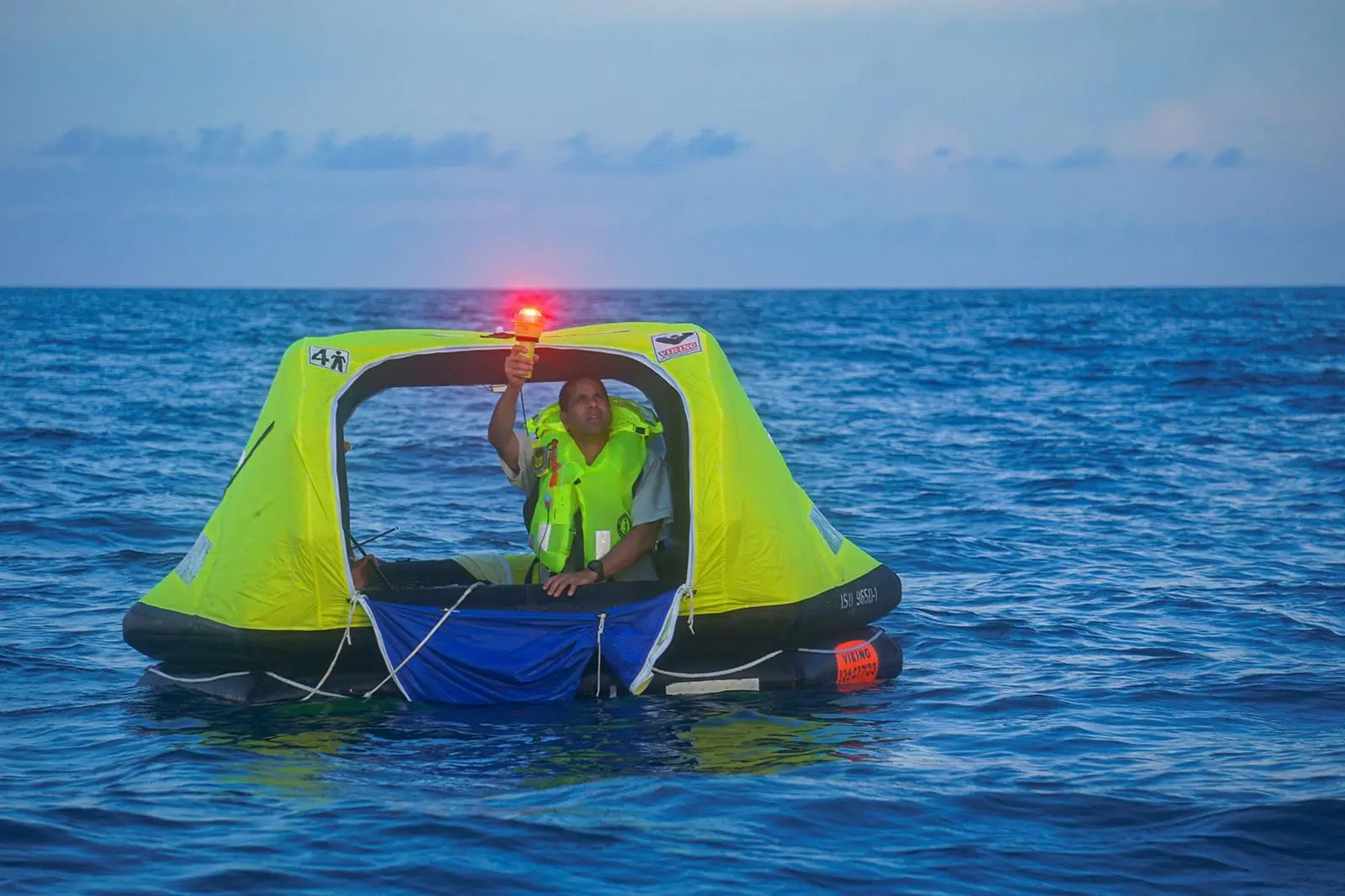
Electronic Visual Distress Signalling Devices (eVDSDs), sometimes called electronic flares, are the logical successor to pyrotechnic flares. Compact, waterproof and rugged, these units emit bright strobing LED patterns visible for miles. They can operate continuously for hours, sometimes over an entire night, and many incorporate infra-red strobes.
Unlike pyrotechnics, they can be tested safely, reused, and can either be recharged or fitted with new batteries. They do not expire with a three-year shelf life. They do not produce toxic waste. They do not risk setting a life-raft ablaze or potentially injuring the user or other crew.
Setting operating lifetime aside (tens of seconds for a pyrotechnic flare compared to several hours for an eVDSD), the only other real difference is that a pyrotechnic flare is always going to be brighter than an electronic flare.
With all the other modern alerting and locating systems on ships today, this no longer matters. Electronic flares provide a light that can be seen from several miles away, which is more than sufficient when combined with other systems.
Though an electronic flare may cost more upfront than a set of pyrotechnic flares, the continual cycle of buying, storing, and disposing of pyrotechnics is eliminated.
Regulatory pathways and momentum
Encouragingly, the movement to replace outdated flares is already under way.
The RTCM (Radio Technical Commission for Maritime Services) has developed a performance standard for eVDSDs. The US Coast Guard’s acceptance of these devices for recreational boats sets an international precedent. Manufacturers in Europe and Asia are pushing for parity, developing multi-colour strobes and AIS-integrated eFlares.
For the International Maritime Organisation and the Maritime and Coastguard Agency, the task is simple: approve electronic flares as an equivalent carriage option and then consider phasing out pyrotechnics over a defined period.
Commercial shipping, already equipped with multiple redundant communication systems and with its greater compliance infrastructure, should lead the way. By authorising eFlares on commercial vessels, regulators send a clear message and create the volume of adoption needed to drive prices down for all.
Accordingly, it is time to establish an International Standard for eVDSDs that could be adopted by IMO and other maritime agencies, and to expedite changes to international conventions and national regulations that would allow the carriage of modern alternatives to pyrotechnic devices, including eVDSDs, instead of pyrotechnics.