![MaritimeJournal[Seawork]](https://www.maritimejournal.com/wp-content/uploads/2026/09/MaritimeJournalSeawork.svg)





Rapid vessel charging along the UK’s south coast
Aqua superPower, in collaboration with its consortium partners, has been working on a critical marine charging infrastructure project along the south coast of the UK.
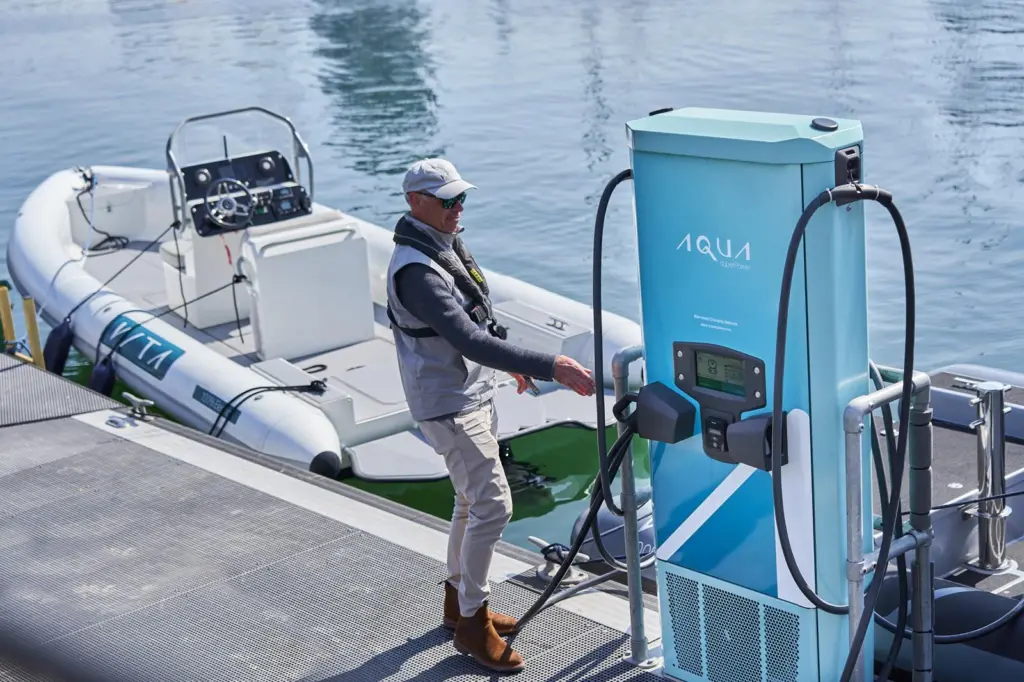
The Electric Seaway (TES) project has established eight new charging sites, creating a robust network to support the region’s growing fleet of electric maritime vessels.
“The Electric Seaway has been a resounding success, delivering on our vision to create a reliable and accessible charging network for electric vessels.This project showcases the power of collaboration and innovation in driving the decarbonisation of the maritime sector,” said Karen Gill, COO of Aqua superPower.
“We’re thrilled to see the south coast emerge as a hub for sustainable marine travel, offering both commercial operators and leisure users the confidence to embrace electric propulsion.
Ambitious goal
The TES project was first launched in June 2023 with GB£3.2 million in funding from the UK Shipping Office for Reducing Emissions (UK SHORE) programme in the Department for Transport, with Innovate UK as the main delivery partner.
Led by Aqua superPower and ZPN Energy, alongside key partners including the University of Plymouth, South Hams District Council, Bournemouth, Poole and Christchurch Council and the UK Harbour Masters’ Association, the project has deployed innovative battery-backed ultra-rapid charging technology tailored for shoreside applications.
The project has been particularly focused on grid limitations in coastal areas, ensuring reliable and efficient charging for electric boating areas with limited grid capacity.
The Electric Seaway locations include MDL Ocean Village, Isle of Wight Trinity Landing featuring two chargers and Fowey, equipped with two chargers – one supported by an innovative ZPN battery backup. Expanding the Aqua network, additional fast-charging marine sites now encompass Lymington, Chichester Itchenor and Falmouth.
In addition, the project has proven to be a groundbreaking initiative, driving innovation and yielding valuable insights for its diverse consortium of partners. Partners like ZPN Energy have refined processes for efficient site delivery, ensuring scalable and practical deployment of charging stations along the UK’s south coast.
The University of Plymouth meanwhile has spearheaded ongoing environmental data collection, employing sensors to monitor ecological impacts and inform future decarbonisation strategies.
Aqua superPower has introduced a new compatibility service, enhancing interoperability between charging systems and electric vessels.
These learnings are set to shape future projects, advancing the transition to clean maritime solutions in the UK and beyond.