





Teledyne launches Sentinel glider, snaps up Valeport
Oceanographic products firm Teledyne Marine used the recent Oceanology conference and exhibition for two announcements – a product launch and an acquisition.
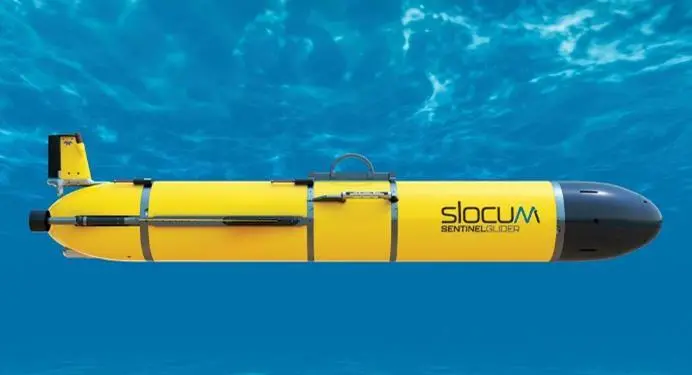
The company’s Slocum Sentinel Glider is being touted as a ‘ground-breaking advancement in autonomous underwater vehicles’, largely because of its increased size, which in turn increases its subsea ocean-going endurance to an incredible two years.
Speaking to MJ after the launch event, product line manager Shea Quinn said because the glider was 2.57m in length and had its diameter increased to 33cm it could hold three and a half times more batteries, thus giving it two years at sea.
The batteries are non-rechargeable lithium primary batteries, which have far more energy density than their chargeable lithium-ion counterparts.
“Customers want longer endurance and on-board processing,” he said. “This is different from other products because it uses changes in buoyancy and gravity to propel it, with the motor used at the inflection point.
“The object is to stay in a single area for a long time collecting data, and the plan is to replace offshore survey vessels as this can be fitted with more energy sensors, such as active or passive acoustics, as well as on-board processing, imaging and echosounders.”
The buoyancy engine can cope with sudden density changes in the water column, he said, and the thrusters at the back give it added robustness in strong currents or other tricky ocean conditions.
The Sentinel, which has a standard speed of 0.75 knots and a sprint speed of 3.5 knots, is aimed at three main sectors: military, offshore wind and oil and gas, with its debut likely to take place in the former.
Valeport acquisition
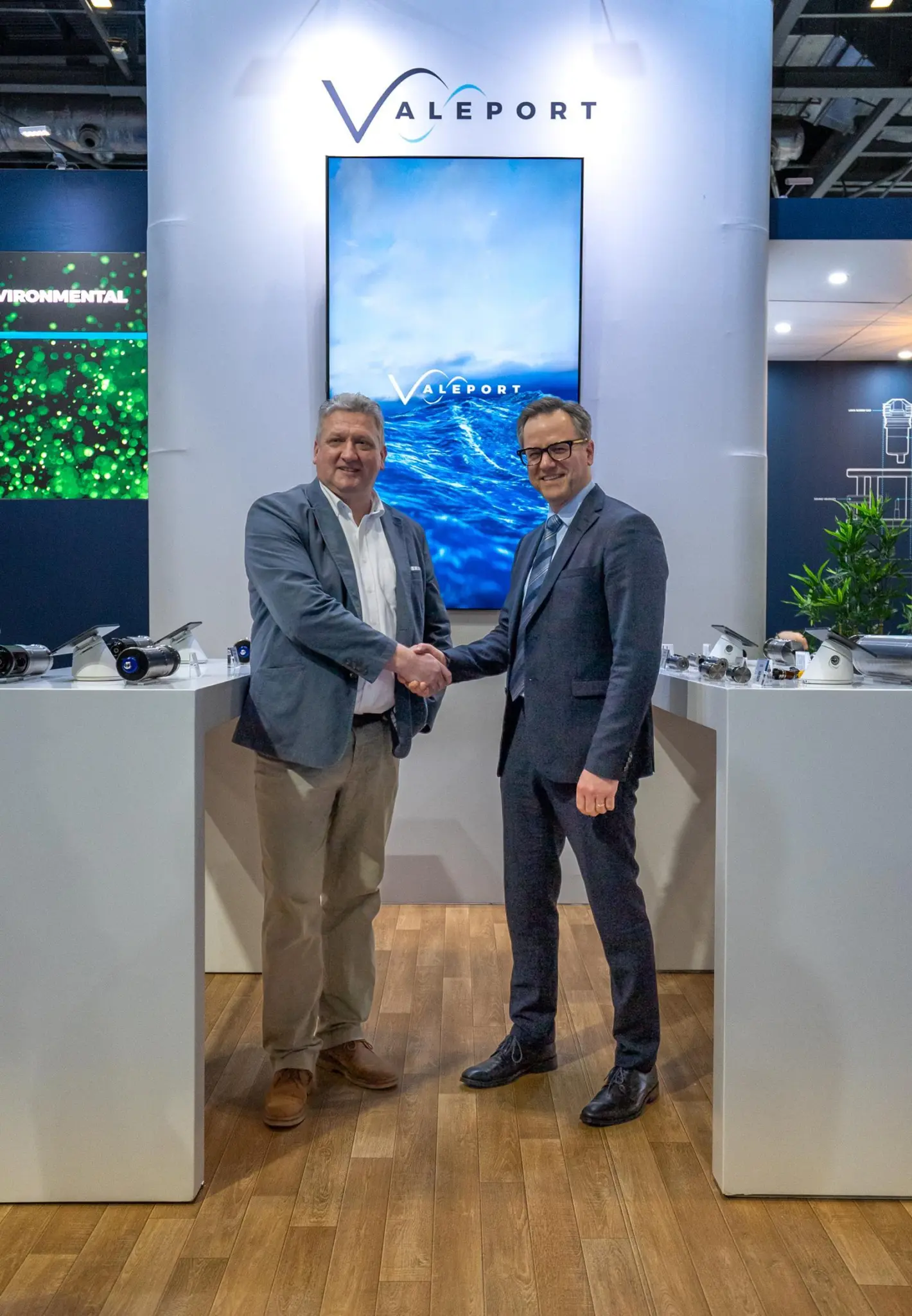
Alongside the Slocum Sentinel Glider launch, Teledyne Marine announced its acquisition of the UK-based oceanographic and hydrographic instrument maker Valeport.
Founded in 1969, Valeport makes instruments for subsea operations across the board, including dredging, port and harbour infrastructure, scientific research and energy.
Managing director at Valeport Matt Quartley said he believed the time was right ‘for the next phase of the journey’.
Related Articles
 ACCESSORIES & EQUIPMENT
 OTHER NEWS
 ACCESSORIES & EQUIPMENT