


Voith eVSP addresses sustainability challenges
An eight-bladed electric Voith Scheider Propeller (eVSP) and digitalisation of maritime applications are among the German engineering specialist’s responses to the challenge of achieving more sustainability in an era of stricter statutory regulations.
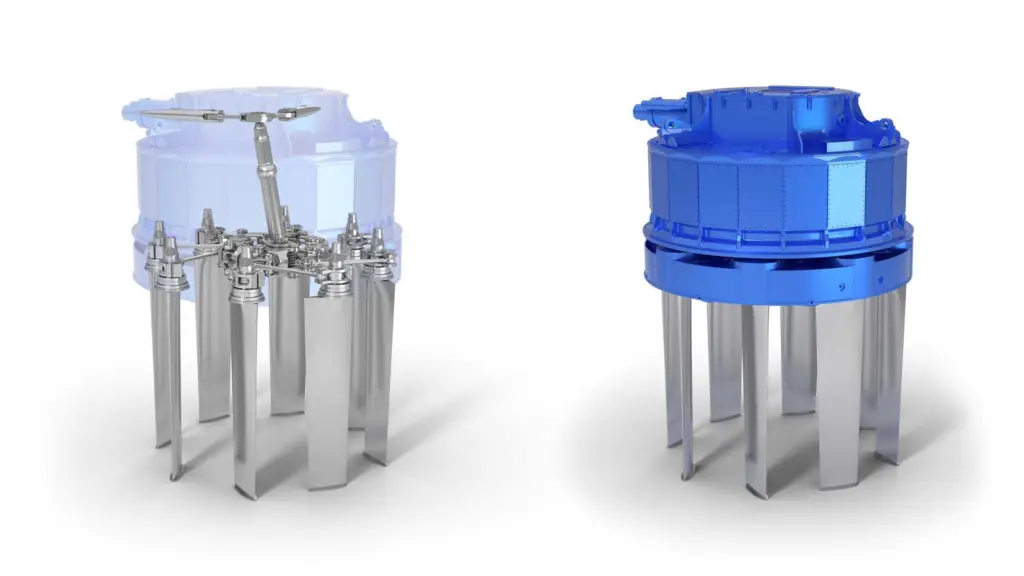
The eight-bladed electric eVSP will provide a quieter operation and reduced background noise exposure for marine life, with noise and underwater sound having almost doubled worldwide, partly due to increasing shipping traffic, Voith says.
First application for the new eVSP will be for Meteor IV, a 125m special-purpose vessel under construction in Rostock on behalf of the German Federal Ministry of Education and Research.
The vessel will carry out multi-functional and interdisciplinary tasks with a focus on environment and climate issues, with propulsion via an eVSP type 32X8/285 aft, in addition to a forward Voith inline thruster type 2000-1650H.
Voith Turbo uses a permanent magnet electric motor from its subsidiary ELIN Motoren to drive the eVSP, whereby there is no requirement for a gearbox allowing an “especially efficient operation and a compact design”, providing vessel designers more scope for integrating the drive unit.
SMM Hamburg
Voith will be featuring its new eight-bladed eVSP at SMM 2024 in Hamburg this year, where it will also provide a comprehensive overview of its product range innovations alongside the latest developments in the digitisation of marine applications including the rcVSP, a system for remote control of ship assistance tasks that make the operation of tugs “more efficient and safer”.
Voith Turbo adds that autonomous driving will also play a role at SMM, having successfully conducted a pilot project with inland waterway navigation where once again the focus was on improving efficiency and safety.
Voith’s cycloidal propellers date back to 1928 and are still in demand today, for example with tugs and smaller ferries where precise manoeuvrability in restricted waterways, particularly when subject to strong tidal currents, is a requirement. This latest iteration continues to refine the proven principle, which remains in effect the same.
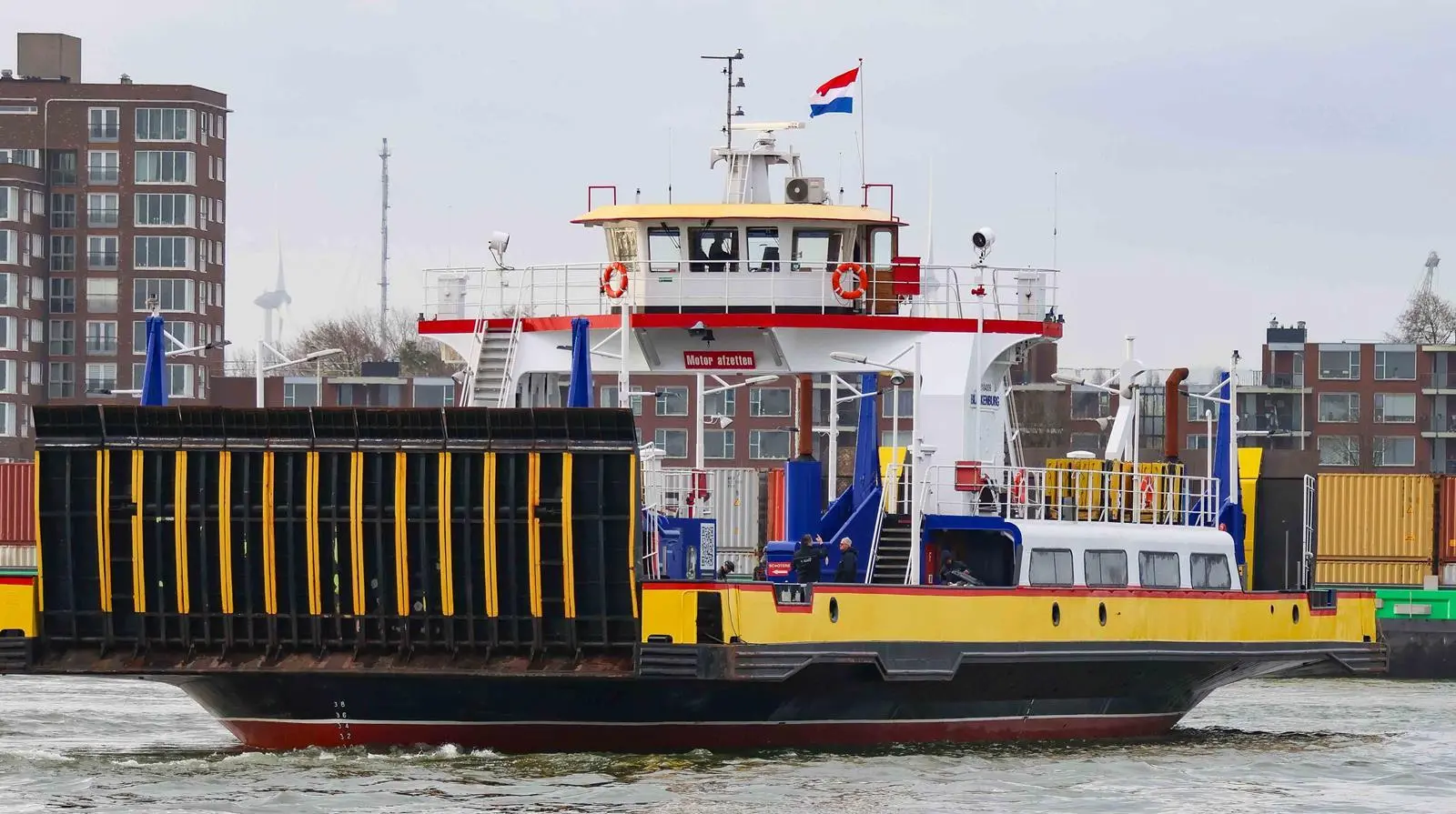
An example of the enduring nature of Voith Schneider Propellers is the ferry Blankenburg, which operates the five-minute crossing between Maasluis and Rozenburg in Rotterdam, one of two similar vessels originally for the route.
The vessel was built almost 60 years ago and was recently extensively overhauled after a period out of service. It was built with mechanical control connections providing finger-tip control of two VSP units, one each end of the vessel.
Related Articles
 ACCESSORIES & EQUIPMENT
 OTHER NEWS
 ACCESSORIES & EQUIPMENT