

ESNA and Strategic Marine to develop SES CTV
Norwegian ship design firm ESNA has teamed up with Strategic Marine to build Surface Effect Ship (SES) crew transfer vessels.
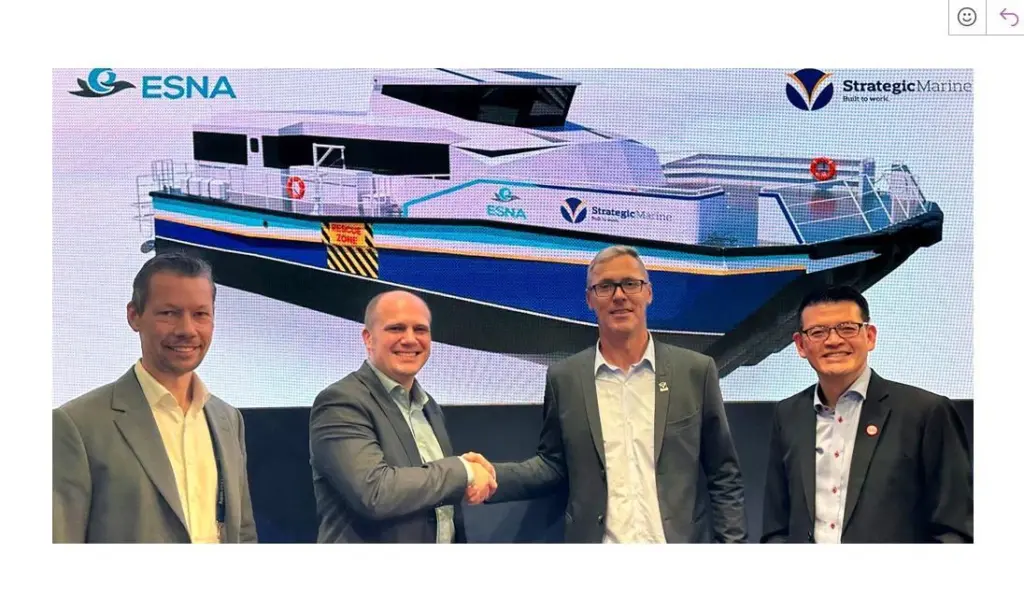
The firms say they plan to build the first one this year, beginning in the last quarter of 2024.
The vessels will be built specifically for the offshore wind market after working on SES technology on vessels for the oil and gas industry, defence and security for more than 40 years.
“The vessel type offers the combination of higher speed, increased operational wave height and reduced fuel oil consumption,” the firms say.
The SES concept for crew transport is beneficial because of the high speed in more comfort that it allows, thanks to the air cushioning effect that aids stability.
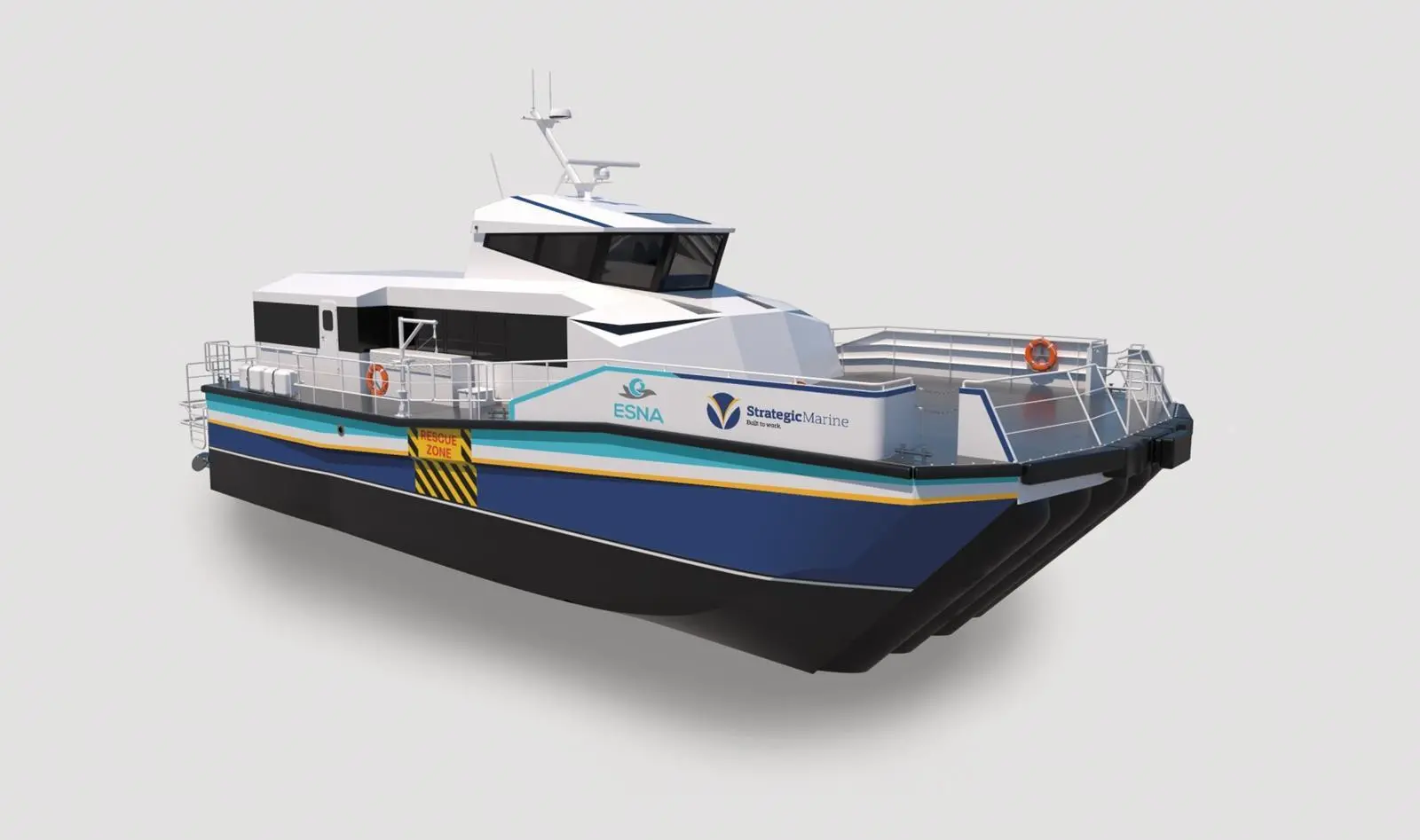
ESNA specialises in the concept, and in January announced it was developing an SES CTV powered by hydrogen fuel cells and batteries.
This would give the vessel enough energy to operate for 12 hours within 15 nautical miles of a port, ESNA said.
The lower SES resistance also offers fuel savings and reduced emissions as well as higher speeds.
“Strategic Marine was a natural choice for ESNA to team up with to further commercialise our technology and designs after having worked with them on other projects and experiencing first hand their excellent shipbuilding capabilities,” said Trygve Halvorsen Espeland, naval architect and co-founder of ESNA.