![MaritimeJournal[Seawork]](https://www.maritimejournal.com/wp-content/uploads/2026/09/MaritimeJournalSeawork.svg)




Fairway deepening at Gothenberg fully funded
Gothenburg City Council has now passed a resolution to grant more than 1,2 billion kronor (€120,000,000) to finance the Skandia Gateway project.
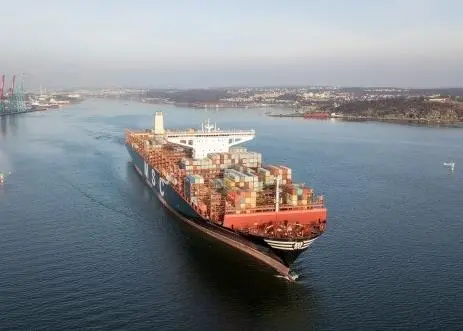
The project is aimed at deepening the fairway leading into the Port of Gothenburg. The sum was matched by the Swedish Transport Administration as part of the national infrastructure plan, and as a result the project is fully funded. The three parties now have a firm basis for entering into an implementation agreement.
Direct services to and from the Port of Gothenburg across the oceans of the world without the need for transshipment are vitally important if Swedish companies are to reach global markets in a way that is both climate-friendly and cost-effective. However, as ships continue to grow in size and require a deeper draught, development of the fairway is crucial. At present the very largest ships can only call at the Port of Gothenburg half loaded, and the ships that are required to keep pace with global maritime expansion are becoming bigger by the year.
“This is a race where we need to keep up if we are to maintain our position as a major international port here in Sweden. Without the largest ships the port will be marginalised, forcing many Swedish companies into using inefficient alternatives that are damaging to the environment and with a resulting loss of competitiveness,” said Elvir Dzanic.
Skandia Gateway is a joint project being run by the Gothenburg Port Authority, the Swedish Maritime Administration, and the Swedish Transport Administration. With funding now in place, the three organisations can move forward and enter into an implementation agreement for this much sought-after project.
1.5 billion cheaper than anticipated According to previous estimates, the cost of deepening the fairway to accommodate ships with a draught of 16.5 metres would be around 4 billion kronor. More detailed calculations now reveal the cost to be around 2.5 billion kronor and achieving a draught of 17.5 metres. The difference can be attributed to the application of more modern construction solutions that emerged during the early stages of the project, coupled with meticulous fairway.
By Jake Frith
Related Articles
 OTHER NEWS
 MARINE CIVILS
 MARINE CIVILS