![MaritimeJournal[Seawork]](https://www.maritimejournal.com/wp-content/uploads/2026/09/MaritimeJournalSeawork.svg)


FEATURE: A drifting LNG hulk that no one wants
An abandoned, burnt-out LNG tanker adrift in the Mediterranean since early March has highlighted the difficulties facing salvors when commercial shipping becomes embroiled in war.
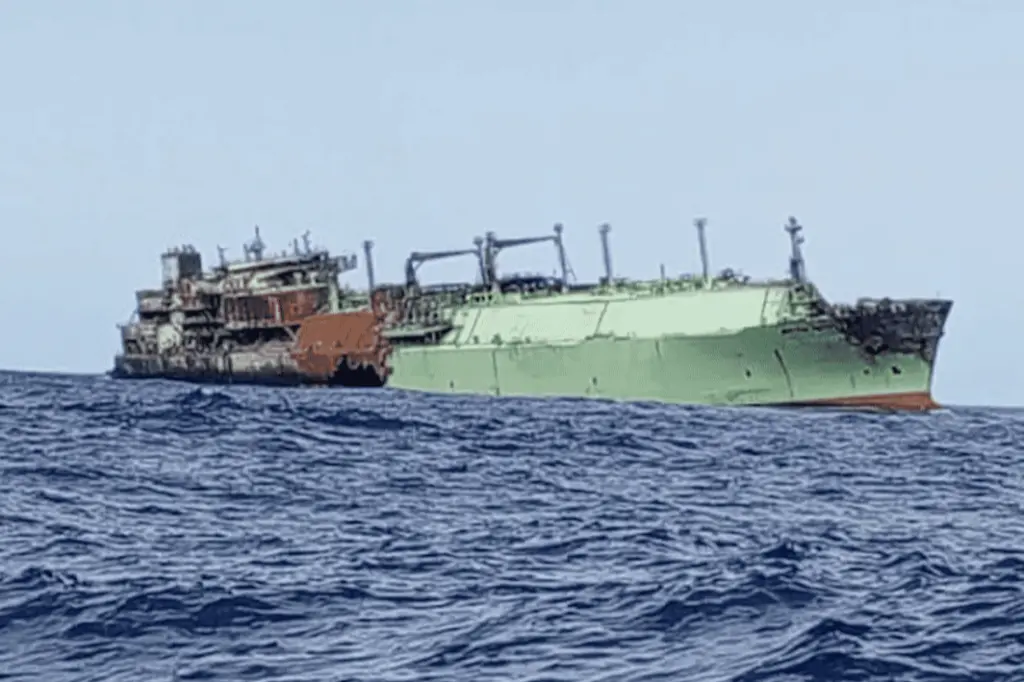
The Arctic Metagaz – on paper owned by Lathyrus Shipping but with murky status – has since been anchored off Benghazi, according to latest reports.
In times like these, the military often has neither capacity nor requirement to deal with the aftermath of civil incidents, and it also reveals gaps in state-sponsored emergency towing provision.
In normal times, the commercial salvage industry’s response to shipping casualties follows a well-established process to agree a contract and salvors tackle the issues of the vessel’s ownership, flag and class along with relevant insurance arrangements (including P&I) for vessel and cargo.
It is said that a professional salvor’s experience and skills in international diplomacy can be as important as its actual technical skills and capabilities, without which nothing is achieved.
An intriguing tale
The story of the Arctic Metagaz has several strands where if we avoid speculation, some of the obvious questions will likely remain unanswered for a long time – remembering the first casualty of war is said to be the truth.
There could well be international intrigue involving Russia’s sanctioned shadow fleet of vessels but none can say for sure, so with the consensus of trustworthy opinion pointing to the vessel’s subsequent loss as being a victim of conflict that is what we can assume.
Regardless of the cause, the problem of dealing with a wreck that threatens major environmental damage remains, added to which even the true legal ownership and liability remain unclear, not to mention the obvious question of who foots the bill.
A wider consideration is how the state in whoever’s waters the wreck is squatting responds, within both its own legal powers of responsibility and the availability and willingness of commercial salvors to respond, relevant in this case in an area where state-sponsored Emergency Towing Vessels (ETVs) are a rarity.
Pariah of the oceans
The Russian-flagged tanker Arctic Metagaz (277m LOA,135,000m3 capacity) was listed as a sanctioned vessel, its ownership hidden behind various shell companies. On its final voyage it was loaded with a cargo of LNG in Russia, bound for China via north Europe, the Mediterranean and Suez Canal.
Early in March and while in the central Mediterranean between Malta and Libya, it was engulfed in flames following an explosion, the crew successfully rescued by another vessel.
Speculation included it having fallen victim to a Ukrainian drone or other weapon, part of its conflict with Russia.
With the fire out, a large hole was visible in its portside shell plating and most of the vessel itself, including the accommodation, was consumed by fire. It’s uncertain if any LNG remains intact in undamaged tanks, but Arctic Metagaz is now listed as a total loss.
Responsibility
Whose waters the wreck was in was of relevance, both Libya and Malta playing host at various times (depending on the definition of territorial and international waters borders) with nearby oil and gas infrastructure at risk.
Libya has taken the initiative at various stages to bring the vessel under control, latest reports saying it has been anchored off Benghazi.
Malta has ratified the Maritime Intervention Convention while Libya has not, but either way it is questionable whether any costs could be recovered should either country intervene directly. Questions about ownership and whether the vessel had insurance will have also been an issue, with the usual process appointing commercial salvors.
There is clear precedence that states can intervene directly to protect their territory, but do they have the resources in-house, or even a suitable source of vessels including tugs available for charter to respond?
In Northwest Europe such incidents would typically get the attention of state-sponsored ETVs at an early stage to at least establish control of the situation and help formulate a recovery plan.
ETV gaps
The location of Arctic Metagaz however revealed a gap in regular ETV (Emergency Towage Vessel) coverage in the central Mediterranean, with only Spain and France to the west and Turkey in the east having significant state-sponsored emergency towing capabilities.
More specifically, in the north, Italy, Greece, Slovenia, Croatia, Albania, Malta and Cyprus are without ETV provision, as well as, to the south, Israel, Egypt (other than with the Suez Canal), Libya, Tunisia, Algeria and Morocco.
They all, particularly Italy and Greece, have significant tug populations, both shiphandling and connected with the offshore O&G and distance towing sectors, but are at the vagaries of market availability with no guarantees and are thus considered ‘tugs of opportunity’.
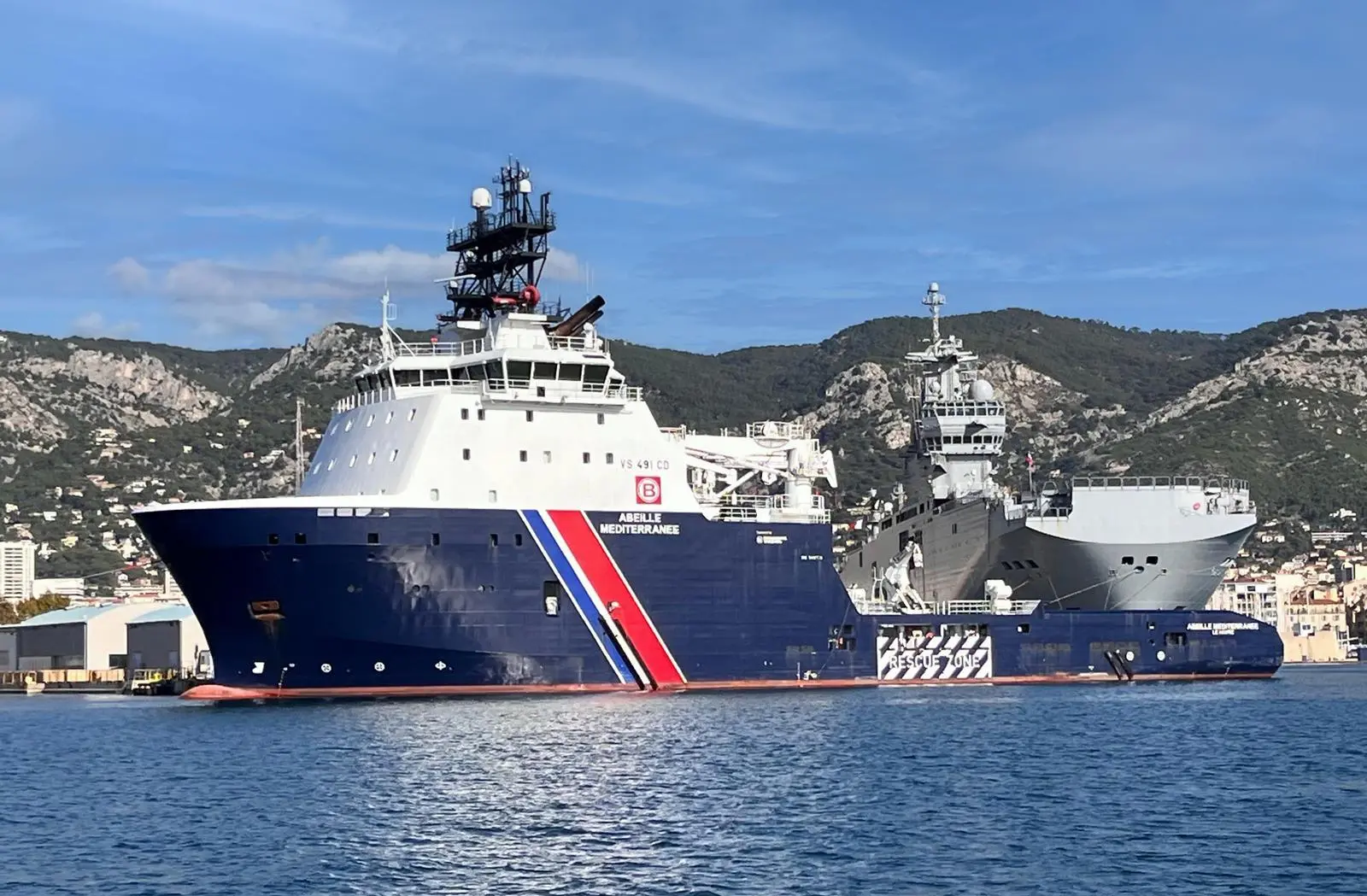
Looking at countries who do operate ETVs, France and Spain have by far the most comprehensive provision. France, with a relatively short Mediterranean coastline, has two anchor-handling tug supply vessels operating as ETVs – Abeille Méditerranée and Jason – part of a five-vessel strong French ETV fleet that also covers the Atlantic and English Channel coastlines.
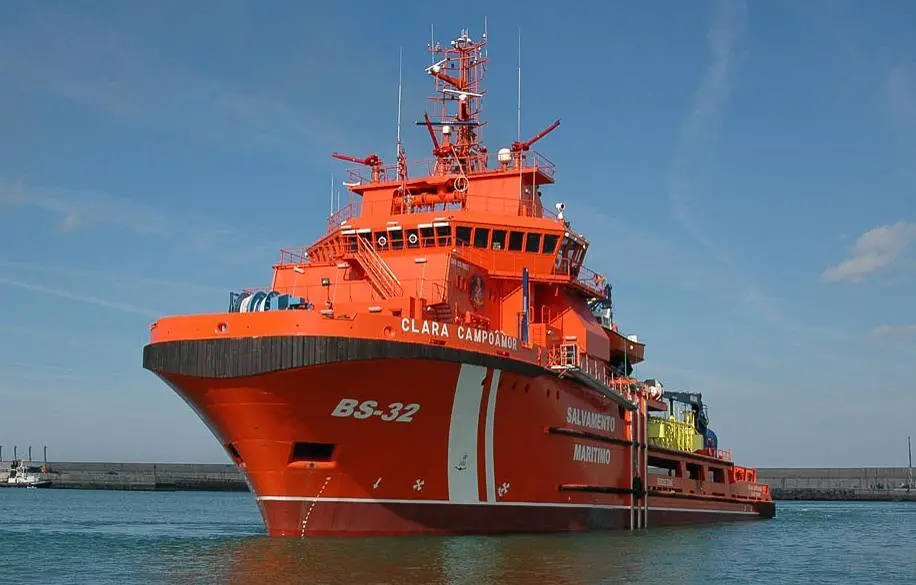
Spain is in a league of its own, with by far Europe’s most comprehensive ETV and rescue craft fleet. Salvamento Maritimo (SASEMAR) is state owned and part of the Spanish Ministry of Transport. It comprises a single comprehensive organisation providing all aspects of maritime SAR, including small fast rescue boats for inshore incidents together with helicopters, fixed-wing aircraft and drones.
The fleet is positioned strategically around Spain’s coastline with the UT722-L Clara Campoamor and five of the smaller rescue tugs stationed in the Mediterranean including the Balearic Islands.
At the other end of the Mediterranean, Turkey faces a different situation both geographically and strategically. It controls the Bosphorus and Dardanelles Strait, important waterways linking the Black Sea and Aegean Sea and more widely the Mediterranean.
With around 22 tugs at its disposal, Turkey actually has more ‘ETVs’ than Spain, but serves a different set of demands consequential of its geography and the potential disruption to traffic should vessels encounter difficulties where shipping passes through the city of Istanbul.
Related Articles
 SPECIAL REPORTS
 FEATURES & VIDEOS
 FEATURES & VIDEOS