


First port with sand bypass system
South Africa’s Port of Ngqura is the first in the world to have a fixed jet sand bypass system, which is meeting its stringent dredging targets of 240,000 tonnes of sand per year.
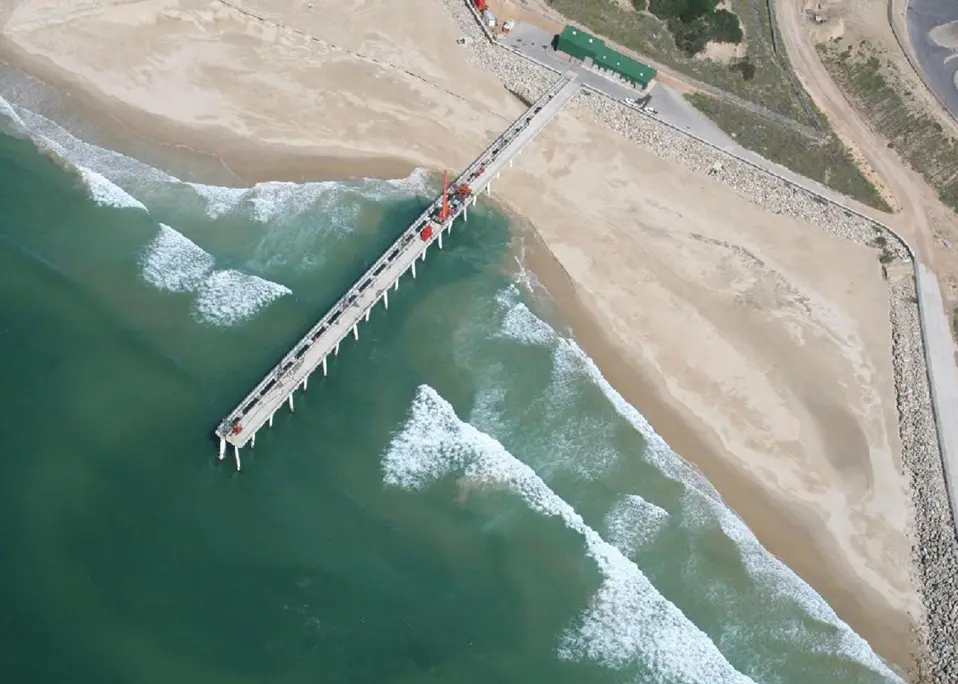
The computer controlled sand bypass system, which successfully mimics nature, consists of jet pumps which mimic the natural longshore drift along the coast. This is achieved by pumping the sand from the up drift (west) section of the coast to the down drift (east) section of the coast. Littoral drift of sand occurs primarily on South Africa’s east coast, where prevailing winds and currents cause a northward movement of sand up the coast.
At Ngqura, sand is captured in sand traps created by Transnet National Ports Authority (TNPA) dredging services. It is then pumped via pipelines to a discharge point on the opposite end of the port. The annual net longshore transport rate within Algoa Bay varies from 240,000 to 320,000 tonnes per years, the average quantity of sand required to be bypassed by the system annually.
“This is an achievement, as we are complying with the Record of Decision (environmental legislation) which stipulated the strict conditions to be adhered to in the development of a port of this nature in an environmentally sensitive area, said the Port of Ngqura’s environmental manager Mandilahke Mododana. “The Port of Ngqura is the only port in South Africa to have a Record of Decision for its construction and operation. This means that it is the only port subjected to environmental legislation during its entire development, operation, and future development.” Failure to bypass and achieve a minimum volume of 240,000 tonnes of sand per year could result in a fine of some R10 million (£540,000).
The system is effectively a fixed dredger which operates cost effectively compared to a mechanical dredger. It requires a rigid maintenance programme which keeps it going 24/7. The port has had to develop and refine the maintenance, standby and recovery plans to counteract temporary shortfalls as part of a continuos improvement process. This included making provision for unplanned maintenance, improving maintenance techniques, daily planning and scheduling, all while remaining within budget. Other initiatives include remote operations after hours, establishing visual maintenance tools for all staff, and implementing continuous improvement techniques.
By Larz Bourne