



Germans develop smart commercial UV systems
Two research projects involving the development of autonomous underwater vehicles for commercial maritime applications have drawn attention and official funding in Germany, writes Tom Todd.
In Kiel, Thyssenkrupp Marine Systems (TMS) and partners in industry and science have been awarded Government funding totalling €13.2 million for the second phase of the Modifiable Underwater Mothership (MUM) project to develop an unmanned, underwater workboat for commercial use. Total project costs are put at some €35 million with Berlin putting up €22 million.
Handing over the latest funding German Maritime Co-ordinator Norbert Brackmann said “… Pipelines and cables run on the seabed. Maritime infrastructure needs to be built and maintained. With the MUM vehicles … this work is safer, faster and also more cost-effective”.
The MUM concept has been under study since 2017 and is seen as setting a new standard for future unmanned underwater work.
It is planned to build and test a modular demonstrator vehicle of about 25m length from 2023. Planned is a system for a variety of civil maritime applications including payload transport and deployment, the exploration of hard-to-reach sea areas like the Arctic, as well as offshore applications.
The planned underwater systems will have electrical main energy and be powered by emission-free hydrogen fuel cells. Where needed, power supply can be supported by a Lithium-ion battery module. Regardless of wind and weather, MUMs will work around the clock and 365 days a year. They will, reportedly, also be tailor-made.
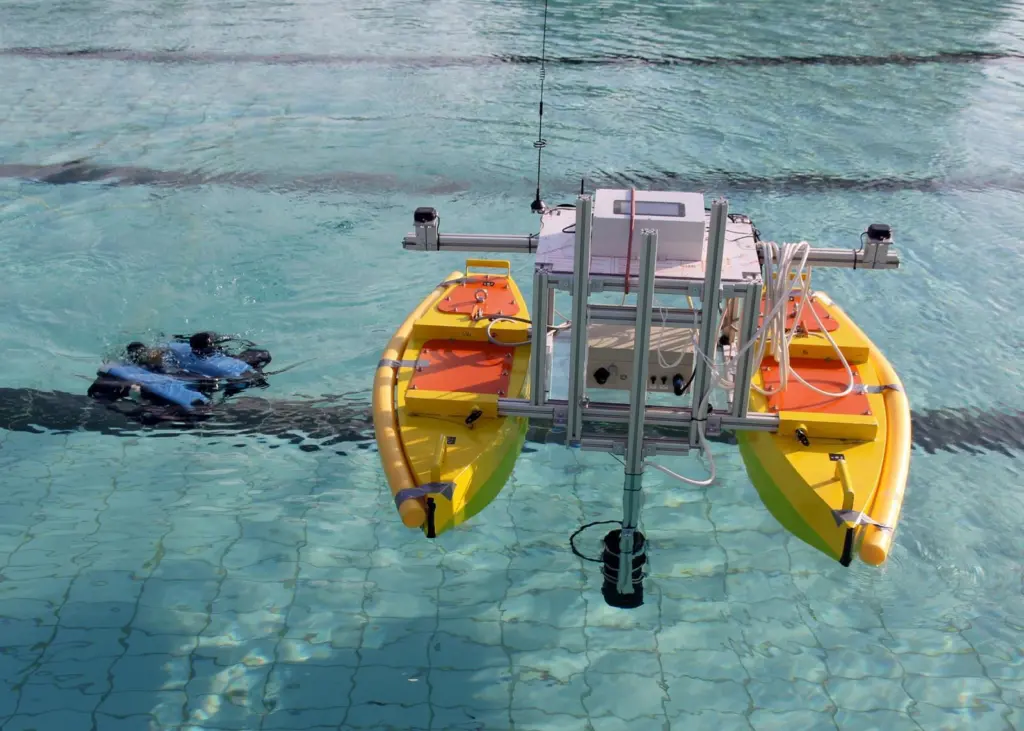
In Wilhelmshaven, scientists at that port city’s Jade University of Applied Sciences have meanwhile unveiled an autonomous underwater vehicle system for commercial use. It has been developed during a four year research project called EITAMS funded with €1.5 million by the Volkswagen Foundation.
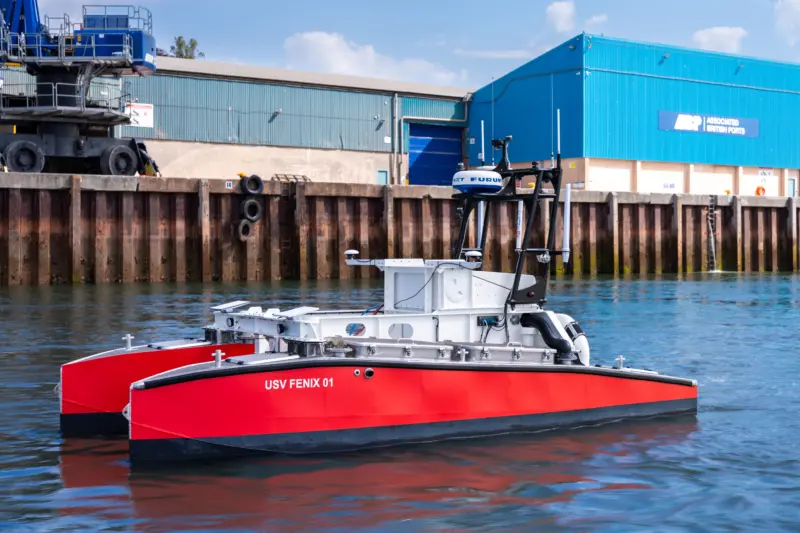
The university said hydraulic structures like port and offshore facilities placed complex demands on maintenance and monitoring which could often be solved with remote-controlled or autonomous underwater vehicles. It unveiled a test platform based on an autonomously operating surface vehicle which controls a ‘swarm’ of self-drive, interlinked underwater vehicles.
In further research, university departments with differing specialities worked on sub-areas of the main project. One looked at vehicle operation in unknown or hard to reach underwater areas while another developed intelligent strategies for UVs to react to unexpected situations.
Related Articles
 MERGERS & ACQUISITIONS
 OTHER NEWS
 ENVIRONMENT