






GLAs complete five year AtoN review
The General Lighthouse Authorities (GLAs) of the United Kingdom and Ireland are Trinity House, the Northern Lighthouse Board and the Commissioners of Irish Lights.
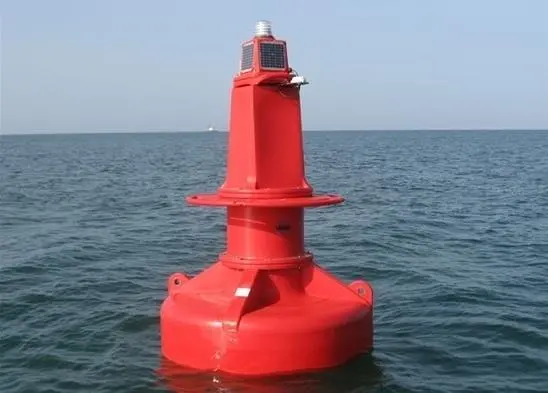
Together, they have the statutory responsibility for the provision of marine aids to navigation (AtoNs) around the British Isles.
The GLAs have now completed their latest five yearly comprehensive review of AtoN requirements for the waters around the United Kingdom and Ireland.
In determining the ongoing requirements, modern technology has allowed the GLAs to make full use of data on vessel traffic analysis provided through the Automated Identification Systems (AIS). This data together with the use of Geographic Information System (GIS) overlays including the consideration of leisure routes and a professional assessment of new or changing offshore developments has facilitated the formulation of decisions that will ensure the safety of navigation for the coming years.
In the review the following principles have been applied to ensure a consistent application around the coast. Generally, the lights system can be considered a complementary but secondary system to Global Navigation Satellite Systems (GNSS) such as GPS. Having one light in view is acceptable, a maximum range of 18 miles is considered sufficient for most lights, and rotating optics are no longer a requirement.
If practical, there can be a reduction in the amount and diversity of flash characters on lighthouse lights. Leading and sectored lights remain important but fog signals are no longer considered to be AtoN and will only be used as hazard warning signals. Major Floating AtoN, including light vessels, can have the same light character if not in close proximity.
The decisions were made following a wide scale consultation exercise with users and representative organisations across the whole spectrum of users from leisure sailors to large commercial operators.
The results include decisions to discontinue six lighthouses, 18 buoys, five fog signals, three beacons and one radar beacon. There will be a decrease to the range of light at 44 lighthouses and an increase to the range of light at two lighthouses. A decision has been taken to light 10 existing unlit minor AtoN, establish four minor AtoN and one radar beacon. There will be negotiations with representative local lighthouse and port authorities for the transfer from the GLAs to them of 53 AtoN that are considered to be primarily for the benefit of local navigation.
The changes will be programmed in over the coming years and will be fully promulgated in advance. The document is available on the respective websites of all three GLAs as follows:
Trinity House www.trinityhouse.co.uk, Northern Lighthouse Board www.nlb.org.uk, Commissioners of Irish Lights www.cil.ie
Related Articles
 VESSELS
 MARINE CONSTRUCTION
 VESSELS