![MaritimeJournal[Seawork]](https://www.maritimejournal.com/wp-content/uploads/2026/09/MaritimeJournalSeawork.svg)


Grzegorz Mazerski: Deltamarin
“I thought I’d understood vessel design during my university courses,” said Grzegorz Mazerski of Finish ship designers Deltamarin, “but the three years I spent in a Polish yard after college were the real school.”
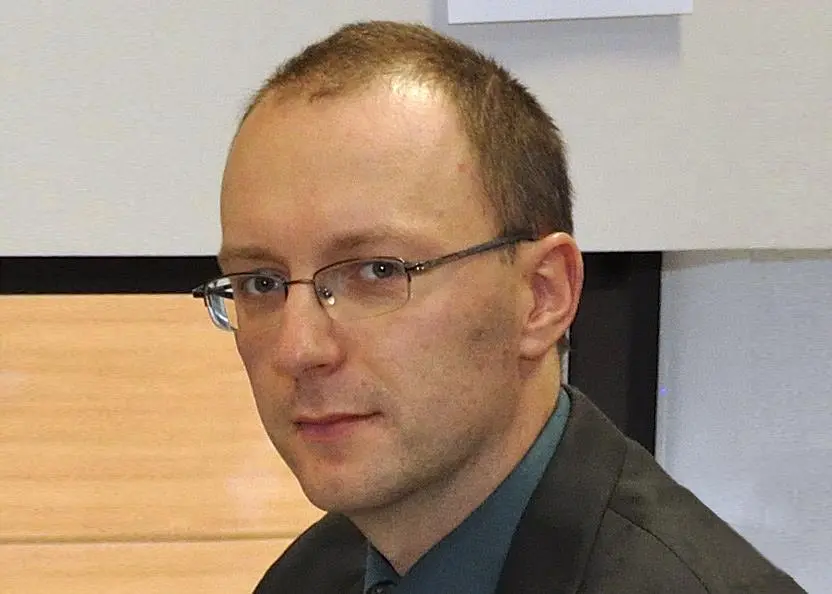
He admits it was “tough and stressful” but having survived it, he wouldn’t change history: “It set me up for the future. I’ve had difficult times since, but nothing was ever quite that hard again.” Having said this, he added: “It doesn’t mean there isn’t a lot of learning to do here at Deltamarin; we still have to investigate new technologies, regulations, market trends… but it’s planned and ‘relatively manageable’ by comparison.”
However, the ever-changing game has relevance for the smaller commercial boats, “which although they look very similar to the untrained eye, are actually very different under the surface”. He added: “These designs are always trying to fit more in, pushing the boundaries while keeping inside existing outlines.” While this seems to be a constant pressure, recently passenger vessels have come under a particularly intense spotlight.
“Certainly there is a growing expectation for environmentally friendly solutions on small harbour ferries,” he said, but not only are these boats in the public eye, they are also highly tailored to the route.
Unfortunately, this means the answers are less than straightforward. Mr Mazerski explained when Deltamarin went out to the market to find out what would be attractive in a small ecoferry, “the answers we got back were all very different” with just one overriding issue: “Whatever we did, it all had to be kept to within 80m, some of our clients have restricted quays so this became an absolute limit.”
Despite “the difficulty in finding anything like a universal solution” he and the team pressed on, overcoming stability performance, engine room and hydrodynamic issues. Space is not least of it he adds, the technology – including LNG fuel tanks – got squeezed in “and then someone asked, ‘how exactly does a maintenance engineer get in here?’” However, he’s obviously pleased with the result: the clean, green DeltaLinx design answers the needs of short-hop or coastal ferries “and yet still manages to hold everything inside an 80m hull”.
Does he have any ideas on the ‘workboat of the future’? Certainly cleaner fuels are one element, but he thinks that more novel structures might also have a part to play: “We put together a research vessel idea for a local industry: they wanted a very stable platform with plenty of room for things like laboratories, testing rigs, workshops and so on and so we immediately thought of a catamaran… which suited their purposes.”
It was only later he realised that “a trimaran, although more complicated, does make some things much easier… for example storage capacity issues are more easily resolved with a bigger, central hull.”
So whatever challenges the future holds it seems Grzegorz Mazerski will keep an open mind about their solutions.
By Stevie Knight