



Headline: The Future of Aids to Navigation
The growth of the marine leisure market, the increase in numbers of high speed, large craft and changes in traffic patterns coupled with emerging technologies are placing new demands on, and finding new solutions for, aids to navigation providers like Trinity House.
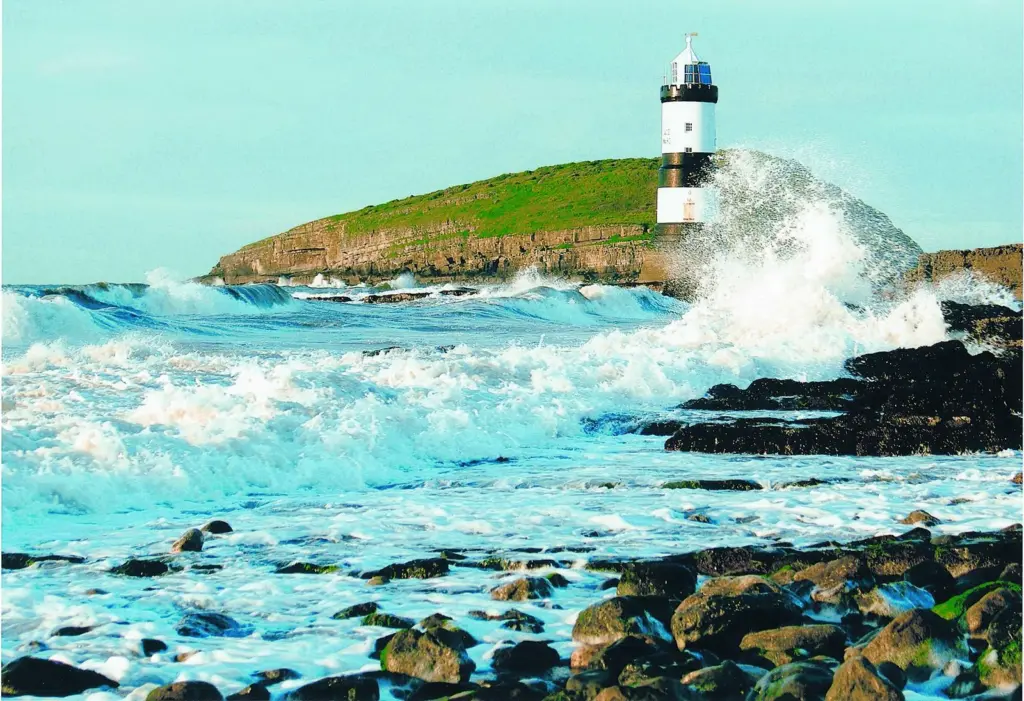
In the last 20 years there has been substantial changes in the way Aids to Navigation are provided and maintained which has economic and resource ramifications.
Twenty years ago the Channel lightvessel was automated and became the last manned Trinity House lightvessel. In November 1998, North Foreland’s lighthouse keepers left their positions for the last time and a new era of fully automated lighthouses began in the UK. Today we are in the final throes of converting all of our lighthouses to operate using solar power. All of our buoys have been changed from being acetylene or traditional battery powered to using renewable sources such as solar and wind power.
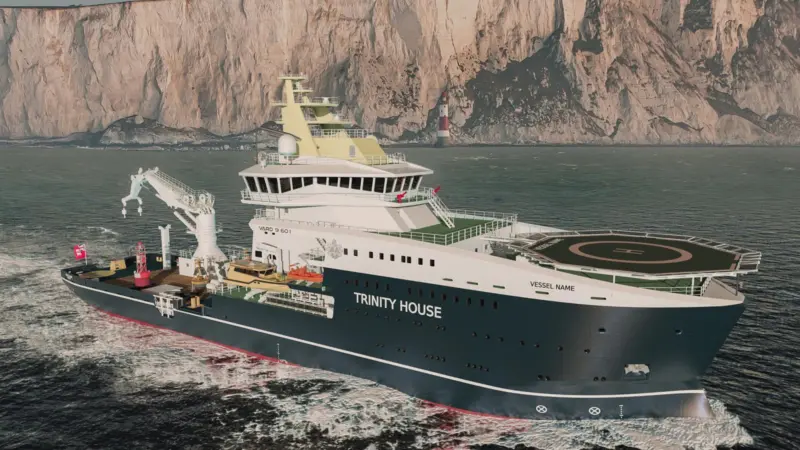
At that time Trinity House had a larger fleet of vessels and employed many more staff to service its Aids to Navigation in several depots dotted around the coast. Today Trinity House employs 300 staff based on three vessels and in four depots. The reduction in the number of resources required to service and maintain our aids to navigation, for example buoyage, has been realised by the development of modern engineering solutions, improved coating systems that protect the buoys for longer deployment and more efficient processing in the facilities ashore.
The reduction in overheads for maintaining vessels and depots and employing large numbers of people has had a large impact on the cost of light dues, the levy applied to commercial shipping using UK ports. The Government, which sets the level of light dues, has been able to reduce the charge by 50% in real terms over the last 10 years. This is because of the significant cost savings Trinity House has made by seeking alternative methods to ensure the continued safety of the mariner.
The savings that have been made have probably now reached a plateau with it being likely that as traffic patterns change, perhaps more floating aids will be necessary closer inshore as vessels pass closer to danger due to, sometimes inappropriate, confidence in electronic positioning systems.
It has been found that over the last 20 years some mariners are relying less on their individual skills to navigate waters safely and instead are increasingly dependent on their electronic gadgetry. Whereby 20 years ago a mariner would have considered the weather and visibility, nowadays a mariner is likely to risk going out in poor conditions because he is certain his electronic equipment will guide the way, which it may well do very accurately, until, say, a power failure.
Member states of IALA (the International Association of Marine Aids to Navigation and Lighthouse Authorities) are conducting a review of its maritime buoyage system that was agreed in 1976 and implemented in 1977. All aspects of buoyage are being considered with an example being the conspicuity trials currently taking place in the River Swale where synchronised lights on buoyage will improve the perception of the approach channel against background lighting and other distractions.
In the future there will still be a need for physical aids to navigation, such as lighthouses and buoys, but the way these are operated and powered will change as technology progresses. These traditional forms of navigation will be enhanced by electronic navigation methods (such as the eLoran system that Trinity House, along with the other General Lighthouse Authorities for UK and Ireland, is helping to develop, an independent and complementary e-navigation service to Galileo).
We fully expect to see these systems running complementarily to each other and GPS and vessels will have tri-receivers which will improve the integrity of the information received by the mariner.
It would be a foolhardy mariner who would not like to have the safety net of a clear bridge window and a pair of eagle eyes to ensure their safe voyage.
The future of aids to navigation is ever changing but the raison d’etre of Trinity House remains as it did 500 years ago, to aid the mariner’s safe navigation.
Captain Roger Barker is Navigation Manager at Trinity House.
Related Articles
 VESSELS
 MARINE CONSTRUCTION
 VESSELS