






Dredging uncovers medieval watermill
The remains of a 14th century watermill complex have been discovered at Blenheim UK
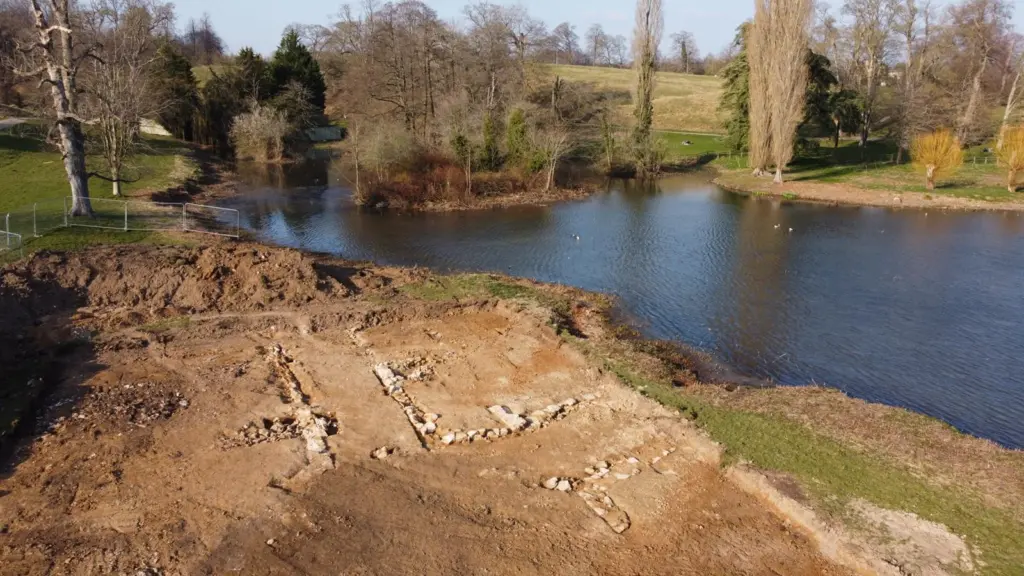
Archaeologists found the remains of the watermill complex ahead of major dredging work being undertaken to Queen Pool by wet civil engineering firm Land & Water.
“We are delighted to hear the discovery of some historic findings ahead of the dredge. The project site has been carefully monitored and assessed by Archaeologists so that any significant artefacts can be recorded and protected,” said Charlie Oakes, project manager at Land & Water.
“Wessex Archaeology have informed us that the remains found this year comprise part of the stone-lined mill race, directing water from the mill and are surprisingly well-preserved and substantial. They have also discovered stone water channels, which would have been part of a medieval mill site, recorded as being demolished in 1334 and which was partly excavated in the mid-1970s.”
Restoration works
The stone structures were uncovered at the UNESCO World Heritage Site by Wessex Archaeology prior to work commencing to ensure no historical remains were affected.
It’s believed the watermill is associated with Woodstock Palace, a royal hunting lodge that played host to no fewer than 16 British monarchs over its 700-year history with everyone from Ethelred the Unready to Henry VIII having spent time there.
Demolished in 1720 to make way for Blenheim Palace, it was also the birthplace of the Black Prince and used as a temporary prison for Queen Elizabeth I, who is said to have carved ‘Much suspected by me, nothing proved can be, Quoth Elizabeth prisoner’ on a window sill.
The restoration works will see Land & Water perform the first dredge of Queen’s Pool in over 100 years. The firm will look to remove 300,000 cubic metres of silt, enough to fill Wembley Stadium, to return the Capability Brown-designed lake to its original depth of two metres from its current shallow 30cm.
Related Articles
 OTHER NEWS
 SPONSOREDSTORY
 INDUSTRY NEWS