![MaritimeJournal[Seawork]](https://www.maritimejournal.com/wp-content/uploads/2026/09/MaritimeJournalSeawork.svg)





Finland files charges for submarine cable sabotage
Finland’s National Prosecution Authority has filed charges against a tanker suspected of severing five submarine cables by dragging its anchor on the seabed for 90 kilometres.
The Eagle S, which was carrying a cargo of oil products, is accused of deliberately damaging the cables in the Gulf of Finland on Christmas Day 2024.
Charges of ‘aggravated criminal mischief’ and ‘aggravated interference with communications’ have been brought against the captain and first and second officers of the tanker.
According to the prosecution authority, the suspected sabotage – which severed a critical power cable connecting Finland and Estonia as well as four telecommunications lines – resulted in a repair bill of at least €60 million.
The telecommunications cables were repaired within about a month, but the more complicated fix of the Estlink 2 Power cable was not completed until June 2025.
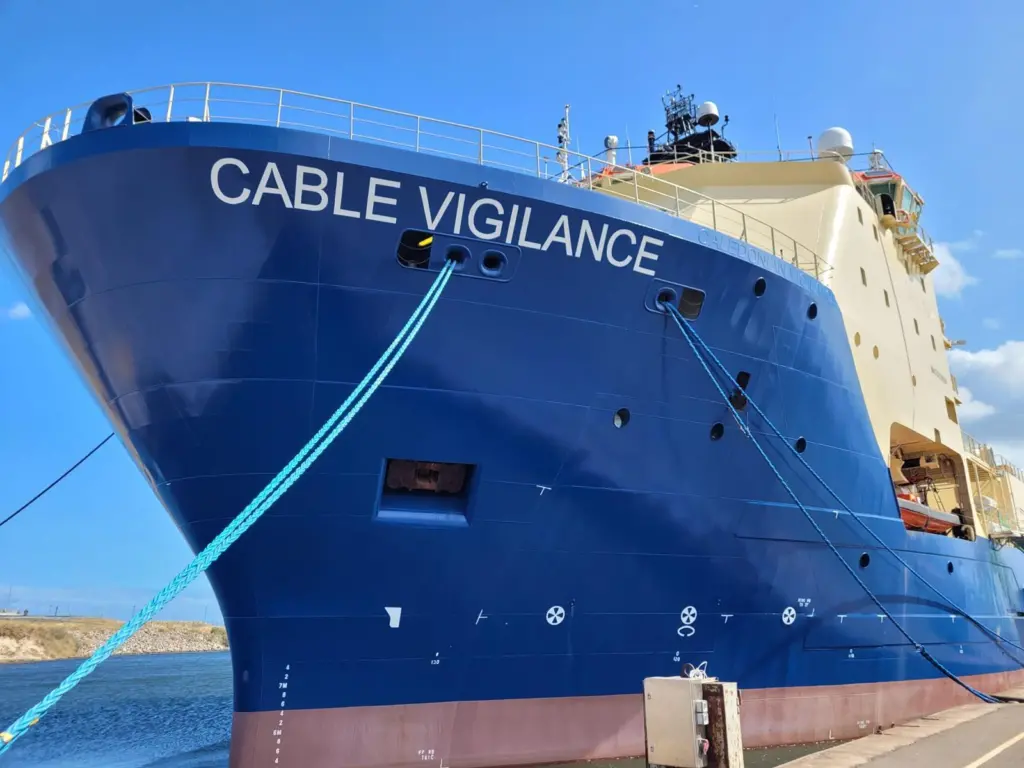
Cable-repair vessel Cable Vigilance, a 5,448GT cable-laying and repair high-speed vessel built by Louis Dreyfus Armateurs for working in harsh conditions with integrated cable tanks, cable machinery, jointing and testing rooms and its own dedicated ROV and plough capabilities, was called in to repair the damage.
The cable had to be located, seabed material had to be removed and the damaged section cut out and removed.
The vessel is owned by Malaysian firm Optic Marine Maintenance (the OMS Group), which owns cable-lay and repair vessels and barges, offshore supply vessels and tugs.
Tests were then performed on land before undamaged cables were sealed and replaced, the Estonian transmission system operator Elering said.
In March, Elering joined forces with Finnish electricity system operator Fingrid to sue the Eagle S shipowner for repair costs and compensation. According to Lloyd’s List, the owner is United Arab Emirates-based Caravella LLC-FZ, and the vessel is flagged under the Cook Islands.
“The disruption of electricity transmission and telecommunications cables with very high transmission capacity is also suspected to have caused a serious risk to energy supply and telecommunications in Finland, although services could be secured by using alternative connections,” the prosecution authority said.
“In the preliminary investigation, the defendants have denied that they committed the offences. They also consider that Finland lacks jurisdiction in the case, as the locations of the cable damages are outside Finnish territorial waters.”
A summons application has been submitted to the Helsinki District Court.