



Fire and myth: exploring EV battery dangers in shipping
A recent paper refutes what it says are misleading claims that battery electric vehicle (BEV) fires are more dangerous and frequent than those in vehicles with internal combustion engines (ICE).
Best practice and recommendations for the safe carriage of electric vehicles has been published by the International Union of Marine Insurance (IUMI).
“Fires in battery electric vehicles are not more dangerous than fires in conventional vehicles and are currently not more frequent,” says the paper, which was coordinated by the Research Institutes of Sweden and part of EU-funded LASH FIRE, an international research project aiming to reduce the risk of fires on board roro ships and a document that should be read in conjunction with IUMI’s report.
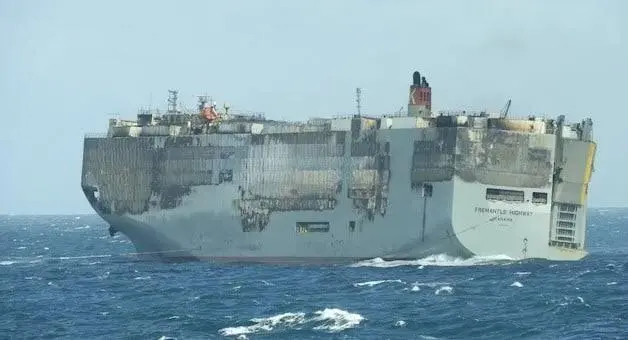
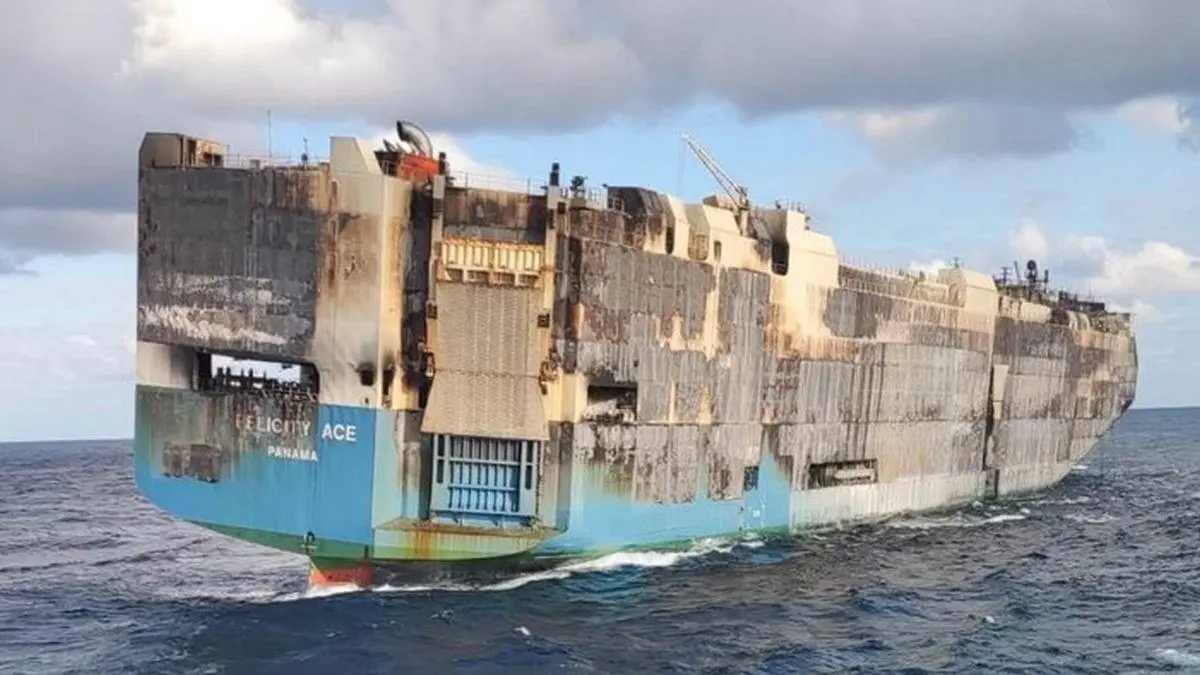
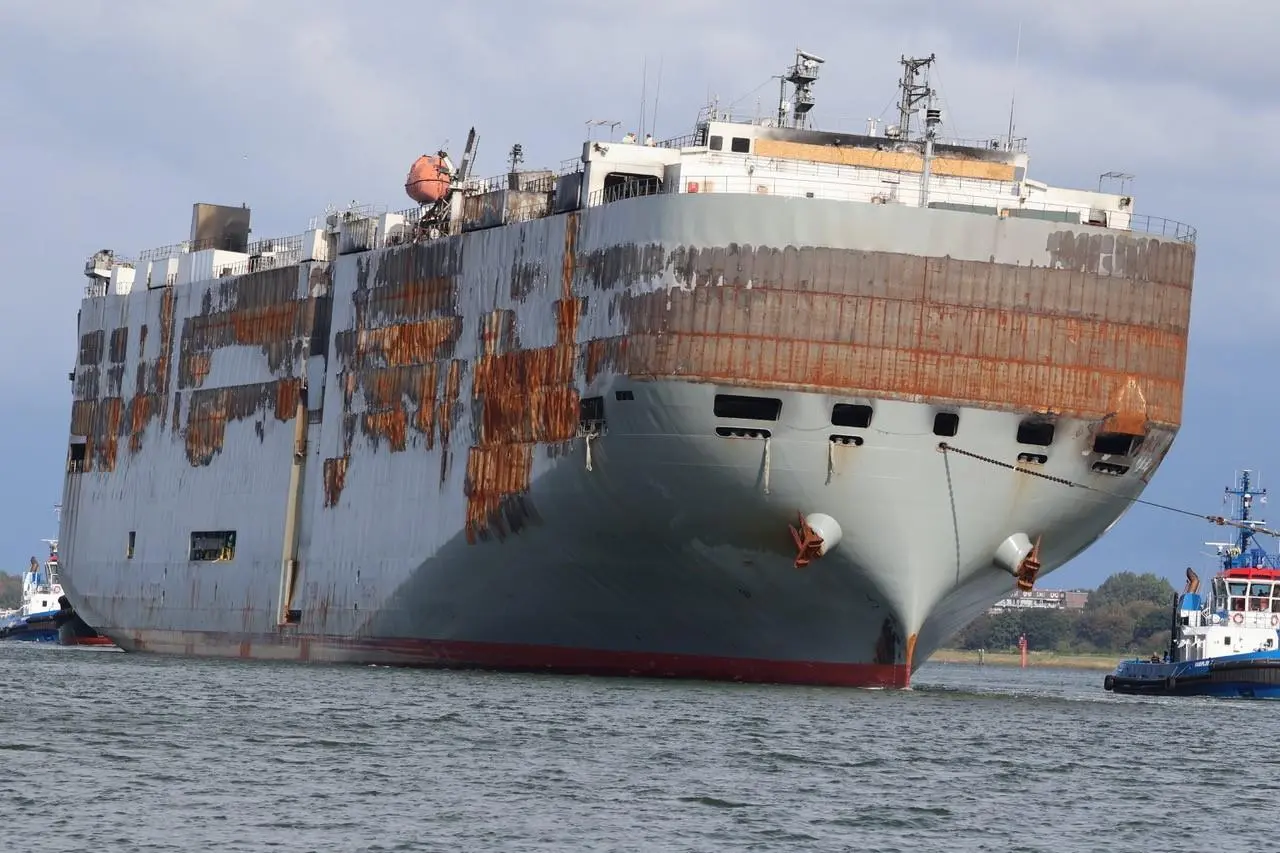
Recent fires on pure car and truck carriers (PCTCs) has prompted speculation that BEVs were the origin. Most recently, the fire on the PCTC Fremantle Highway off the Dutch coast led to reports that this was the case; yet those involved have said there is no evidence of that.
“There are currently no documented cases of factory-new electric vehicles causing a fire on board [a ship],” says the IUMI report. “In contrast, used cars may have had accidents causing mechanical damages which may negatively impact the intactness of the battery pack.”
In fact, current statistics from Sweden indicate that the probability of a BEV fire is lower than that of fire in an ICE vehicle, relative to the total number of vehicles.
An important safety feature of EV battery packs is their in-built battery management system (BMS), which monitors and controls the battery, ensuring the cell operates within safe operating parameters.
Alarming CCTV footage has shown the consequences of thermal runaway lithium-ion battery fires during charging in domestic settings, but the document notes that BMSs are not incorporated into smaller capacity and less sophisticated vehicles such as electric bikes or scooters.
With electric vehicles projected to match the sales of ICE vehicles by 2030 and surpass them by 2040, the shipping industry will be keen to keep pace with managing the safety of moving such vehicles by sea, ensuring the financial risks, and lives of ships’ crews with whom the buck stops when a fire breaks out, are adequately addressed.
Thermal runaway
The battery’s State of Charge (SoC) is a factor where experience indicates those at high SoC experience “more violent reactions” during thermal runaway.
While high SoC cells produce higher heat release rates, maximum temperatures and toxic gas concentrations during thermal runaway affecting the growth and peak heat release, it does not affect the total heat release.
When thermal runaway occurs the cell undergoes an unstable chemical reaction that is difficult to bring under control and the released heat potentially affects other nearby cells.
But studies by the Danish Institute of Fire and Security Technology and US-based National Fire Protection Association have determined that EV fires, once established, are largely fuelled by the car’s body and plastic interior, and the fire load is similar to that of ICE vehicles with around 20% (regardless of propulsion method) from the energy source and 80% from plastics and vehicle interior.
The report describes battery design as “inherently safe”, adding that thermal runaway can occur if a cell is abused for example by heat, mechanical damage or overcharging. Clearly there are differences in risk between ships carrying brand new vehicles and those carrying used EVs, such as car ferries.
Different ships
The report examines differences in design between PCTCs, roro and roro/pax vessels.
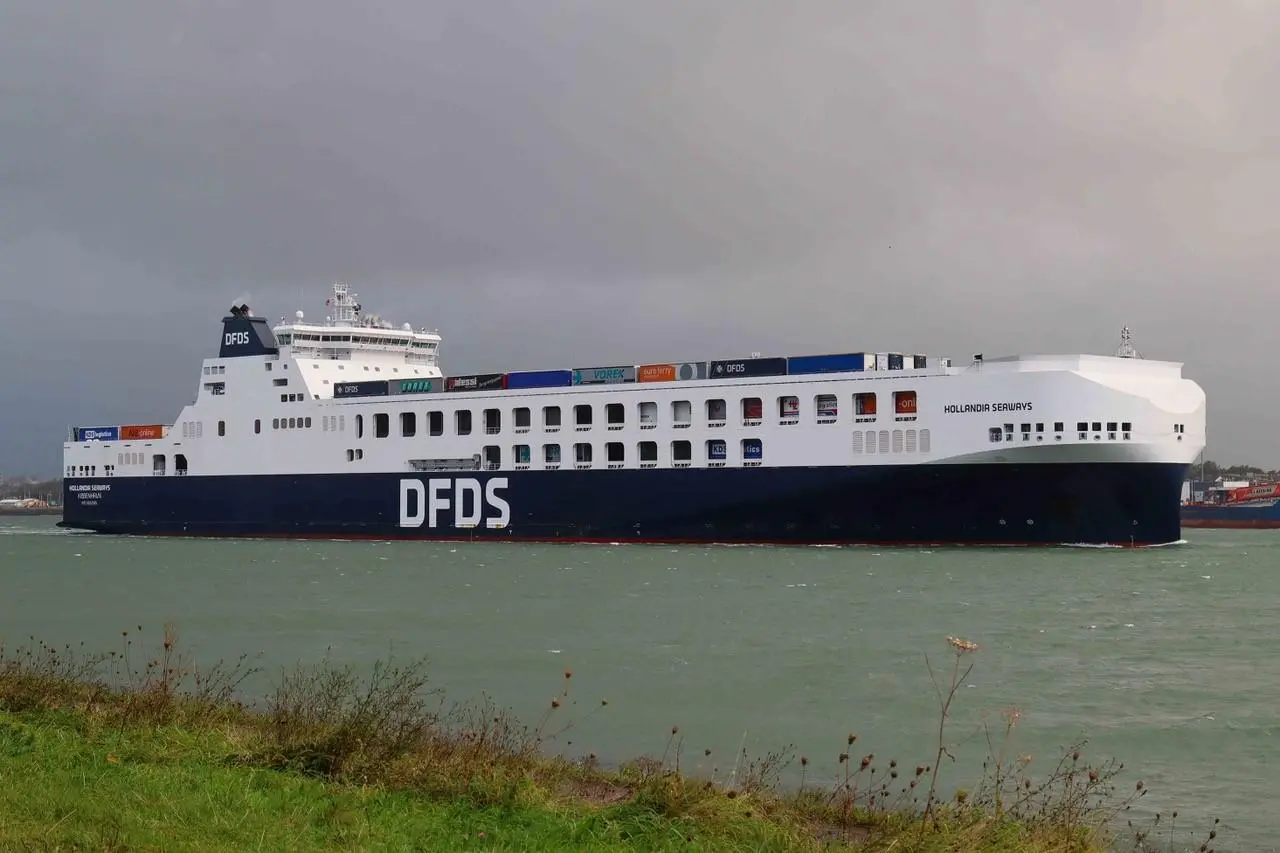
Roro spaces are categorised as open, closed or weather deck; open roro spaces having opening in the hull sides are described as closed space if not open or a weather deck. The large openings “make firefighting challenging” due to air flow, while fires in spaces with smaller openings are restricted by the available oxygen.
Passengers on roro/pax vessels are increasingly asking for EV charging facilities while on board, the report noting that charging stations and cables have to be approved by classification societies with charging cable connected by the crew.
The European Marine Safety Agency has also published guidelines on the carriage of alternative fuel vehicles in roro spaces.
It is pointed out that as well as roro/pax vessels carrying ‘used’ electric cars, they also transport buses and excavators that may have hidden damage that might be difficult to visually check.
PCTCs are purpose built for a variety of ‘rolling’ cargo, from cars to heavy construction equipment. They often have 10 to 13 decks, the heights of which can be adjusted allowing for lower-height cars thereby maximising cargo space. This results in very little space between the vehicles, which impedes quick access to specific cars.
Vessels face particular challenges when alongside, where CO2 extinguishing systems cannot be used due to internal doors and stern/side ramps being open for loading, whereby the CO2 cannot be contained within. Similarly, uneven air flows disrupt the flow of foam-based extinguishing agents. The report adds that ramps cannot be closed quickly and that external fire-fighting teams “are not familiar with the design of vessels and not trained to fight fires in such environments.”
EV fires are notoriously difficult to put out and the report says fire-fighting agents should be injected directly into the battery to enable efficient cooling.
With all vehicle fires early detection, suppression and boundary cooling are described as “critical actions” to stop the fire spreading. The risk of re-ignition is higher for a longer period with EVs and precautionary measures to avoid re-ignition of the traction battery must therefore be taken for an extended period after a fire has been extinguished.
Gasses from all types of vehicle fires are toxic and ships’ crews along with emergency responders will be aware of the importance of basic safety measures including PPE and avoiding smoke plumes in such situations.
Recommendations
The report finishes with recommendations and best practices drawing from the main body of the document. It concludes that with safety systems incorporated into EVs, new cars present a lower risk compared to used cars.
Vehicles should be screened and rejected before being allowed on board if there is any suspicion of a damaged battery.
On-board charging can be permitted if appropriate risk control measures are implemented, indeed charging on board is described as a “safer option” due to in-built safety mechanisms.
Gas detection systems, thermal imaging cameras and AI powered systems are also vital.
Full-scale tests show that drencher systems have the same impact on fires on-board roro and roro/pax vessels regardless if they are internal combustion or electric, and therefore considered effective to manage and control fire.
Planned revised amendments to SOLAS will include detection and alarm systems, along with fixed water monitor-based extinguishing systems to cover weather decks intended for vehicle carriage.
The recommendations also include doubling the CO2 capacity aboard PCTCs, given the success of such means tackling fires. The potential effectiveness of high-expansion foam is mentioned, and while unable to stop thermal runaway, such measures hindered the ignition of flammable gas including gaseous electrolyte from the batteries, effectively preventing heat transmission from a vehicle on fire as long as it was submerged in the foam.
Beginning in March 2024, the IMO’s Sub-Committee on Ship Systems and Equipment will start work on the “Evaluation of adequacy of fire protection, detection and extinction arrangements in vehicle, special category and ro-ro spaces in order to reduce the fire risk of ships carrying new energy vehicles.”
IUMI’s overarching approach is that with PCTCs and roros, different design, resources, equipment and circumstances have to be considered for each vessel. Individual risk assessments and tactics are essential to ensure an effective response in case of a fire on board.
In more ways than one the subject of safety with lithium-ion batteries can be described as a ‘hot’ topic that will clearly gather pace as the use of such technology increases.
The IUMI’s report is interesting in putting the risk element of the subject into perspective, while also pointing the way to managing this developing area and its effect on safety at sea, the document can be viewed at https://iumi.com/news/iumi-eye-newsletter-september-2023/iumi-publishes-best-practice-and-recommendations-for-the-safe-carriage-of-electric-vehicles.
Related Articles
 SPONSOREDSTORY
 INDUSTRY NEWS
 INDUSTRY NEWS