![MaritimeJournal[Seawork]](https://www.maritimejournal.com/wp-content/uploads/2026/09/MaritimeJournalSeawork.svg)


Hybrid vessel doubles up installation functions
A three-year installation contract will see one vessel install both foundations and turbines during its tenure at the Hornsea Three offshore wind farm.
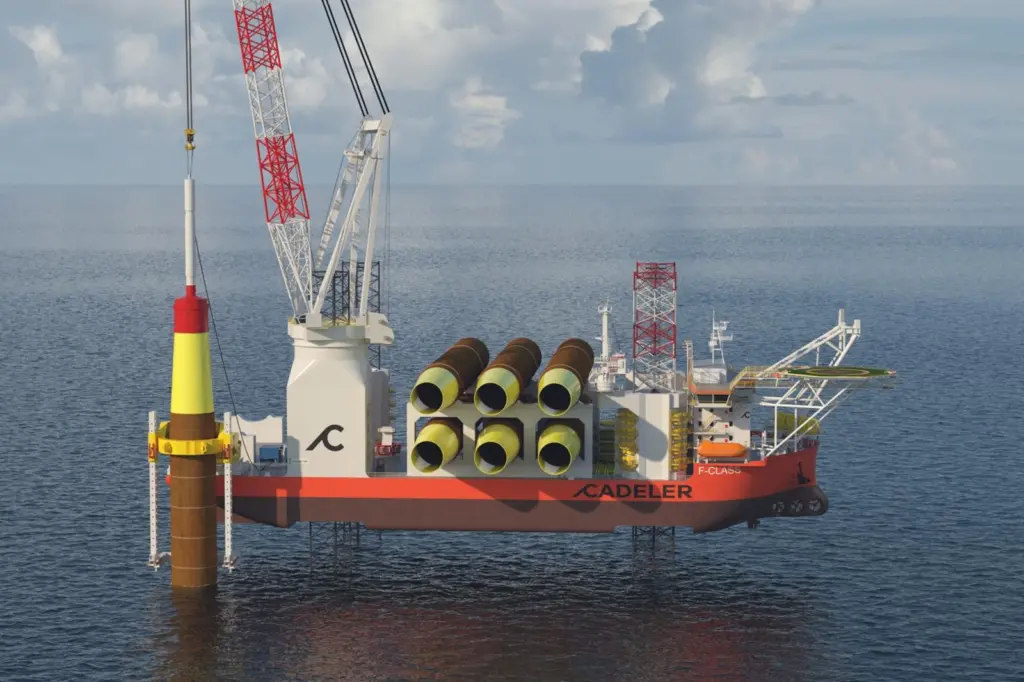
Cadeler’s agreement with an undisclosed customer will secure the use of its F-class vessel for a period of up to four years with a high level of flexibility for the client to freely choose to either install foundations or WTGs.
“We are very happy that we have secured a long-term utilization of our state-of-the-art F-class vessel until 2030. This is a clear testimony that our vessels are a good fit for the market, in high demand and that Cadeler is a valued business partner to our clients,” said Mikkel Gleerup, CEO of Cadeler A/S.
“We are looking forward to putting our new hybrid vessel to good use in the next years while executing projects in collaboration with our business partners.”
Clever convertion
During the project, Cadeler will make use of its new F-class vessel, featuring a unique hybrid design, allowing the vessel to convert from being a foundation installation vessel (WFIV) to a wind turbine installation vessel (WTIV) within a short period of time.
The first task of the F-class vessel is the installation of turbine foundations at the Hornsea Three offshore wind farm commencing in 2026. When the WFIV has completed the windfarm installation at Hornsea Three, it will start executing on this new agreement.
If all options stipulated in the new agreement are called, the value of the agreement will exceed €330 million for the vessel only. In addition, this agreement provides Cadeler the possibility of bidding on the transport and installation (T&I) scope. If successful, this will increase the overall revenue and profitability connected with the agreement even further.
With an intensified focus on energy security and a global need to drive the transition towards renewable sources of energy, large developers of offshore windfarms are increasingly looking to secure the necessary business partners and assets e.g. subcontractors, installation vessels and crew for longer terms to ensure timely execution of the series of projects they have in their pipeline.
This portfolio-based approach is also shared by the undisclosed customer in this particular case, which aims at securing the needed capacity for years to come to avoid bottle necks and delays in project execution caused by lack of assets.