![MaritimeJournal[Seawork]](https://www.maritimejournal.com/wp-content/uploads/2026/09/MaritimeJournalSeawork.svg)




SE Asia lures European offshore businesses
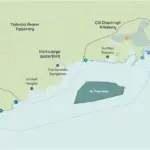
Bangladesh will get its first offshore wind farm Courtesy of Denmark’s Copenhagen infrastructure partners (CIP), offshore wind consultancy 4C Offshore has reported.
The Danish investment is valued at $1.3 billion to develop a 500 MW utility-scale offshore wind energy project, it says, and the Bangladesh government has given approval to start a feasibility study and implement the first phase of development.
The project will be carried out with Bangladesh’s Summit Group and Copenhagen Offshore Partners.
“This offshore wind project in particular presents a unique opportunity for the country to maximize the utilisation of its coastal resources, supporting the development of the ‘Blue Economy’”, says 4C Offshore. “The project comes at a crucial point in time for Bangladesh as despite ambitious clean energy targets, the country remains heavily reliant on fossil fuel imports, a comparatively costly power source due to global inflation-related price shocks.”
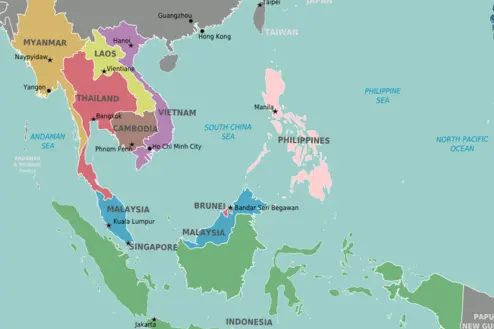
Offshore wind is a nascent industry in Southeast Asia, and European turbine manufacturers and vessel builders are bound to be pricking up their ears at the approval.
According to S&P global, Vietnam and the Philippines have been gaining traction among offshore wind developers and investors, with two thirds of offshore wind project pipelines jointly owned by international and local companies.
“Companies head-quartered in Europe make up 52% of total attributable capacity for offshore wind projects in a pre-construction stage, with firms from Denmark taking 10GW in net capacity,” it says.
About half of electricity generation in these economies, it says, still comes from coal.
“Offshore wind is well positioned to cater to the rising demand or displace old coal-fired power plants owing to their large capacity and high capacity factor relative to solar or onshore wind,” it says.
Problems such as obscure permitting processes and inexperience could be holding up the sector, but there is plenty of potential.
“It is also worth noting that the role of regional players – mainly Singapore, Philippines, or Thai-based developers and independent power producers holding power assets across Asian markets – is not prominent in offshore wind projects, unlike their active role in solar or onshore wind projects,” S&P Global says. “This is primarily owing to their limited experience in offshore wind relative to their European peers.”

Related Articles
 SEAWORK NEWS
 INDUSTRY NEWS
 OTHER NEWS