



The shipping fuel mosaic: Shell interview
Dr Alexandra Ebbinghaus talks to Maritime Journal about how Shell is looking for ways to decarbonise its shipping fuel offering.

Dr Ebbinghaus has worked with Shell for more than 25 years, including fuel R&D and commercialising alternative energies, before joining Shipping & Maritime in 2013 in the strategy team to focus on environmental aspects, policy and advocacy. In 2021 she was appointed GM Decarbonisation. She has a PhD in Mechanical Engineering from the University of Sheffield, UK, and a Master’s degree in business studies from the University of Hagen, Germany.
For oil and gas firms, the rising tide of renewable energies and alternative fuels must be a bit of a headache.
Governments worldwide are not only giving huge subsidies to renewable energy technologies, they are also implementing policies to eliminate the use of fossil fuels entirely, country by country, in one sector after another – Denmark, for example, cancelling all North Sea licensing rounds in 2020 in a bid to end oil and gas production completely by 2050.
A single realistic alternative to diesel as a shipping fuel has yet to emerge, so for now the oil companies do have a market – but they are awake to the threat and Shell, for one, is ramping up its work in alternative fuels to ensure it has a future.
Exploring LNG
Talking to Maritime Journal, Alexandra Ebbinghaus says it is vital to start looking at the options.
“Nobody knows what the future looks like, so we are looking at having a closer relationship with some of the key customers to discuss different options,” she says.
“LNG is a fuel we have been pushing and selling for a long time – it’s taken off very slowly, which shows how difficult it is to introduce a new fuel technology and find customers. There are just a few hundred LNG vessels today out of 50,000 commercial vessels. When you look at the orders of new vessels, depending on the sector, eg car transporters, overall 20-30 per cent are choosing LNG.
“But there are problems – the tanks need to be cryogenic, and converting older vessels isn’t worth the cost. A modern engine could be updated relatively cheaply, but the lifespan of an older vessel is smaller so the investment needs to be paid back in a much shorter time.”
In a Memorandum of Understanding signed with shipping firm CMA CGM, Shell has agreed to explore the practicalities of LNG.
Under the MoU, Shell will start supplying liquefied natural gas to CMA CGM’s 13,000 TEU vessels in the Port of Singapore, with LNG bunkering undertaken at the same time by FuelLNG, a joint venture between a unit of Shell Singapore (Shell Eastern Petroleum) and Keppel Offshore & Marine.
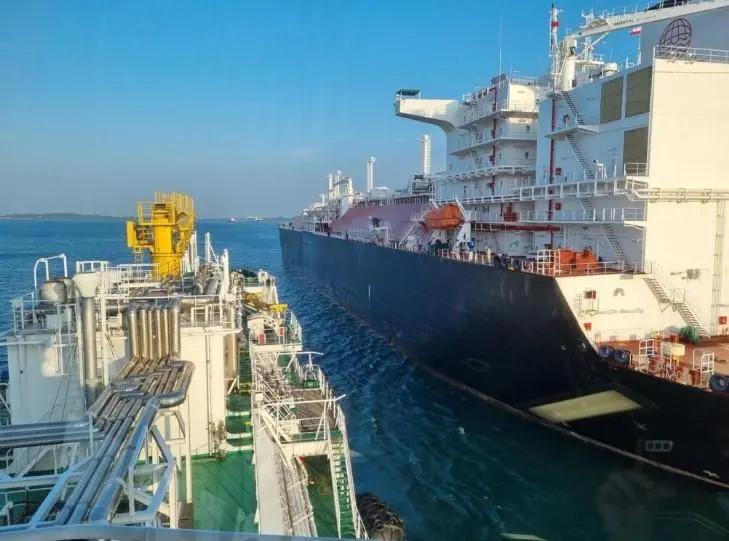
It will use the bunkering tanker FueLNG Bellina, which fuelled the CMA CGM containership Scandola with 7,100m3 of LNG for the first time as a ship-to-ship transfer.
An 18,000m3 bunker vessel will come into service in 2023 to strengthen the reliability of bunkering operations, Shell says.
“CMA has decided to invest in an LNG vessel and we are looking at how we can improve the performance and emissions, so Shell is looking at catalyst solutions. At the moment you still have methane emissions – unburnt methane going through the engine (methane slip),” Ebbinghaus says.
The MoU also encompasses work on liquid biofuels, bio/e-methane (to LNG), and bio/e-methanol for new and existing vessels.
It will also look at hydrogen blending, methane slip abatement technologies and fuel cell development.
Biomass option
In September 2021, Shell confirmed a final investment decision to build an 820,000 tonne/year biofuels facility at the Shell Energy and Chemicals Park, Rotterdam – formerly known as the Pernis refinery.
The facility, it is claimed, will avoid nearly 3 million tonnes of carbon dioxide emissions by producing so much renewable diesel that it would be the same as taking more than 1 million cars off the roads.
“You’re benefiting from nature, taking the biomass, compressing it – all you have to do is take it out of the ground and refine it,” says Ebbinghaus.
But of course there are many downsides – it’s more expensive than crude oil and you don’t get as much out of it, and while costs might come down long term – “people are kidding themselves if they think it will be cheaper than oil.”
There’s also the competition from other sectors, which could leave only scraps for maritime.
“A farmer could easily grow enough biomass to fulfil all the requirements of oil marine fuel. However, currently, only 20% goes into transport. At the moment biomass is used for power – a lot is used in developing countries for cooking. You have chemical, building industries using biomass. And it’s very voluminous – you can’t transport it so you’d have to co-locate your ethanol plant.
“For shipping, you could use a number of treatments – thermochemical treatment, gasify it, use a thin gas to make a liquid fuel, like methanol, which Shell is also trialling.”
Moving on to methane, Ebbinghaus says that the losses during the upstream and downstream of engines leaking it mean that the best engine has an improvement of just 23% over conventional diesel engines – and can be as low as 5%.
Yet the costs are competitive to a marine gas oil, unlike biodiesel, which may be three times more expensive.
Accepting a fuel mosaic
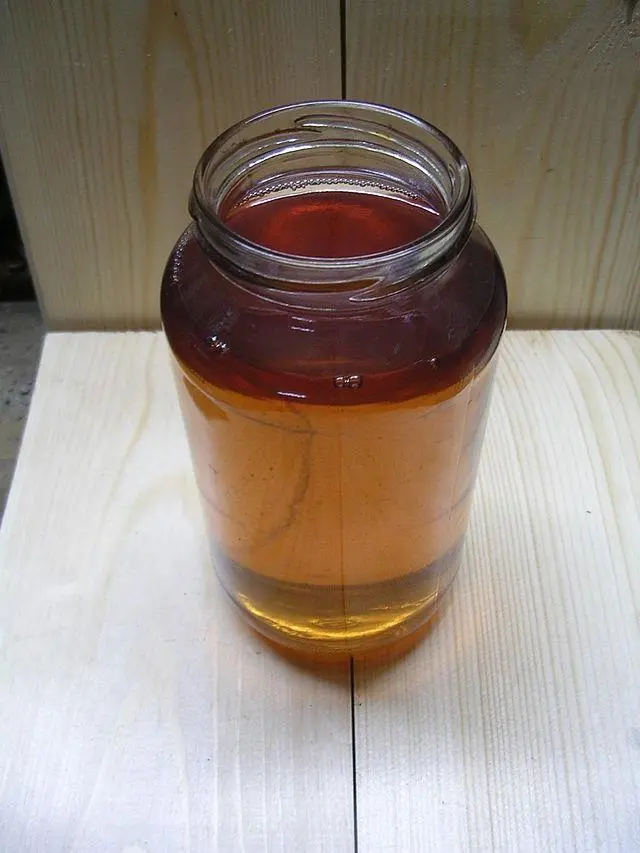
“Nothing can beat fossil fuel on all counts, and it never will,” says Ebbinghaus. “Diesel is cheap to manufacture. Biomass, for example, is already as expensive or more than crude oil but you don’t get as much out of it.
”No fuel alternative has the same scale, energy density, comparative cost and therefore competitiveness as fuel oil. We therefore expect different ship types or shipping sectors to transition from today’s fuel oil to different zero emission fuels and to use different fuels in the transition – this what we call the fuel mosaic.
”We cannot afford to wait to decarbonise shipping until the mass availability of zero-carbon fuels and so shipping needs to use the low carbon alternatives that are available now, such as LNG and biofuels in combination with all energy efficiency measures.
“The only low-carbon fuel we have today which is genuinely competitive is LNG. It’s another fossil fuel but it’s a lower emissions option. The advantage is it’s just methane, CH4 – the energy comes from carbon and hydrogen, so the CO2 emissions are much lower than when you’re burning a longer chain, which has more C compared to H. It’s a 30% reduction.
“We like to say we are data driven, experience driven – we don’t work on what we believe to be true. This is why we’re saying we don’t have enough data yet to say ammonia works or doesn’t work, hydrogen works or doesn’t work.”
And there’s always perception to take into account. Cruise ships, says Ebbinghaus, are extremely unlikely to opt for ammonia as a power source.
“If you knew you were going on a cruise ship that was powered by ammonia, and that the ammonia might kill you, you might be a little less eager to go on that cruise,” she says. “It’s the same for ferry operators.”
Shell is looking at ammonia to monitor and understand how it can be used as a marine fuel, with a particular focus on ensuring the safety requirements are met, she says.
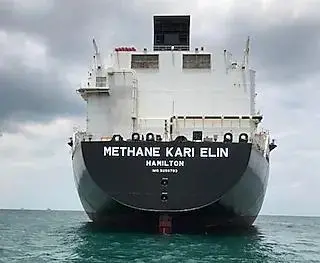
”Shell is involved in working consortiums to share our technical expertise and assess how shipping can overcome the toxicity challenge. We will continue to monitor the relevant signposts for safety, these include dispersion studies indicating the minimum safe distance for bunkering activities, combustion efficacy and safe operations in bunkering, risk containment and response procedures.”
For larger ships, bunkering outside ports could be possible, where it wouldn’t be an option in short-sea shipping, which on the other hand might work on hydrogen or compressed hydrogen.
“We are definite that by 2050 we will be a net carbon company,” she says. “Overall, all of the products we sell will be net zero, so that any of the fossil fuels we are selling will be offset with other products.
“We know a lot about shipping. We have our own fleet of vessels, tankers and so on. And it’s important to get the different views and work with technical departments and operations to develop new solutions that each can then take out and use.
“We are seeing a fuel mosaic. There isn’t going to be one fuel for all. Our strong message is that there’s not going to be a single fuel and people should not wait for that fuel to emerge.”
Related Articles
 OTHER NEWS
 OTHER NEWS
 SPONSOREDSTORY