![MaritimeJournal[Seawork]](https://www.maritimejournal.com/wp-content/uploads/2026/09/MaritimeJournalSeawork.svg)





UK expected to extend emissions penalties to smaller vessels
The UK is expected to press ahead with extending its Emissions Trading Scheme (UK ETS) to vessels below 5,000GT, with policy makers set to examine the move in September.

A conference briefing issued ahead of a Westminster policy forum on the future of the UK ETS says attention will turn to expanding the scheme beyond its initial maritime scope following the inclusion of domestic maritime emissions of vessels above 5,000GT from this month.
“The potential for further maritime inclusion will be explored, drawing on responses to the Department for Energy Security and Net Zero consultation on extending coverage to vessels below the 5,000 GT threshold,” it says.
The conference agenda says discussions will focus on the industry’s experience since domestic maritime emissions were brought into the UK ETS in July, including sector readiness, monitoring and reporting requirements, and the introduction of allowance surrender obligations. Delegates are also expected to consider the proportionality of extending the scheme, its impact on competitiveness and the costs for operators.
The agenda also highlights practical challenges associated with compliance, including monitoring, reporting and verification (MRV) requirements and what it describes as the ‘double-surrender approach’ during the transition period, requiring operators to surrender allowances both for fuel use and reported emissions.
Regulations unlikely to stop at 400GT
“There has been transparent conversation for a number of years of the intention to explore emissions regulations for vessels 400GT and above from a wide range of organisations and regulators, and for some period owners and shipyards have been steering vessel sizes to 399GT and below purposefully in expectation of this change,” said Workboat Association CEO Kerrie Forster.
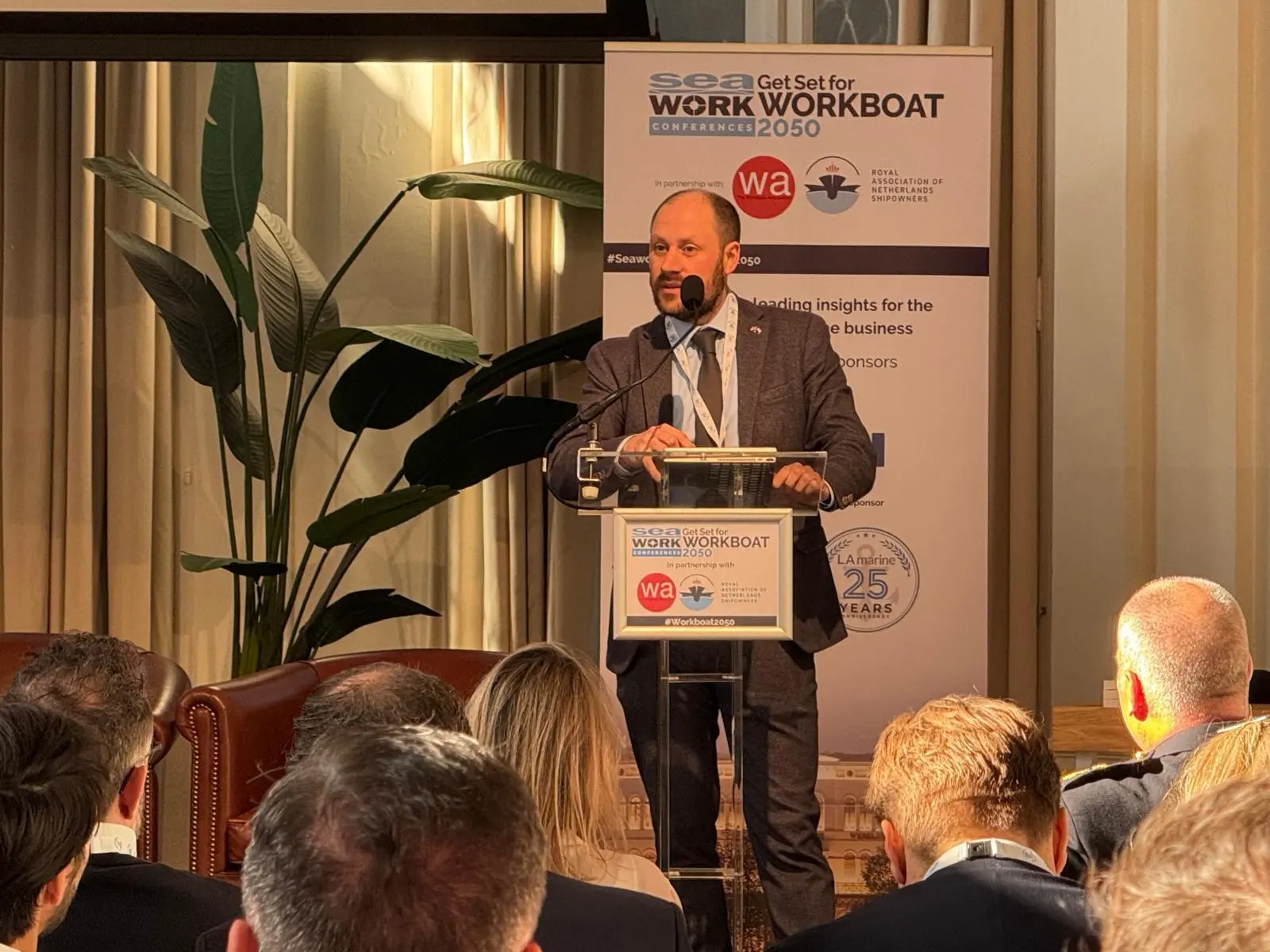
”But I would also expect at some point in the future this pressure will also be placed on vessels 400GT and below. As emissions control matures and monitoring, reporting and technical advances develop, it can only be expected that regulation will develop too, from focusing on larger emitters at first, towards smaller and smaller emitters over time.”
The event will bring together officials from the Department for Energy Security and Net Zero, the Department for Transport, the Maritime and Coastguard Agency and other government bodies alongside industry stakeholders to discuss the future development of the UK ETS.
While the document is a conference briefing rather than a government policy announcement, it indicates that extending UK ETS coverage to vessels under 5,000GT remains firmly on the policy agenda as ministers consider the next phase of maritime emissions regulation.
Smaller vessels could follow EU approach
“It’s correct that the UK ETS currently applies only to vessels of 5,000GT and above, with the scheme set to include offshore vessels of 5,000GT and above from 2027,” said Jacob Clausen, director of Performance with Norwegian maritime technology company NAVTOR.
“While smaller vessels are not in scope for the short-term horizon, there are indications that the UK may consider lowering the threshold to include vessels between 400GT and 5,000GT as part of the planned 2028 review of the UK ETS scope.
“A key factor influencing the expansion of UK ETS is the development in the EU MRV and EU ETS. The EU has extended its EU MRV reporting to include offshore vessels of 400GT and above and is scheduled to review vessels between 400GT and 5,000GT should also be brought into the EU ETS. The outcome of this review is expected to influence the UK and any decision to extend the scope of the UK ETS to smaller offshore vessels and workboats.”

The EU’s 5,000GT threshold still applies to most other vessel types, including container ships, tankers, bulk carriers, passenger ships and Ro-Ro vessels. The extension aims to improve emissions data from smaller commercial vessels without bringing the entire sub-5,000GT fleet into scope.
If the UK were to introduce reporting requirements below 5,000GT, it would go beyond its current framework and could either mirror the EU’s targeted expansion or adopt a broader regime covering additional vessel types, such as tugs, dredgers, workboats, research vessels and small domestic passenger ferries.
Conference details
The UK conference will be held online on the morning of 14 September 2026.
Further sessions will consider the UK’s wider approach to carbon pricing as the government prepares to introduce the UK Carbon Border Adjustment Mechanism from January 2027, alongside work between the UK and EU on potential linkage of their respective emissions trading schemes.