




Workboats are ready for automation — the question is: Are we?
The workboat sector is ripe for automation, a panel and its audience agreed at one of the many sessions at Europort’s Smart stage this week.
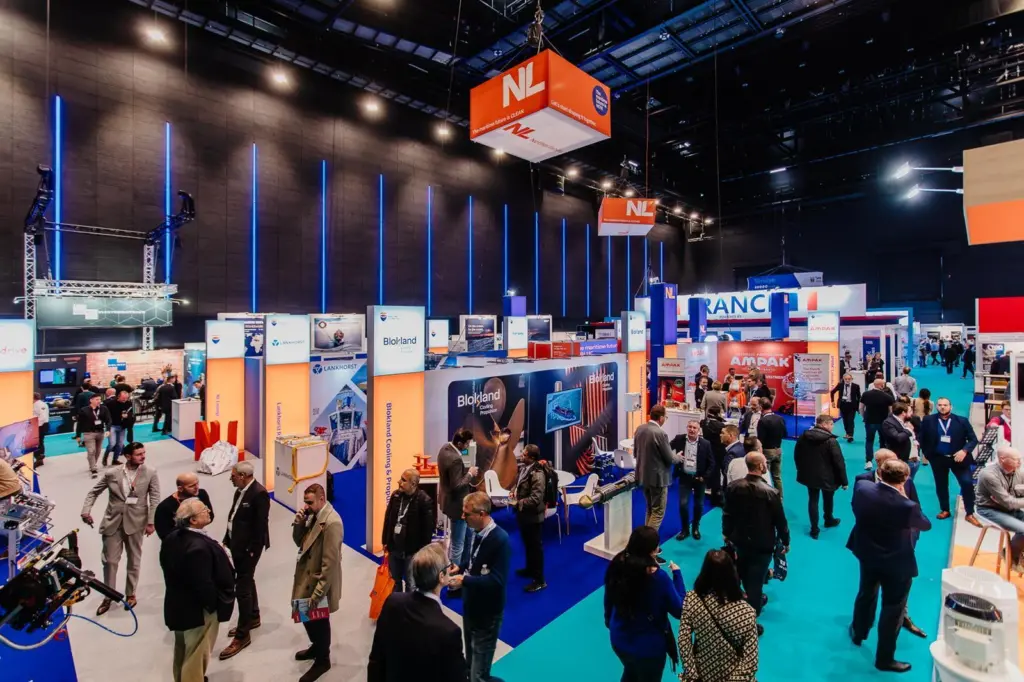
The themes running through Europort this year are almost all related to sustainability and decarbonisation, which to a relative newcomer to the industry begs the question what was talked about before CO2 became an issue.
Hand in hand with sustainability goes digitalisation and electrification and with that, the benefits of autonomy, which is being developed apace and in incredible ways, mainly with the idea of making things better, and cheaper.
In shipping it’s also about safety, and along with the fact that seafarers are retiring and not being replaced by the younger generation, if vessels can be operated without physical crews on board it makes complete sense.
“Technical feasibility is not an issue any more,” said moderator Hans-Christoph Burmeister, head of the Sea Traffic and Nautical Solutions department at Fraunhofer-CML. “So what is the biggest barrier to scaling autonomy?”
Could the barrier be a human one?
“What is the role of the human that we would like to see in moving a person from on-board ship to a static room looking at a screen?” asked Tije Vos, chief commercial officer at VSTEP, the Rotterdam-based software company that develops maritime simulation and training.
“With the practical changes, an operator who used to be on-board a vessel needs to be taught to look at different parameters.”
“It’s connected,” said Sofien Kerkeni, at D-ICE Engineering, a French software company that uses digital twins, hydrodynamics and robotics to reduce emissions and improve safety at sea. “If you have people operating systems from the shore, the systems on board need to be reliable. The good news is that we can make the path to autonomy safer.
“The main benefit for the shipowner is safety and security. Ships are getting more and more complex as we transition to autonomy and decarbonisation. People on board are not used to this but remote offers a way to support them.
“When you are on the ship you are using your senses to adapt. For example, when wave heights reach four or five metres and manual takeover becomes necessary, how do you know that autonomy can do that as well as a human? We have this sense but do the new technologies have this?”
Vos says VSTEP is doing it with digital twins, with AI the enabler. “Technology is moving very fast. We need to bridge the gap between people on board and on shore,” he said.
He said that in one trial they had carried out using a digital twin, on-board pilots allowed the autonomous technology to operate the vessel for 99% of the time.
“We need to take it step by step and build assurance that they are safe solutions,” said Kongsberg Program director Kristian Osnes. “There are so many systems on board ships and when you start building autonomous and remote systems, crew have to handle the supporting systems as well.”
“AI is the enabler,” said Vos. “But autonomy doesn’t remove the human, it moves the human.”
Regulation needs to be slow
“Technology is emerging but moving from pilots and into fully commercial solutions is a lot about the classification and developing the rules,” said Kongsberg Program director Kristian Osnes. “But don’t start too early with regulations – we need to build knowledge at the same time and in smaller steps.”
Kerkeni said industry sharing would be important before regulations were implemented.
“Today ships are consuming much less fuel and we need to know how the ship reacts with the environment,” he said. “We are working with research institutes etc – and then regulations will be applied with this data.”
Vos pointed to inland waterways, where autonomous docking has been happening for a while with no regulations.
“There are 1,500 inland vessels with autonomous pilots, track pilots,” he said. “No regulations. Sometimes you need it to come into the market first, then regulation follows.”
Reach Remote
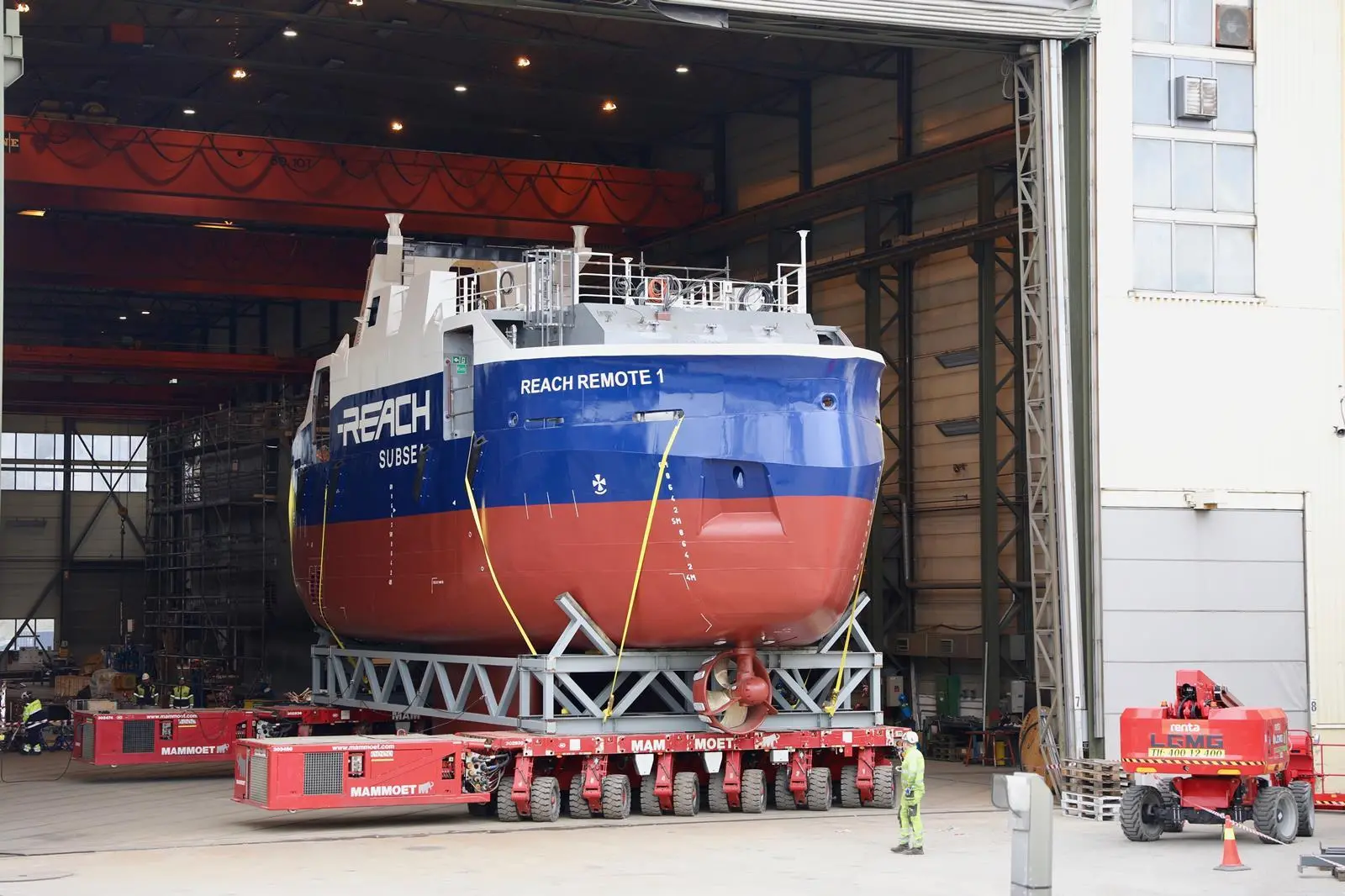
Kongsberg’s Reach Remote autonomous vessel, the first of up to four that have been ordered by Reach, is currently working on the North Sea without a single member of crew on board.
“It was built from day one as a remote vessel,” said Osnes. “The less energy you use, the more emissions you cut: while many people are looking at alternative fuels, a large part of this can be done with smaller vessels fully, with remote control. We see so many technical platforms on a ship and we need them to work together to bring them to an autonomous level.
“Autonomy and remote capabilities can be an important driver of both costs and emissions. It’s always about the Total Cost of Ownership – there has to be a reasonable payback and operational costs must be lowered.
“To be able to run a more efficient operation is as important as the staff on board, and different ship designs will need to be brought to the table.”
Osnes admits that while Reach Remote is uncrewed and does not need a support ship, strictly speaking it isn’t autonomous – it is remotely controlled.
It is the next step to autonomy,” he said. “We need that learning to get there, to build the business case.”
Related Articles
 OTHER NEWS
 SPONSOREDSTORY
 INDUSTRY NEWS