


Italdraghe weed harvester for Kenya
Although best known as a dredger manufacturer, Italdraghe SpA, also has considerable experience in designing and building weed harvesters.
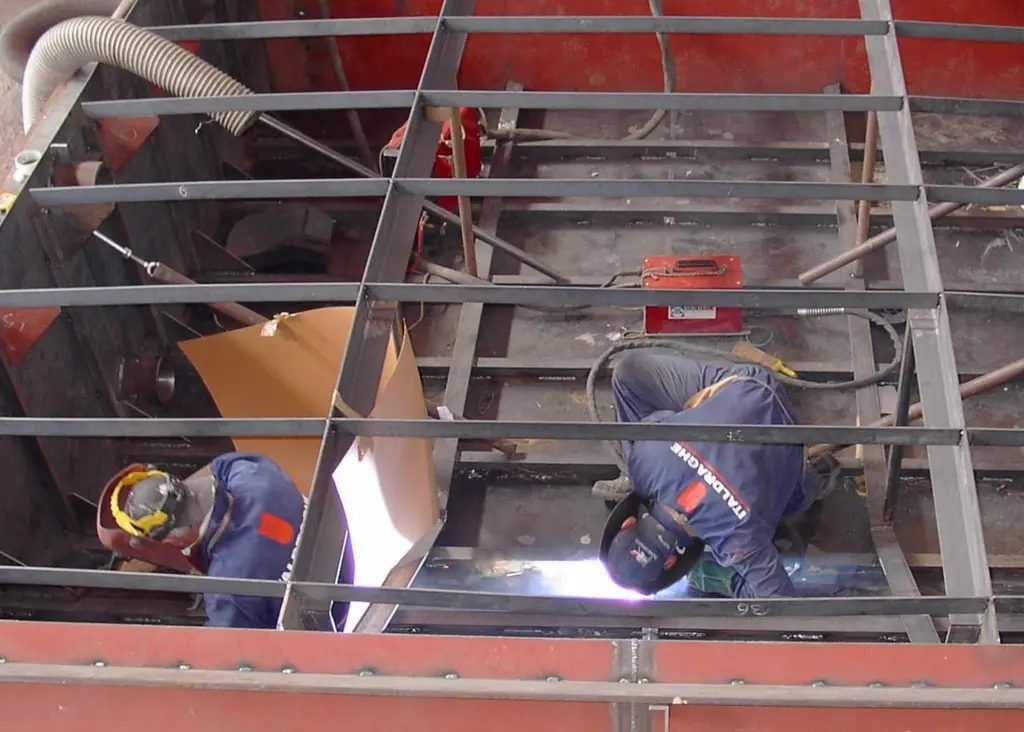
In fact, one of the vessels currently under construction in its shipyard near Italy’s Adriatic Sea, is a purpose-designed harvester for the Kenyan Government.
The harvester will be supplied thanks to International Development Association to help solve the serious problems caused by the water hyacinths that, for the last two decades, have been taking over parts of Lake Victoria, Africa’s largest lake.
The invasion of the hyacinths, originally native to South America, is having devastating effects on the lives of those that live around the lake. Mats of dense vegetation, which grow at a considerable rate, block boat access with obvious negative effects upon transportation across the lake. The fishing industry suffers considerably because not only do the hyacinths prevent fishing boats from launching but they also deoxygenate the water and smother native aquatic plants which provide essential nourishment for young fish populations. The thick-growing hyacinths, despite their beautiful flowers, are also a breeding ground for a range of disease-bearing insects, including mosquitoes. They can interfere with water treatment, irrigation, and water supplies and in some badly-stricken areas the plant has even blocked hydroelectric plant supply intakes, interrupting electrical power for entire cities.
The harvester, 9m long and 3.5m wide, will feature a 500 litre capacity fuel tank to allow for 30 hours’ continuous operation. It will be powered by an Iveco N 45 ENT diesel engine with a power of 75kW at 2,200 rpm and will be propelled by two hydraulically operated paddle wheels specially-designed to not become clogged up by vegetation.
On the front of the harvester there will be a cutting head with a conveyor belt that will transport the cut vegetation on board the harvester. A second belt, installed on deck, will then convey the vegetation collected by the first belt into the stocking area. From here, a foldable unloading conveyor belt at the rear of the harvester will offload the vegetation onto the shore.
By Larz Bourne