![MaritimeJournal[Seawork]](https://www.maritimejournal.com/wp-content/uploads/2026/09/MaritimeJournalSeawork.svg)

Drilling begins on Rotterdam’s CO2 capture
Drilling has started beneath the seawall at Rotterdam’s Maasvlakte in the Porthos project, aimed at storing around 37 million tonnes of CO2 in depleted North Sea gas fields over the next 15 years.
The aim of the Porthos project (Port of Rotterdam CO2 Transport Hub and Offshore Storage) is to use Carbon Capture and Storage (CCS) to return CO2, produced through the burning of fossil fuels such as coal, gas and oil, to depleted North Sea gas fields.
It is part of the Netherlands’ climate objectives to reduce greenhouse gas emissions by at least 55% in 2030 compared with 1990 and be climate neutral by 2050.
Around 14% of the country’s CO2 emissions originate from the Rotterdam port area and CCS is widely considered to be the fastest way to substantially reduce them for a relatively low cost, allowing the chemical sector, hydrogen producers and oil refineries to reduce the impact of emissions in the short term while developing longer-term objectives of sustainability.
The Porthos project will store about 2.5 million tonnes of CO2 per year for 15 years, reducing CO2 emissions from Rotterdam’s port industry by around 10%.
Partnership
Porthos is a Dutch partnership between Port of Rotterdam Authority, energy network operator Gasunie and energy transition specialist EBN, each contributing their respective expertise in the local situation and market, experience with gas infrastructure and transport and expertise in deeper soil layers and offshore infrastructure.
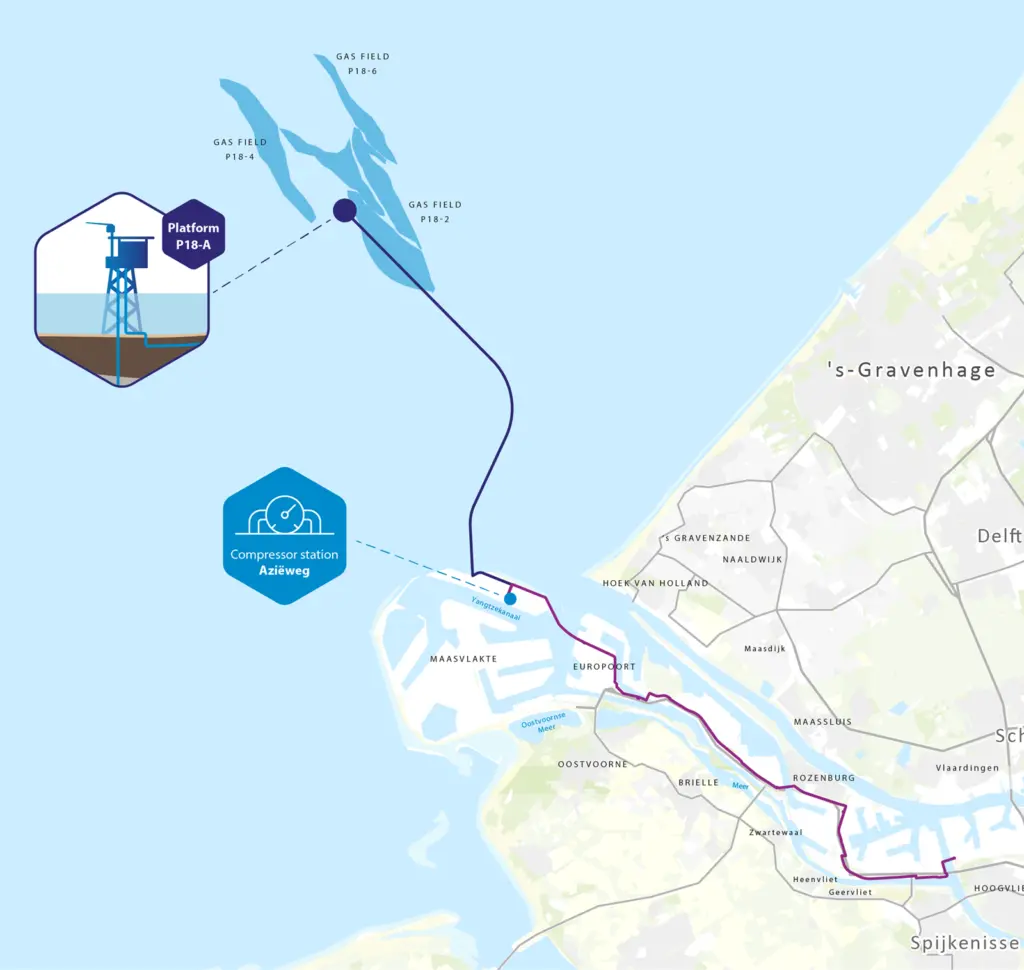
The CO2 will flow along a 30km long collective pipeline from the Botlek area through Europoort to a compressor station at Maasvlakte. The pipeline passes through energy-intensive areas including Shell’s Pernis complex, Europe’s largest oil refinery, and similar industrial plants at Europoort.
The collected CO2 will flow in a gaseous state at a pressure of 35 bar through the pipeline, which has a diameter of around 108cm. The pipeline itself is housed in the existing pipeline corridor and entrenched section by section, the corridor ranging in width from 10m to 45m.
Various companies will supply CO2, terminating at Maasvlakte, where it will be pressurised by three compressors to a maximum of 130 bar. It will then flow to a platform 22km offshore and pumped into an empty gas field situated in a sealed reservoir of porous sandstone more than 3km beneath the North Sea.
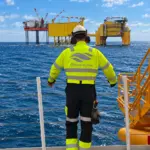
The gas arrives at the offshore P18-A platform through a 40cm pipeline in a gaseous state with the characteristics of a liquid. P18-A is a former gas platform and will be re-used to store the CO2 , the platform fitted with facilities necessary for transporting it to the injection wells. Various technical systems will be installed to monitor and remotely control the system.
For millions of years CO2 was hermetically trapped under high pressure, the pressure gradually decreasing as gas was extracted. This pressure will rise again as CO2 is injected and the reservoir will be constantly monitored and checked to ensure that local pressure never exceeds the values recorded when gas extraction first started.
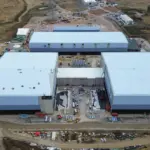
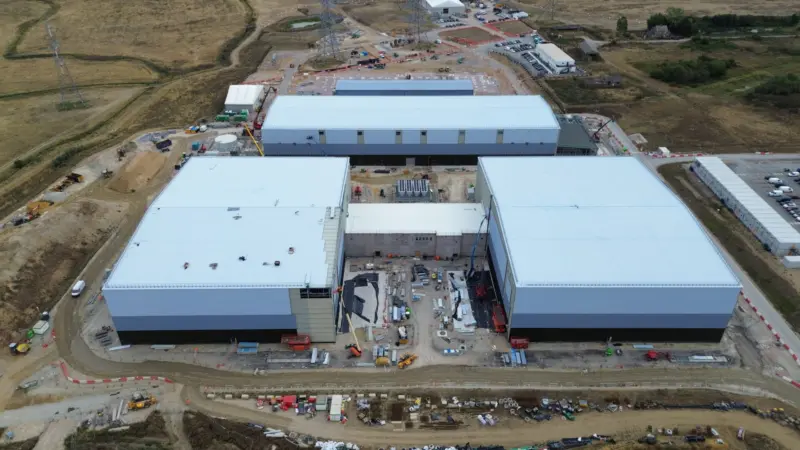
The shoreside compressor station itself at Maasvlakte has a surface area of roughly 2ha, the entire site supplied with power from an electrical substation. The pumping station houses the cooling water pumps that are used to cool the compressors.
Drilling
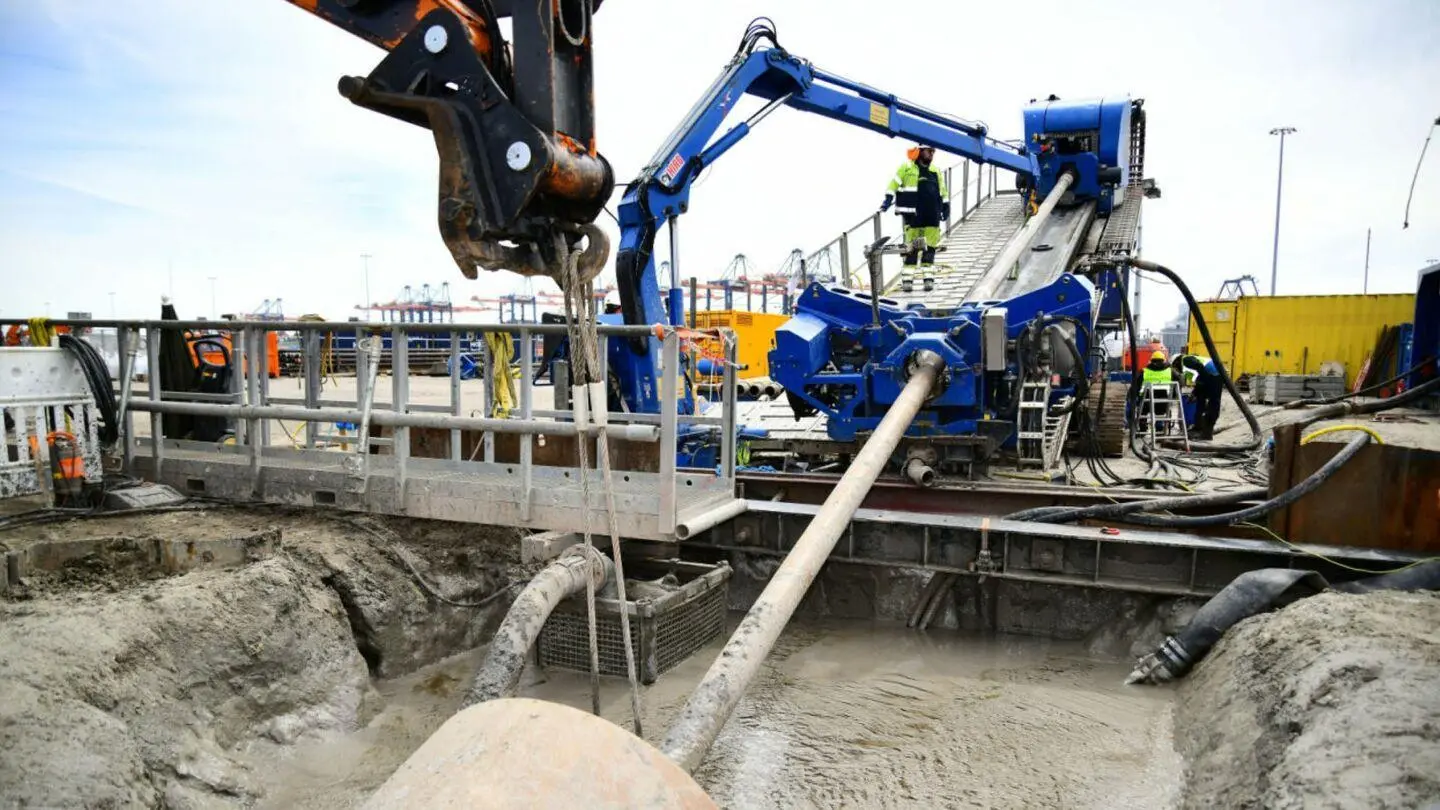
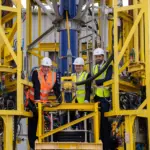
Following a period of preparation there is now a period of what is described as a “noticeable start” to construction of the infrastructure, with the first drilling of a tunnel under the seawall on the Maasvlakte.
A drill of more than 300mm diameter was used to dig under the seawall to just beneath the seabed. The tunnel will be widened to around 1,500mm for a casing tube of around 800mm diameter and will accommodate the gas pipeline within the tunnel.
The casing tube, with an overall length of 600m, consists of 34 pipes that have now been welded together. The casing tube will then be pushed down the drill hole from the landward side. The CO2 pipeline itself is expected to be led through the casing tube some time in 2025.
Work will continue on the CO2 pipeline itself at other locations in the port of Rotterdam, the subterranean tubing system transecting multiple waterways, train tracks and roads in the port area. The actual Porthos project is expected to be operational in 2026.
Related Articles
 MARINE CIVILS
 OTHER NEWS
 OTHER NEWS