![MaritimeJournal[Seawork]](https://www.maritimejournal.com/wp-content/uploads/2026/09/MaritimeJournalSeawork.svg)


EU megaproject costs up 200%, 20-year delays
Spiralling costs and serious delays mean a raft of major EU transport ‘megaprojects’ will not meet their 2030 goal, the Trans-European Transport Network (TEN-T) has admitted.
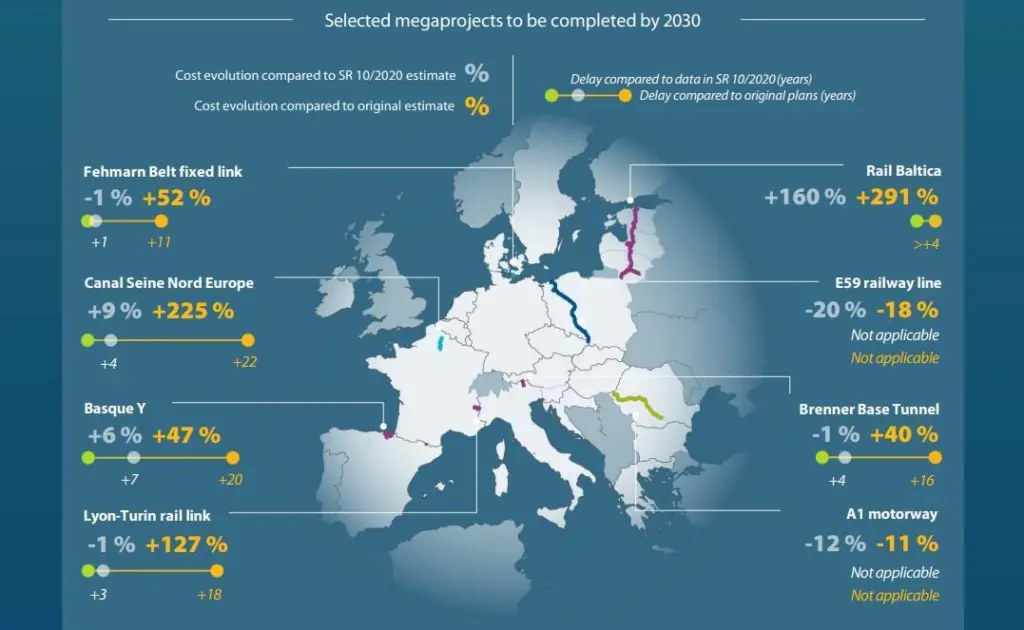
Costs have risen by more than 200% in some cases and projects have been delayed by more than 20 years, a report by the European Court of Auditors (ECA) has revealed.
The Trans-European Transport Network (TEN-T) is the European Union’s long-term policy framework for developing a single, integrated, multimodal transport network across all EU member states.
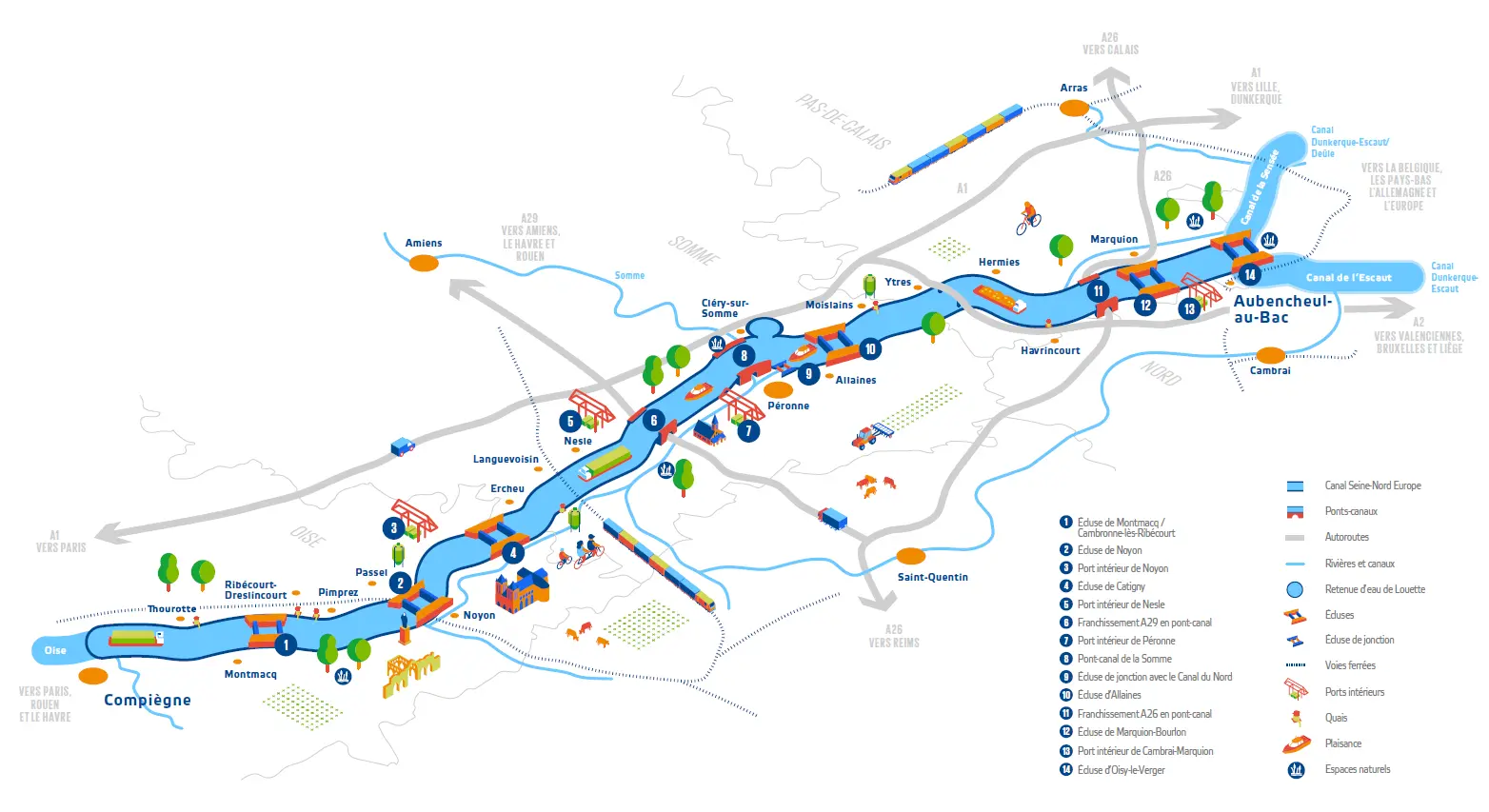
The most expensive project involving marine civil engineering is the inland Canal Seine Nord Europe, a large-gauge 107m-long canal, which is planned to connect the French network to the 20km of European waterways.
Financed by the EU, France and local authorities, the 54m-wide canal will encompass 10 docks, 62 road and rail crossings, three canal bridges and one water reservoir along its length.
It has been delayed by 22 years and costs have risen by 225%, the ECA report says.
Rail Baltica, a railway that crosses several rivers and waterways to integrate the Baltic States of Estonia, Latvia and Lithuania with Europe’s standard-gauge rail network in Poland, has seen its costs rise by 291% and works delayed by four years.
The Fehmarnbelt fixed link connecting Denmark and Germany has been delayed by 11 years and costs have risen by 52%, the same report says.
“In the context of unforeseen crises, the construction of Europe’s flagship transport infrastructures has been affected by rising costs and further delays in implementation,” the ECA says.
“The outlook in 2025 is worse than in 2020, and falls far short of what was initially envisaged. Of course, since 2020, these megaprojects have faced a series of additional challenges arising from the Covid-19 pandemic and Russia’s war of aggression against Ukraine. New regulatory requirements and unexpected technical issues have also arisen.”
“EU transport flagship infrastructures are supposed to reshape Europe, bringing people closer together and facilitating economic activity”, said Annemie Turtelboom, the ECA Member who updated the report.
“But three decades after most of them were designed, we are still a long way from cutting the ribbon on these projects, and a long way from achieving the intended improvements in passenger and freight flows across Europe.”