




Offshore wind’s sky-high potential hits onshore grid wall
Europe’s offshore wind revolution is running into a hard physical limit – the electricity grid.
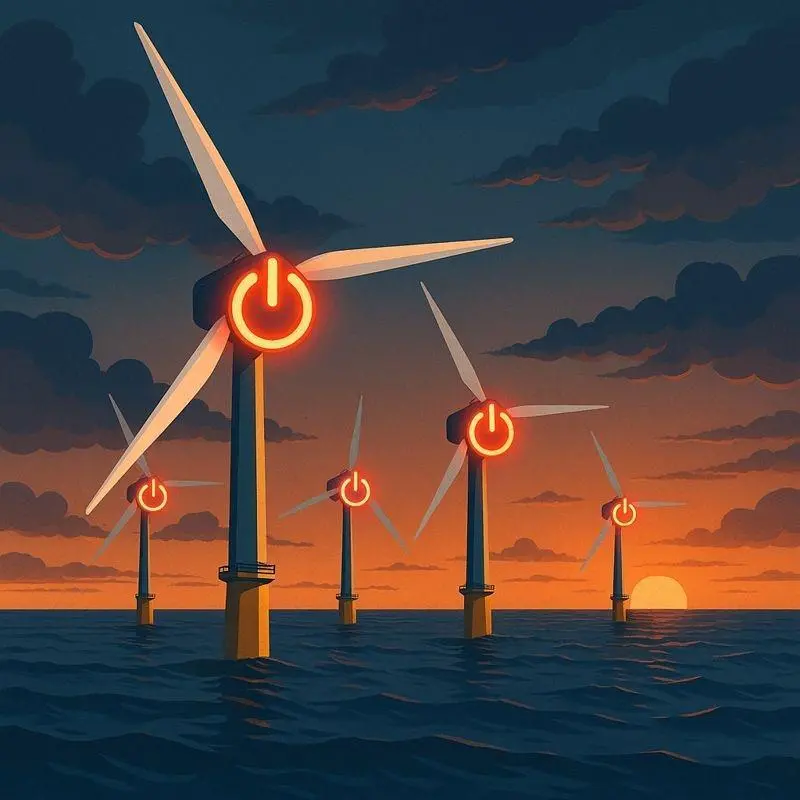
For more than a decade, governments across the continent have announced increasingly ambitious offshore wind targets, especially in the North Sea, Baltic and Atlantic regions.
But Europe’s ageing grids cannot cope with more wind power, and in the UK alone wind farms earned more than £400 million (€460 million) last year by being paid to switch off. Bottlenecks in Germany, the Netherlands and the Nordics regularly force wind farms to curtail output.
North Sea projects like Dogger Bank, Hornsea, and Hollandse Kust show consistent delays tied to grid constraints.
The problem is structural: Europe’s grid was built for centralised fossil-fuel plants, not thousands of offshore wind turbines scattered from the Dogger Bank to the Bay of Biscay.
A new European Commission initiative, the EU Grids Package, says that high-capacity interconnectors, subsea transmission systems and reinforced onshore networks will be vital to bring gigawatts of electricity from the sea into Europe’s industrial heartlands.
The Commission emphasises that Europe must ‘maximise the use of existing infrastructure before investing in new capacity,’ but will also have to build cross-border grid lines.
Package details
To break the deadlock, the Commission’s proposals include an Energy Highways initiative, identifying eight strategic cross-border infrastructure corridors urgently needed to complete the Energy Union and unlock large-scale renewable energy deployment.

Several of these projects are directly tied to offshore wind growth:
- Bornholm Energy Island (Baltic Sea) – designed to turn Denmark’s Bornholm into a major offshore wind hub, linking offshore production to multiple EU countries.
- The Great Sea Interconnector – connecting Cyprus to the European grid, enabling large-scale renewable energy (including offshore developments in the eastern Mediterranean).
- Harmony Link (Baltics) – increasing interconnection capacity critical for integrating growing Baltic offshore wind farms.
The Commission argues that without these offshore and coastal ‘highways’ Europe cannot efficiently transport the electricity expected from future marine energy zones.
To prevent grid projects from stalling, the European Grids Package proposes:
- Time limits for permitting all grid infrastructure and renewable projects
- Digitised permitting systems
- A new ‘gap-filling’ mechanism where the Commission can trigger new project proposals if essential capacity is missing
- A streamlined TEN-E process for Projects of Common Interest (PCIs), enabling access to Connecting Europe Facility funding
- A presumption that electricity infrastructure is of overriding public interest, enabling faster environmental approvals
The package also introduces benefit sharing for communities near major renewable projects, including offshore cables making landfall, to improve public acceptance.
ENTSOs (the EU’s transmission operators) estimate that 41GW of needed cross-border electricity capacity remains unaddressed by 2030, a shortfall that risks leaving future offshore wind projects stranded.
Offshore works needed
Grid expansion will require enormous amounts of offshore work. Transmission operators and marine contractors foresee an increase in:
- Subsea cable manufacturing and laying (HVDC and HVAC)
- Offshore substations and converter platforms
- Interconnector trenches and seabed preparation
- Offshore protection works, including rock placement, concrete mattressing, and scour protection
- Surveying, UXO clearance, and environmental assessment operations
- Offshore construction vessels, specialised cable-layers, and heavy-lift ships.
For the workboat and offshore support sectors, this represents years of demand for offshore logistics, transport, and marine construction services if the permitting and planning system accelerates.
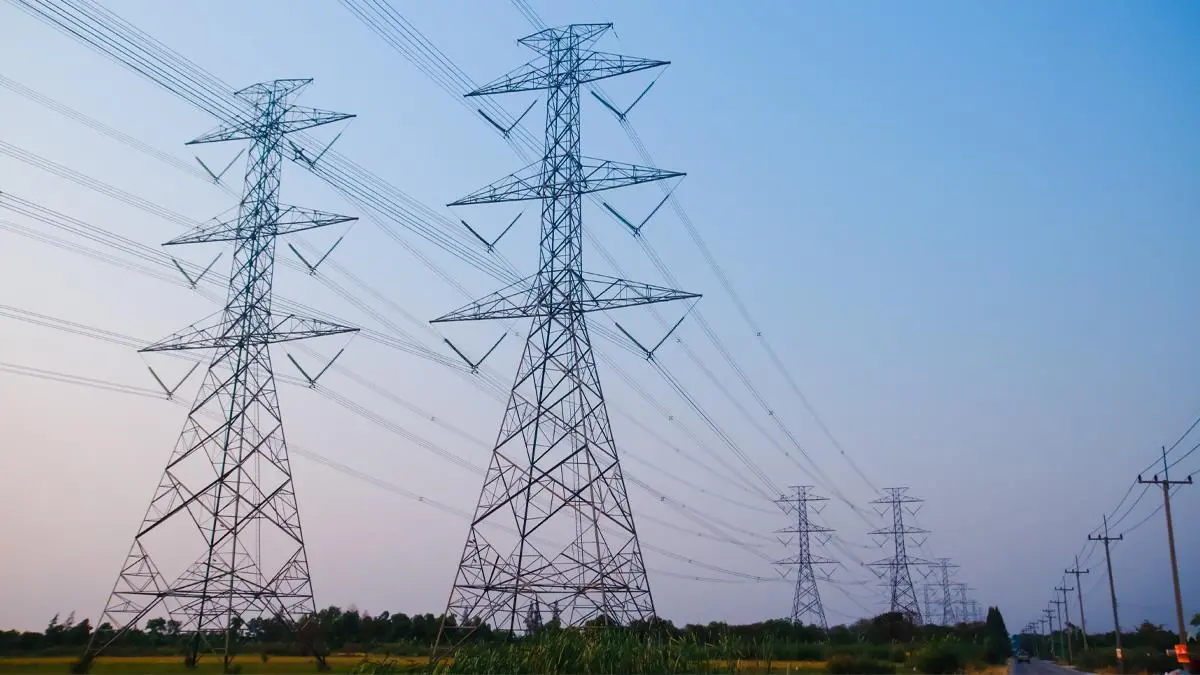
That ‘if’ is central to the EU’s message: grid development currently takes too long. Permitting for cross-border electricity lines averages five years, and renewable generation projects can face up to nine years of approvals.
More taxpayer funding
For the taxpayer, bills only go one way – and it’s not down.
The EC estimates that the grid overhaul is going to cost around €1.2 trillion by 2040, with €730 billion for distribution grids and €240 billion for hydrogen networks.
Much of this spending will take place on or beneath the sea: offshore wind farms are already moving further from shore to access better wind conditions, requiring longer subsea cables, complex offshore substations and HVDC links capable of transporting electricity hundreds of kilometres.
Offshore grid hubs like the Danish Bornholm Energy Island in the Baltic Sea will require massive marine construction campaigns, including seabed levelling, foundation installation, offshore accommodation and heavy-lift assembly. These will be among the largest maritime engineering operations attempted in Europe.
Offshore contractors, workboat operators, subsea specialists and energy investors are preparing for one of the largest marine infrastructure build-outs in European history – but it’s only worth doing if the onshore grids can cope.
WindEurope endorsement
WindEurope has strongly endorsed the EC’s EU Grids Package, calling it a vital step toward unblocking Europe’s energy transition and enabling the growth of wind power.

“Grids are vital to Europe’s energy security and competitiveness. A renewables-based energy system will be much cheaper for Europe – even when you factor in the additional costs for grids, storage, and electrification. But you can’t have more renewable electricity without more grids. The EU Grids Package will enable faster permitting, better planning and increased investment certainty,” said Giles Dickson, WindEurope CEO.
He welcomed the EU’s commitment to faster permitting, better planning and increased investment certainty.
WindEurope estimates that the continent will need €584 billion in grid upgrades by 2030, yet persistent underinvestment is delaying new wind projects, driving up consumer bills and forcing renewable energy curtailment.
Around 500GW of wind projects are currently stuck in grid-connection queues, it says, with authorities overwhelmed.
The new Package includes a proposal to shift from the current ‘first come, first served’ approach to ‘first ready, first served’, says WindEurope, and this makes sense in prioritising viable projects and filtering out ‘zombie projects’.
“National implementation will be crucial. WindEurope stands ready to work with EU Member States and industry partners to make Europe’s grids fit for a future energy system based on high shares of wind energy,” says Dickson.
Related Articles
 MARINE CONSTRUCTION
 MARINE CONSTRUCTION
 MARINE CONSTRUCTION