





WATCH: Floating bridges, subsea tunnels – Norway’s E39 will have it all
Norway’s largest ever transport route combines a multitude of engineering concepts, some of which have never been built before.
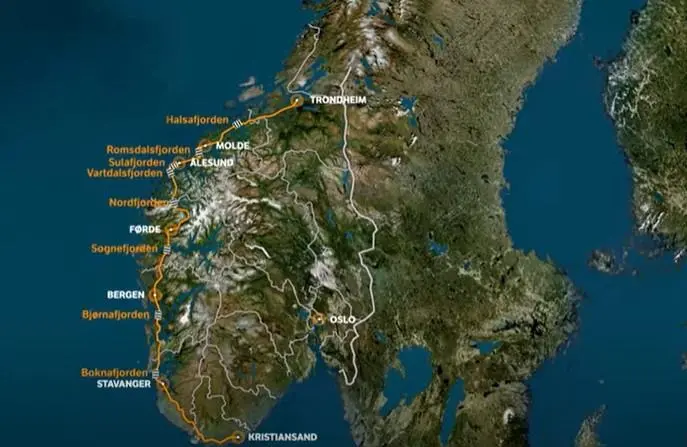
Plans for the €34-36 billion E39 coastal route, along the western edge of Norway, have still not been finalised although work has already been carried out on the less complex aspects of the E39 coastal route.
The route, which is being coordinated by the Norwegian Public Roads Administration, will connect Trondheim in the north with Kristiansand in the south, a 1,100km continuous connection that currently takes more than 20 hours and involves seven ferry crossings.
The E39 will comprise a mixture of different designs of bridges and tunnels, including the world’s deepest undersea tunnel at 390 metres below sea level. When completed in 2033, the route will halve the transport time between the two destinations to around 11 hours.
Sognefjord
One of the trickiest connections is across the Sognefjord, for which a final design has not yet been decided.
The fjord is 3,700m wide and too deep at 400 metres for traditional lateral anchoring methods. It also must have a 400m wide shipping lane.
Some of the design options on the table have never been built before, such as a submerged tunnel with floating bridge attached.
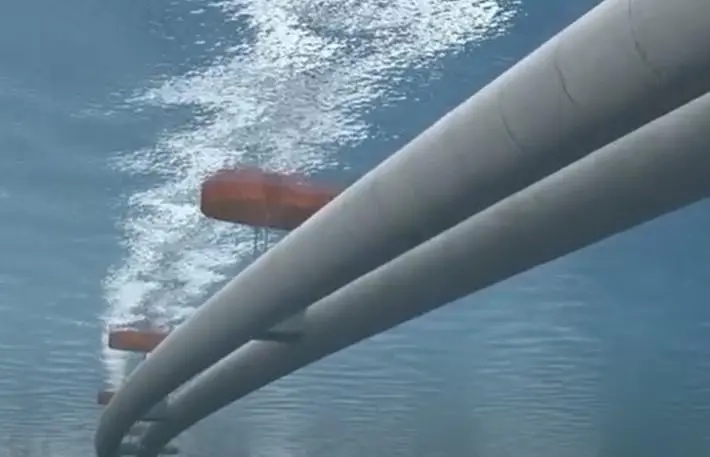
This would encompass two concrete tubes submerged and floating about 20 metres beneath the water surface with anchoring points at both ends and floating pontoons on the surface. It would be deep enough to allow ships to pass overhead, and could possibly be linked to a floating bridge for the rest of the crossing.
Another design option is for a massive suspension bridge across the whole fjord, which would be three times longer than San Francisco’s Golden Gate bridge. It would have 450m towers each end and have to be high enough to accommodate ships underneath, one of the main challenges, along with achieving enough rigidity with only being anchored at the ends.
A final option would be a traditional cable-stayed bridge with towers on floating elements, a design taken from the offshore industry, which has increasingly used floating platforms anchored to the seabed. This, the project planners say, has never been attempted for bridges.
Rogfast tunnel
The world’s deepest undersea tunnel will be 27 kilometres in length, including roundabouts, emergency exits, laybys and ventilation shafts.
The Rogfast tunnel, just north of Stavanger, will be blasted through solid bedrock, which is a traditional Norwegian method of building subsea tunnels.
The twin tunnels will each be 10.5 metres in diameter, with two traffic lanes in each and emergency exits. A 4km spur tunnel will lead to Kvitsøy with underground roundabouts some 260 metres below sea level.
Norway already has the record for the longest subsea road tunnel in the world. Its 14.3km Ryfast Tunnel, east of Stavanger, claimed the title when it opened in 2019, but will lose its crown with a tunnel almost twice as long.
Some of the construction firms involved in the bridges and tunnels building include Kruse Smith, Skansa, Implenia Norge and Stangeland Maskin. Fugro will carry out marine surveying and geotechnical works for the entire route.
Other crossings
Other notable crossings that will remove ferry routes include:
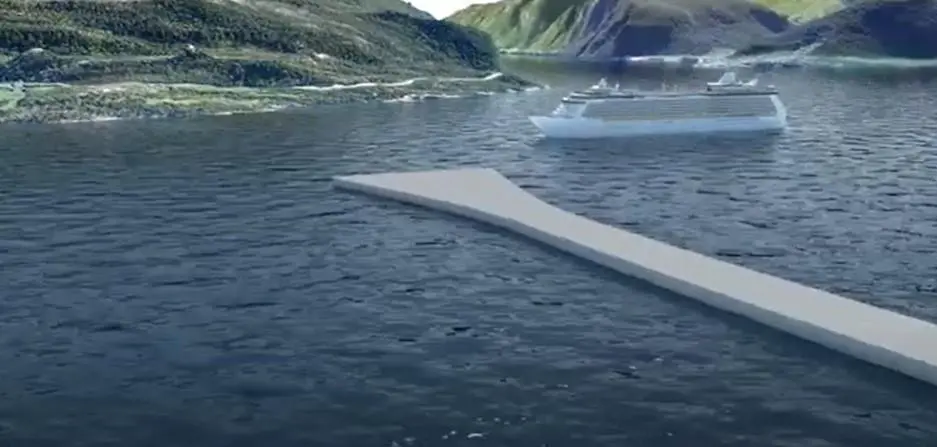
1. Bjornafjorden near Bergen: More than 5km wide and 600m deep, a likely option is an end-anchored floating bridge, anchored to land at both ends
2. Sulafjoren: The 4km wide, 400m deep fjord could have a suspension bridge, with one tower mounted in the middle on the seabed and two others at each end. If not, a submerged tube bridge could be installed.
3. Fomsdalsfjorden, between Molde and Alseund: This could see a 21km subsea tunnel and 2km suspension bridge with emergency exits between the tunnels and laybys.
Final designs will have to be approved soon if the 2033 completion target is to be hit.
Related Articles
 MARINE CONSTRUCTION
 MARINE CONSTRUCTION
 MARINE CONSTRUCTION