![MaritimeJournal[Seawork]](https://www.maritimejournal.com/wp-content/uploads/2026/09/MaritimeJournalSeawork.svg)

Meeting the changing times
Andreas Tsavliris, head of Greek firm Tsavliris Salvage and president of the International Salvage Union says being close to shipping issues isn’t just useful, “It’s vital for the survival of business”.
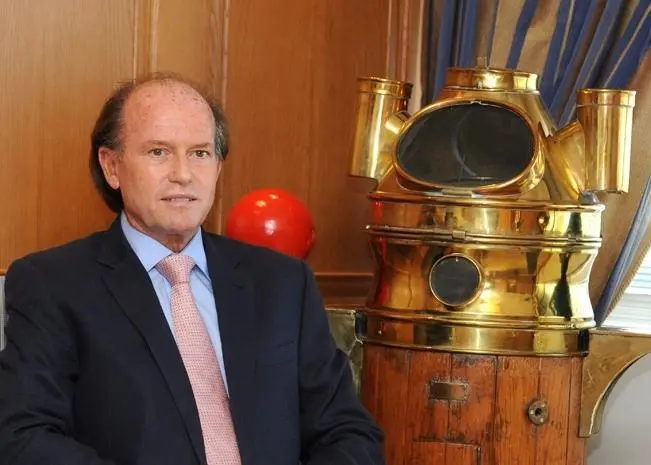
He points out that salvors are a service industry and salvage companies have to be able to comprehend and respond to rapidly evolving pressures within the industry, which include increasing ship sizes and increasing amounts of advanced technology.
So, although he describes being elected the first Greek President of the International Salvage Union in 2011 as one of his “proudest moments”, being closely involved at the heart of the industry is a pragmatic move. “Everything to do with salvage is naturally directed toward the ISU, so everything comes past you on a daily basis,” he says.
It is worth noting that the constant challenges are not far removed from the family tradition. Mr Tsavliris followed his father Alexander into the firm in 1970, a man he describes as “a daring pioneer”.
Another proud but emotional moment was the wreck removal project of the Greek warship Kostakos. “This case was particularly important as the naval missile boat was lying about 170m down on the sea floor and we also had to recover four bodies from the wreck. It was an emotional and technically difficult operation,” he said, adding that he felt honoured to be a part of it.
However, being able to respond in a timely way is often the key. Mr Tsavliris explained that his firm is one of the last entrepreneurial salvors to maintain tugs on station at strategic locations. Although the number deployed like this has diminished since its height four decades ago, he says that a vigorous policy of modernisation “means we are now better equipped to cope with today’s larger and more complex vessels as well as with the threat of pollution, which has imposed new demands on salvors”.
The hot topic of environmental salvage is not far away. “Both the ISU and I, personally, believe the environmental benefit conferred by salvage services should be fully recognised,” he said.
Salvors have long played an important role in preventing and, where this is not possible, limiting accident generated pollution. Major spills result in catastrophic economic and environmental damage. So Mr Tsavliris is greatly disappointed that the last CMI Conference did not support proposals for what he describes as “a modest change” to the 1989 Salvage Convention.
This refusal, according to Mr Tsavliris, does not provide proper recognition of the salvor’s efforts in carrying out his obligations: “Salvors should receive fair remuneration for the benefits they confer for the added value they produce. Preventing pollution and averting liabilities are clearly worth paying for.”