


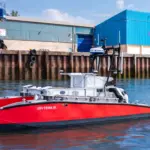



Monitoring vessel efficiency remotely
The Satellite Applications Catapult describes itself as “part of a consortium developing the world’s first non-invasive marine vessel monitoring system, which will help significantly reduce fuel costs and harmful emissions, and improve overall vessel efficiency throughout the marine sector”.
The Project – IConIC (Intelligent Condition monitoring with Integrated Communications) consortium, is led by STS Defence and includes other SMEs as well as both Portsmouth and Southampton Universities. The consortium will develop an automated machine-to-machine and ship-to-shore data exchange capability to detect ship propulsion faults using the diesel generator’s vibration and current, as well as automatically making maintenance decisions based on the availability of spares and engineers. The Catapult will provide the support for the satellite technology and the integration of satellite services including communications.
Stuart Martin, CEO of the Satellite Applications Catapult, said: “The consortium’s experience in satellite communications and electronics will lead to the first ever non-invasive condition monitoring system that principally detects ship propulsion faults, resulting in reduced maintenance costs and lost downtime while docking.
By Jake Frith
Related Articles
 ACCESSORIES & EQUIPMENT
 ENVIRONMENT
 MARINE CONSTRUCTION