![MaritimeJournal[Seawork]](https://www.maritimejournal.com/wp-content/uploads/2026/09/MaritimeJournalSeawork.svg)


New report puts Venice in Peril
Venice is fast being lost to the water, says a report released this month by the conservation group, Venice in Peril.
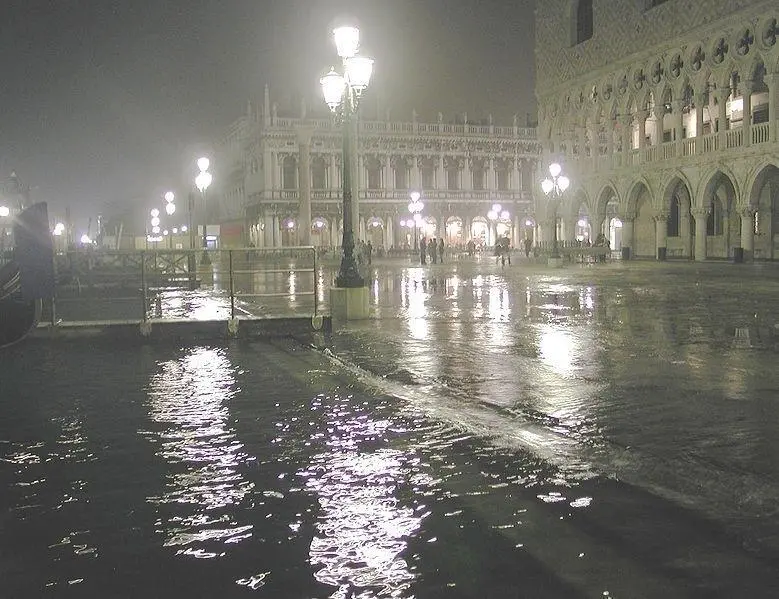
It seems plans for a commercial port and transport hub big enough to rival Trieste at Porto Marghera, which sits on the edge of the Venetian lagoon, while being welcome by the mainland economy, would impact heavily on Venice, where rising water levels and floods are rotting the once splendid architecture.
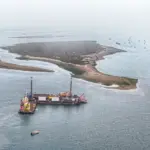
The report explains that the projected port development would require deep dredging of the channel from the Malamocco inlet to Marghera in order to let in the big bulk carriers. ‘It is precisely these deep channels that over the years contributed, with other environmental factors, to the degradation of the lagoon and the chronically raised water levels in the city’, says Anna Somers Cocks in an introduction to the Venice report.
The authorities argue that the new MOSE system (Modulo Sperimentale Elettromeccanico) will be able to mitigate the effects of any dredging. This defence consists of rows of mobile gates able to isolate the Venetian Lagoon from the Adriatic Sea when the tide pushes the water level above a metre in height.
Countering this view, Ms Somers Cocks points out that it ‘confuses the role of MOSE in defending Venice from flooding events with the question of the degradation of the lagoon.’
The chapters of the Venice Report, commissioned by the conservation group in collaboration with the Department of Architecture of Cambridge University, explains that the situation in the city remained relatively stable until recently, although the waters were still creeping up. However, the newly liberalised economy has allowed a faster pace of economic development, at the expense of the old city.
A contributing factor may be that heavy marine traffic and dredging churns up the usual sand and sediment on the bottom of the lagoon, allowing it to be washed out to sea. This erosion of natural barriers allows more water in, resulting in a rise in levels. The past century has seen Venice sink nine inches through rising water and subsiding land (the city is, after all, balanced on gradually sinking wooden piles) but the fear is that this might now accelerate.
Ms Somers Cocks concludes, ‘Two basic economic tools also need to be applied by the authorities and investors: risk assessment (particularly where the plans for the port are concerned) and cost-benefit analysis. For example, is it worth investing billions in a port and transport hub if, as a consequence, you have to spend billions long term protecting the buildings of Venice from the water?’