




New technology used for Hydrosphere buoys
Technology is constantly moving forward and navigational aids are no exception.The latest harbour to embrace new technology is Lochinver on Scotland’s North West coast, managed by the Highland Council.
The harbour is a landing point for not only UK but also European fishing vessels and as such when new navigation buoys were needed consideration had to be paid to those which would be reliable and long lasting.
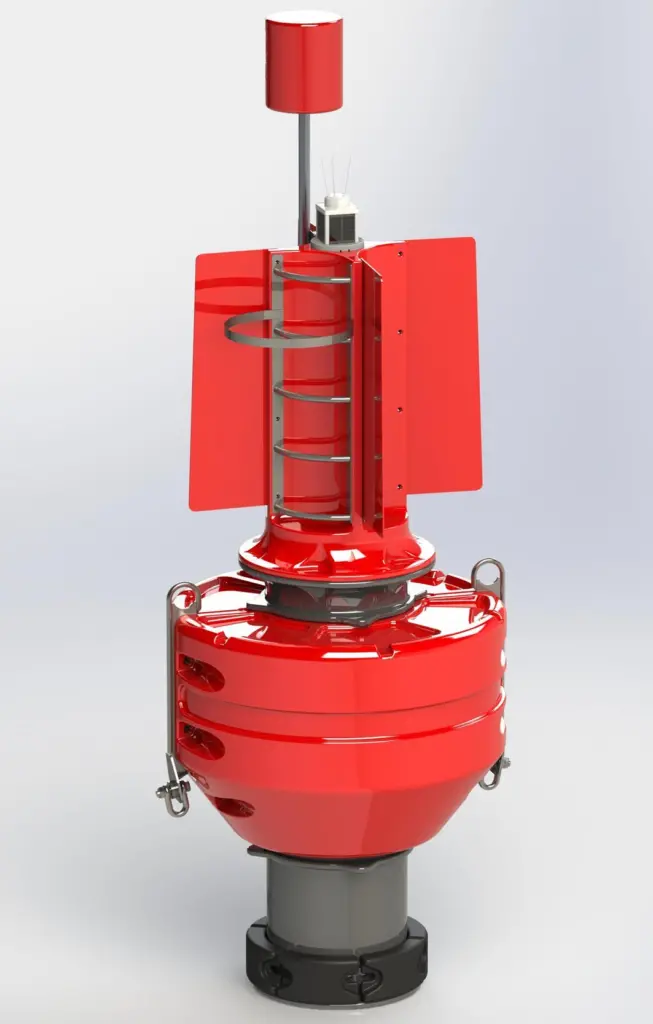
Two Jet 1200s – port and starboard – were chosen, supplied by Hydrosphere, each of a new 1.5m diameter hull size with 1200kgs of buoyancy.
“This is a totally new type of buoy from Hydrosphere,” explained sales director Jeff Gibson. “Traditionally Jet buoys are constructed around a hollow galvanised steel central structure with polyethylene hull float sections. These new ones have a newly designed rotationally moulded central structure, constructed entirely from polyethylene which makes them lightweight and also immune to corrosion.”
“The buoys are moulded to the exact shape required which results in a lighter and stronger buoy. Another advantage of the new buoys is that being made from the same material, the daymark and hull have an exact colour match”, he added
The buoys are rated UV17 meaning they will be within International Association of Marine Aids to Navigation and Lighthouse Authorities (IALA) colour guidelines for a minimum of 17 years at British latitudes.
Stability is achieved through the lightweight ballasted structure which also includes an internal radar reflector. In addition, the buoys are suitable for use with a bridle mooring.
All parts are accessible for easy service and replaceable if required.
The new Jet 1200 buoys are particularly suitable for use in near shore locations where high visibility is required and have the option of 1.9m floats with 2000kg buoyancy.
Visit Hydropshere UK at Seawork International 2015 on stand A79.
By Katina Read
Related Articles
 VESSELS
 MARINE CONSTRUCTION
 VESSELS