![MaritimeJournal[Seawork]](https://www.maritimejournal.com/wp-content/uploads/2026/09/MaritimeJournalSeawork.svg)





Box rule changes
It’s been a strange time for those involved with offshore containers.
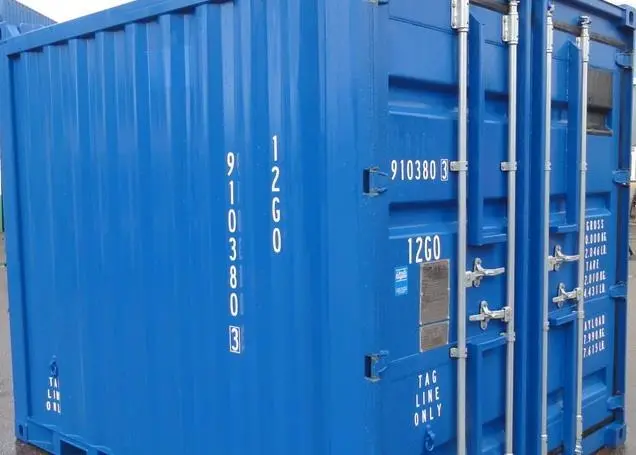
Almost as diverse as the objects they carry, these boxes are relied upon for transporting a huge range of items to and fro between port and offshore work sites – but their ‘legislative history’, and the reaction to it, has been frankly tangled. Further, it seems that countries without the benefit of robust regulation might be the ones dumped with containers that wouldn’t get past European standards.
The back story is that the lifting equipment association (LEEA) got involved in warning people that 2015 would see the termination of an old rule after a 15 year arrangement. While BS7072 – The Code of Practice for Inspection and Repair of Offshore Containers – was being moved aside for the next standard, it got a lease of life from MCA guidance “to the effect that containers built to the original BS7072 may, if properly surveyed and maintained, still be used for the transport of dangerous goods until 1 Jan 2015”, explained Denis Hogan of LEEA.
It was a mixed blessing: while it gave everyone breathing space, Mr Hogan said it was also thought that a lot of companies had just ignored the fade out of the rule entirely. So it was with some relief that he found evidence that at least a few ports were refusing to handle effectively ‘out of date’ boxes. However Mr Hogan said: “There were some that publicly said they weren’t going to go along with the replacement.” This may have been grounds for a tiff, but at least it would have been a fair fight.
It turned out to be a little economical with the truth. In fact, it seems that those apparently recalcitrant organisations had been involved in a replacement programme – but most importantly, it appears that many of the older boxes, manufactured to the BS7072 standard, may not have been scrapped after all but transferred on to regions where the rules are a little more lax, “notably places like West Africa” he said. Although it’s hard to judge, he feels there’s some suspicion that the original stance was taken in order to avoid having to write-off an expensive commodity.
Despite this, Mr Hogan is playing the ‘long game’ and is fairly certain that over time, the standards will assert themselves in other parts of the world. And maybe not that far into the future, either “just because those countries don’t, at the moment, have standards in place themselves” and so they won’t be reinventing the wheel (or box) but more than likely looking to take on already proven policies. A process that LEEA is already helping to initiate.
By Stevie Knight

Related Articles
 ACCESSORIES & EQUIPMENT
 OTHER NEWS
 ACCESSORIES & EQUIPMENT