![MaritimeJournal[Seawork]](https://www.maritimejournal.com/wp-content/uploads/2026/09/MaritimeJournalSeawork.svg)


Exporting professionalism
“People often sigh when you talk about Health and Safety,” Denis Hogan of LEEA International told MJ, but he argued “it’s one of Europe’s most successful exports”.
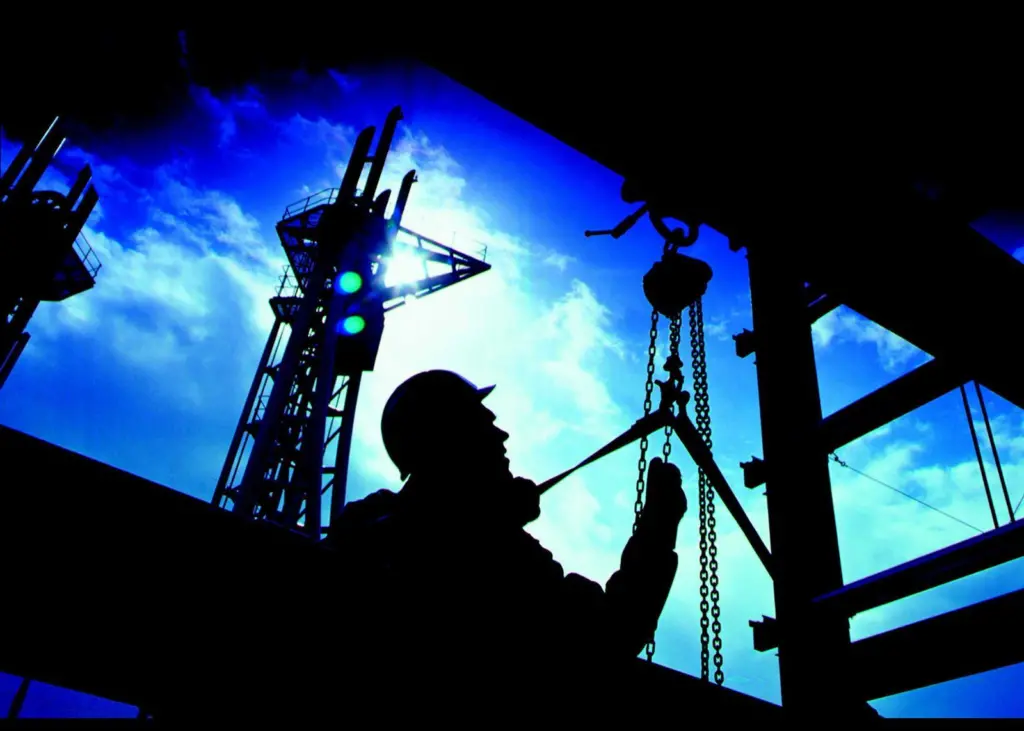
As emerging regions aim to get a toehold into international markets and turn their resources into tradable commodities there’s been understandable pressure to expand offshore development and marine support as fast as possible.
But trying to operate lifting equipment in an environment where there is no history of established professional standards can only be described as truly frightening; Mr Hogan explained that it was against this backdrop that Lifting Operations and Lifting Equipment Regulations (LOLER) were adopted as ‘best practice’ originally by UK or European companies working in regions that lacked lifting-specific legislation. LOLER was successful because it manages to be both pragmatic and risk based said Mr Hogan: “For example, LOLER prescribes a written scheme of examination for a wire rope sling if it’s used on a frequent basis, and a reduced interval between examinations.”
Along with the introduction of LOLER came the definition of the necessary competent person: “someone who has sufficient experience and technical qualifications to detect defects in the equipment”. Not easy to find in a fast emerging market.
So the Lifting Equipment Engineers Association (LEEA) stepped into the gap and introduced both a code that guides the use and manufacture of everything from slings and eyebolts to the cranes themselves alongside the training courses to back it up – and answered a thirst for professionalism that is fast increasing in places as diverse as Southeast Asia and Africa.
The reversal in LEEA’s figures tell their own story: in 2009 there were barely 260 members, of which 70% were in the UK and 30% abroad said Mr Hogan: “Today it’s almost an inverse of what it was, there are roughly 880 members worldwide with the majority, around 60%, being overseas.” The biggest growth areas are the Middle East and Far East, says Mr Hogan, with a small presence in the Americas.
There are still issues of course: the US paradigm is a little different and there is a quiet turf war between the two, which Mr Hogan explained needed sorting out “because all too often a support boat turns up for work but its then told it’s slings don’t meet the criteria and have to be discarded”. Further, the next step, says Mr Hogan, is worldwide harmonisation with the aim of the EN standards for lifting equipment being reissued as ISO standards.
However, LOLER (and with it LEEA’s training regime) is now being adopted by the authorities in areas as disparate as Qatar and Indonesia: “We are in discussions with several different government bodies to embed these standards into the law of that land,” said Mr Hogan.
By Stevie Knight
Related Articles
 OTHER NEWS
 ACCESSORIES & EQUIPMENT
 ACCESSORIES & EQUIPMENT