![MaritimeJournal[Seawork]](https://www.maritimejournal.com/wp-content/uploads/2026/09/MaritimeJournalSeawork.svg)





A milestone in hydrogen fuel power cell development
Proteus Energy has unveiled a cutting-edge hydrogen fuel cell system aimed at transforming workboat propulsion and vessel power using alternative fuels.
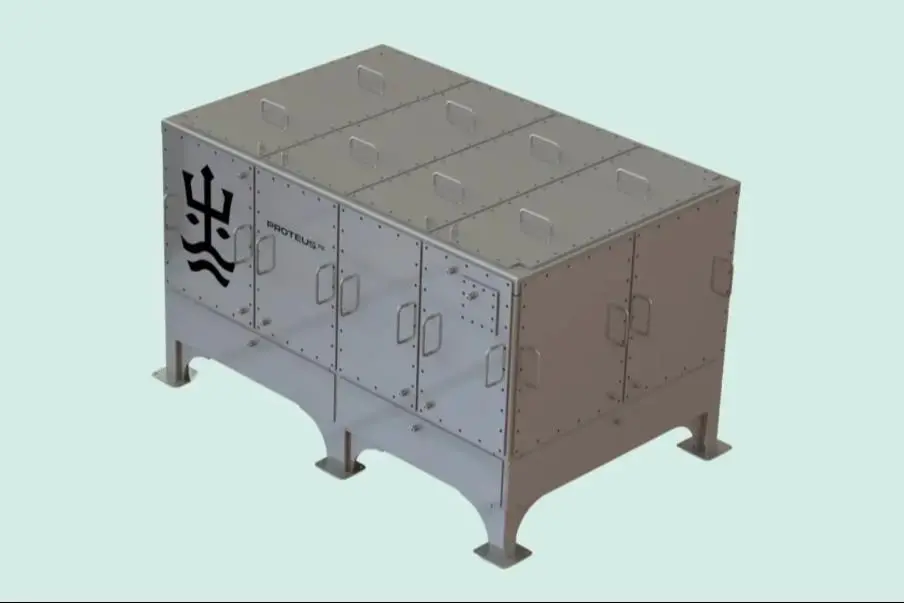
The Singapore-based company’s maritime fuel cell solution is a modular hydrogen-based energy system designed for harbour craft, offshore support vessels and inland waterway boats.
“The maritime industry needs viable clean energy solutions today,” said Dr Lars Gruenitz, CEO of Proteus Energy.
“We are providing a high energy density solution that is compact and lightweight, which is critical for vessels where space and weight considerations are imperative. This best-in-class system is the logical and most cost-effective choice to help operators make a quantum leap in their decarbonisation efforts.”
Compact and lightweight
Proteus’ maritime fuel cell solution can be delivered as a modular powerpack or customised and fitted into vessels.
The flagship Proteus 75 delivers 75 kW per fuel cell stack and multiple units can be combined to meet higher energy demands. The system delivers high energy density in a compact, lightweight format, ideal for vessels where space and weight are at a premium.
Because Proteus’ system delivers zero tailpipe emissions, fast refueling, minimal noise and low maintenance, it also complements electric propulsion, making it a well suited solution for hybrid marine applications.
Developed in collaboration with Symbio Franceba and backed by Michelin, Stellantis and Forvia, the hydrogen fuel cell system leverages proven technology already used in cars, buses and trucks across Europe.
Symbio’s manufacturing facility in Lyon enables large-scale production with automotive-grade precision.
DNV-approved hydrogen storage tanks developed with Forvia will also be available in future. Proteus is working with port operators to implement refueling infrastructure ahead of the fuel cell system’s commercial launch, scheduled for January 2026.
Type approval for the fuel cell is expected by the end of 2025.
Related Articles
 FEATURES & VIDEOS
 ENVIRONMENT
 OTHER NEWS