![MaritimeJournal[Seawork]](https://www.maritimejournal.com/wp-content/uploads/2026/09/MaritimeJournalSeawork.svg)





Cable-detection in pipeline for Dogger Bank
A cable-monitoring system has been unveiled that identifies transmission failure at an early enough stage that outages can be eliminated, its developer says.
Proserv, which is headquartered in Aberdeen, Scotland but has offices all over the world, says its ’Electro Cable Guard (ECG) technology will be deployed at what will be the world’s largest offshore wind farm, the UK’s Dogger Bank.
The technology uses passive electrical sensors to monitor inter-array cables and terminations to deliver early fault detection that Proserv says traditional systems overlook.
“It works by permanently and synchronously monitoring the combined effect of electrical and mechanical stresses on power cables and terminations to identify failure precursors far earlier, providing real-time insights into transmission system health,” says the company. “Without needing additional power or telecoms infrastructure, it is efficient, easy to deploy, and ideal for offshore cable systems.”
The ECG, which is said to be ‘wind farm agnostic’ (ie it can be used on fixed-bottom or floating projects) is being deployed at Dogger Bank And B, Hywind Scotland and Hywind Tampen, the company says, with additional projects in the pipeline.
“As more offshore wind developments come online, unplanned cable and termination failures are an increasing concern,” said Proserv vice-president of Renewables Paul Cook, at Proserv. “This latest evolution of our breakthrough ECG system offers substantial cost savings benefits to developers and operators, addressing the widespread issue of cable failures.”
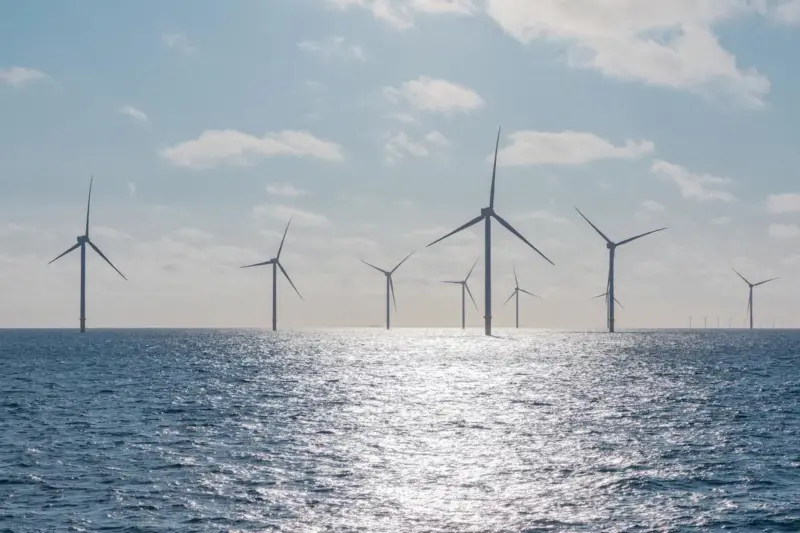
Dogger Bank is being built in three phases with a total of 277 wind turbines. Each will be 260 metres tall, and the project is set due to be completed in 2027, when it is designed to power 6 million UK homes.
Related Articles
 FEATURES & VIDEOS
 ENVIRONMENT
 OTHER NEWS