![MaritimeJournal[Seawork]](https://www.maritimejournal.com/wp-content/uploads/2026/09/MaritimeJournalSeawork.svg)





CCS licensing round opens as Scottish project rejected
Fourteen offshore locations have been offered around the coast of Scotland and England to potentially store carbon dioxide captured from industrial processes.
The announcement came amid media reports that the lead developer of the Acorn project in Aberdeen, Storegga, had sold its interest in the scheme.
The company did not respond to Maritime Journal’s request for information.
The North Sea Transition Authority has selected the 14 areas following ‘extensive consulations’ with the Crown Estate and Crown Scotland, who own the seabed up to 12 nautical miles from shore.
They also have sovereign rights to license the seabed for exploration or carbon dioxide storage.
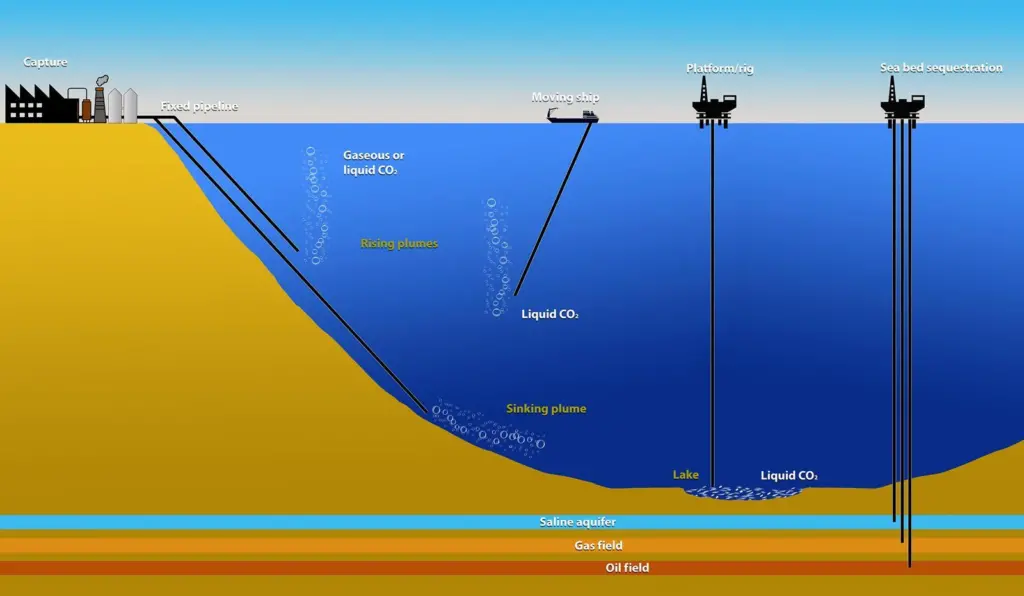
Two broad categories will be assessed for CO₂ storage – depleted hydrocarbon (oil and gas) fields, or saline aquifer sites, deep underground porous rocks whose pores are filled with seawater that can be filled with the gas.
Most UK CCS projects plan to use saline aquifers in the North Sea, such as the Endurance aquifer in the East Coast Cluster and Hynet’s Triassic aquifers in Liverpool Bay.
These formations are estimated to have huge capacity—tens to hundreds of billions of tonnes of CO₂.
“The UK government has signalled its total support for carbon storage and the jobs and investment it can create as a vital part of the energy transition,” said NSTA chief executive Stuart Payne.
“We are proud to be launching this licensing round, working in collaboration with other authorities especially Crown Estate Scotland and The Crown Estate to support this vital industry in the next stage of its development.”
The UK is far from alone in its drive towards storing massive amounts of carbon dioxide under its seabed, with projects already up and running in Norway and other countries.
It is far from cheap: in the UK alone, almost £22 billion (€25 billion) of taxpayers’ money has been earmarked for the technology.
“It is important that momentum is maintained. The Climate Change Committee concluded that there was no viable path to net zero by 2050 without carbon storage,” the NSTA said.
Current levels of CO₂ in the atmosphere as a whole stand at around 420 parts per million – about 0.04%.
According to the research consortium Global Carbon Project, the UK contributes less than 1% of that, which is 0.00036%.
Related Articles
 FEATURES & VIDEOS
 ENVIRONMENT
 OTHER NEWS