![MaritimeJournal[Seawork]](https://www.maritimejournal.com/wp-content/uploads/2026/09/MaritimeJournalSeawork.svg)



Consortium says offshore charging is proven
A Vard Design-led consortium says batteries are the proven technology for the future’s vessels now that offshore charging is a proven concept.
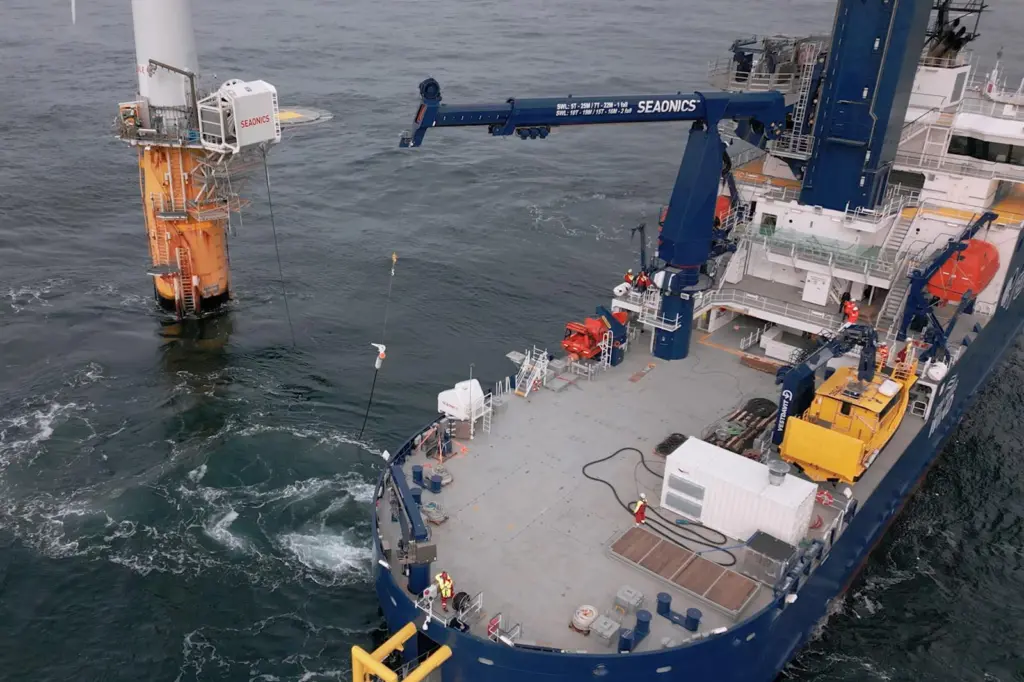
Working with sister companies Seaonics and Vard Electro, partners Rem Offshore, Solstad Offshore, SINTEF Energi, SINTEF Ocean, DigiCat, Sustainable Energy, Equinor, Source Galileo Norge, Corvus Energy, Plug, Shoreline, Norwegian Offshore Wind Cluster, University of Bergen, NORCE and Maritime CleanTech, the consortium says it has proved that its Ocean Charger can power operations at a wind farm without using any additional energy sources.
“Charging tests have been done in port with high voltage charging of the ship`s batteries,” says Vard. “Testing has also been done of the Ocean Charger offshore connection solution and we have demonstrated successfully that we can connect and disconnect the cable under certain conditions.
“In the coming years, a substantial new maritime infrastructure will be developed and built for the offshore wind industry in Norway. Based on the development for other segments, batteries have proven to be the most mature technology for zero or low-emission vessels. This technology constitutes the basis for developing the Ocean Charger project.”
The participants of the project give their opinions on the project in the video, and the product is now ready for market.
*In 2022, UK-based MJR Propulsion won the Renewable Energy category in Seawork’s Innovations Awards for its on-turbine charging system for workboats – something that at the time, the judges said they had not seen before.
In November 2023, Damen partnered MJR Power to develop a system that uses the motion-compensated gangway to create a connection between a crew transfer vessel and turbine or substation for the charging to be carried out.
Related Articles
 FEATURES & VIDEOS
 ENVIRONMENT
 OTHER NEWS