![MaritimeJournal[Seawork]](https://www.maritimejournal.com/wp-content/uploads/2026/09/MaritimeJournalSeawork.svg)


Estonia takes delivery of biomethane- and battery-powered workboat
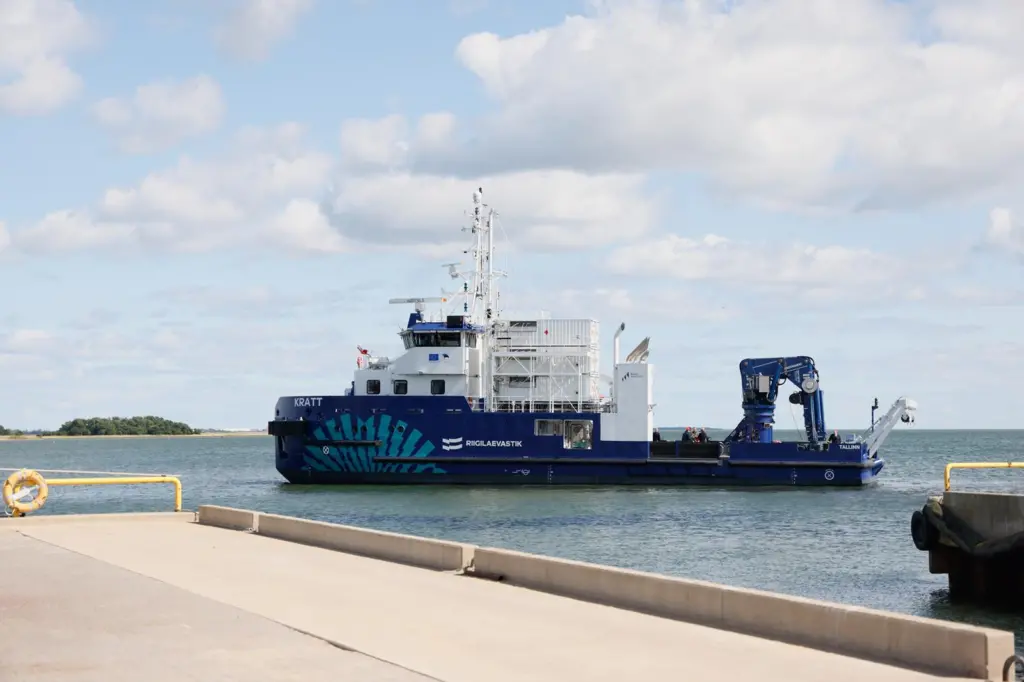
A multi-purpose workboat powered by compressed biomethane (CBM) and battery-electric propulsion has entered service with Estonia’s state fleet, becoming one of only a handful of biomethane-fuelled vessels operating anywhere in the world.
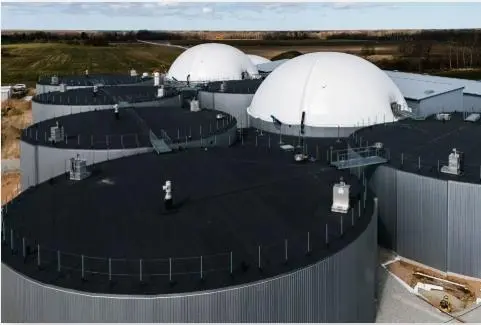
Biomethane is engineered from waste products including animal manure.
The vessel, named Kratt, was designed and built by Estonian shipbuilder Baltic Workboats for the Estonian State Fleet, with the hull constructed under subcontract at Damen Shipyards Gdańsk in Poland. It was then brought to Baltic Workboats’ yard in Saaremaa for outfitting and systems integration and officially christened on 12 August at a ceremony in Saaremaa.
Kratt will enter service in Estonian waters this autumn, carrying out buoy maintenance, fairway services, marine research, pollution response and rescue operations – tasks that would traditionally be split across several specialised vessels.
Propulsion and specifications
The vessel runs primarily on compressed biomethane, giving it a range of up to 1,000 nautical miles at 7 knots, and carries a 400kWh battery system that allows up to two hours of electric-only propulsion at 5 knots, or up to 10 hours of onboard power while at anchor.
Four 350kW gas generators give it a top speed of 11 knots.
Kratt measures 38 metres in length with a 10-metre beam and a maximum draught of 3 metres. Its deck crane can lift 15 tonnes at three metres from the vessel’s side, and an Ice Class 1C rating allows it to operate in up to 40cm of level ice at 2 knots or more, extending its working season beyond summer.
The vessel can stay at sea for up to seven days without resupply, with accommodation for six crew and up to 10 researchers. A 50 m² wet and dry laboratory supports environmental, oceanographic, hydrographic and geological research work, including water and sediment sampling, seabed sonar surveys, and the deployment of remote and autonomous systems.
It is also designed to provide around a quarter of Estonia’s oil pollution response capacity.
”Kratt is a milestone for Estonia in moving towards more sustainable shipping and a good example for others to follow,” said Kuldar Leis, Minister of Infrastructure of Estonia. “We need to develop our fleet intelligently – one vessel should be able to perform as many different tasks as possible while doing so with a lower environmental impact.”
Project background
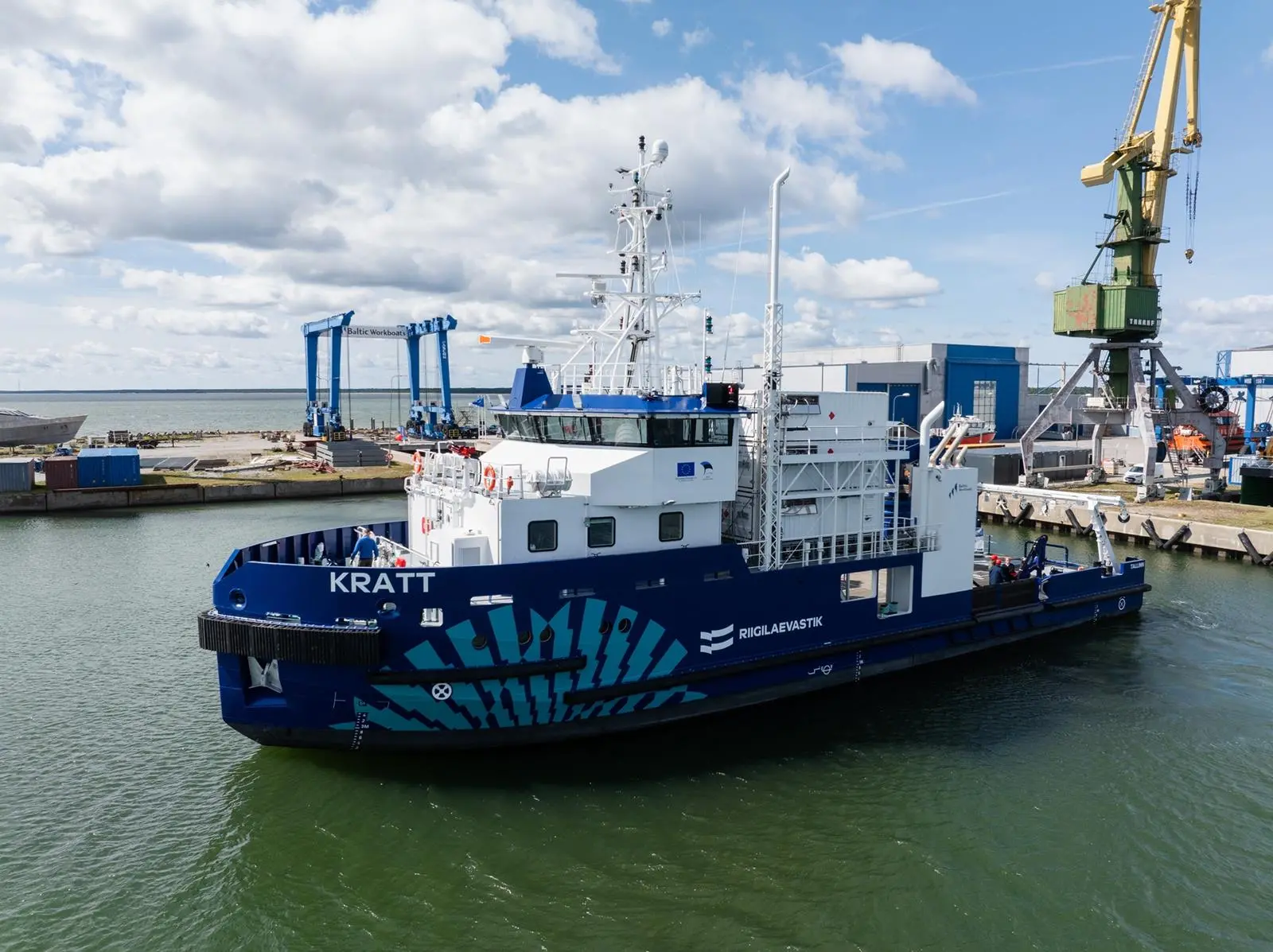
The design and construction contract was signed with Baltic Workboats in January 2024, and the full build took around 30 months. The €22 million project was financed through the EU’s NextGenerationEU Recovery Fund. Kratt is expected to replace an ageing chartered pontoon vessel previously used for buoy tender work in Estonian waters.
“When building this vessel, it was essential to find a solution that combines high work capacity, versatility and a lower environmental impact,” said Margus Vanaselja, chairman of the management board of Baltic Workboats. “Combining biomethane and electricity offers strong opportunities to achieve this and makes the vessel unique in its solutions on a global scale.”
Andres Laasma, director general of the Estonian State Fleet, said: “For a small maritime country, it is important that state vessels are used as efficiently as possible. KRATT is designed as a genuinely multi-purpose platform, allowing us to carry out a wide range of essential tasks with one highly capable vessel. Its combination of biomethane propulsion, battery-electric operation, research capabilities and heavy-duty deck equipment gives us significantly greater flexibility in organising the state’s maritime tasks.”
Kristel Kask, from the Estonia Workboat Fleet, said the fuel system included two sets of gas containers comprising six in total. Three are kept on the vessel and the other three are transported to any biomethane production facility for re-fuelling.
“This allows the vessel to be supplied with biomethane at different locations and provides greater flexibility in its operations,” she said. ”Depending on the vessel’s speed, one gas container provides a range of approximately 300–500 nautical miles.”
Biomethane as a workboat fuel
Biomethane remains a small but growing part of shipping’s fuel mix.
Classification society DNV, which tracks global alternative-fuel uptake through its Alternative Fuels Insight platform, says biofuel availability is expanding across ports, with biomethane emerging as a potential drop-in fuel for the large and growing number of dual-fuel LNG vessels already in operation or on order.
Around 800 LNG-capable vessels are currently in service, with roughly 600 more on order, giving that fleet an established and technically mature base to draw on.
DNV attributes rising interest to regulation rather than economics alone: EU mechanisms such as the EU Emissions Trading System and FuelEU Maritime, alongside a possible IMO Net-Zero Framework, are expected to gradually strengthen the case for low methane uptake.
Even so, DNV cautions that liquefied biomethane’s cost-competitiveness with fossil fuel oil has so far only been reported on specific EU-to-EU routes such as those from Rotterdam, and is not representative of the global picture, where overall costs remain high.
For the moment, the vessel is being supplied by Tahula Biogaasijaam, a local biomethane production facility in Saaremaa, Estonia, which is where the Baltic Workboats shipyard is based.
The plant’s designer, Austrian biogas engineering firm AAT, says the facility was built to process almost 800 tonnes a day of locally collected liquid and solid agricultural waste, including cow and pig manure, feed residues, grass, flotation sludge and whey, with the resulting biogas upgraded to biomethane.
The long-term supplier will be determined by a procurement process.
Related Articles
 FEATURES & VIDEOS
 ENVIRONMENT
 OTHER NEWS