![MaritimeJournal[Seawork]](https://www.maritimejournal.com/wp-content/uploads/2026/09/MaritimeJournalSeawork.svg)






ETA raises concerns about EU emissions rules
The European Tugowners Association (ETA) has raised concerns surrounding the implications of the EU’s Emissions Trading System (ETS) for ports on Europe’s peripheries.
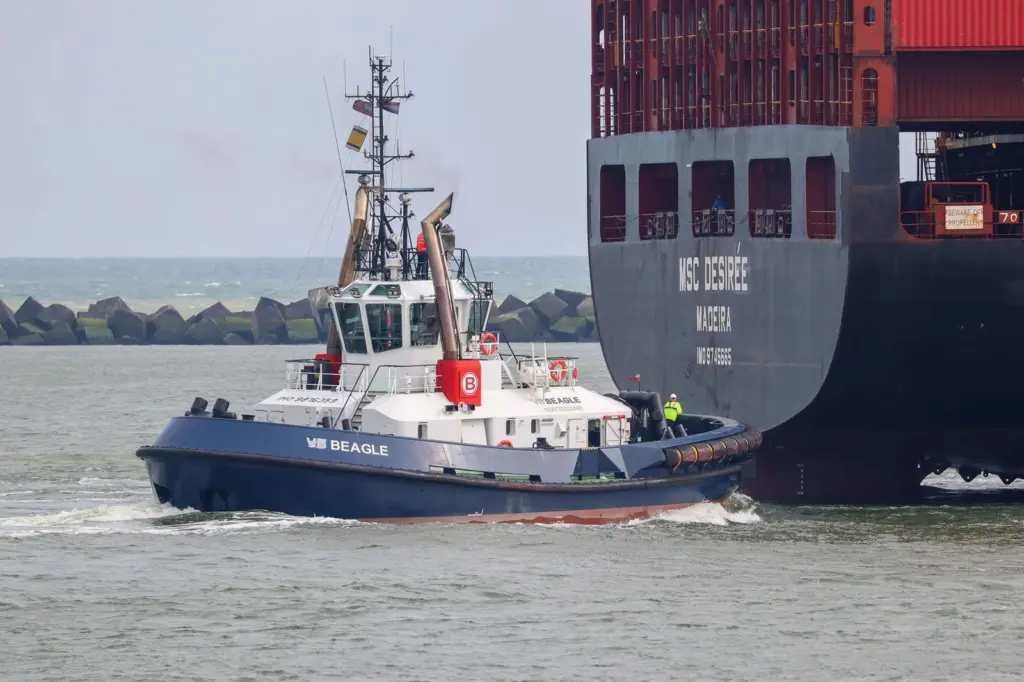
Issues surrounding the ETS will mainly be of interest to EU ports themselves, but with ETA’s members providing services essential for the safe and efficient operation of Europe’s ports, by extension any negative effects could have an indirect impact on the shiphandling towage industry, hence the association’s interest.
The EU’s ETS scheme for the maritime sector comes into force on 1 January 2024 and while ETA supports the EU’s decarbonisation ambitions for 2050 in terms of the Green Deal, it has raised concerns that “it will severely impact several ports on Europe’s peripheries”.
The regulations aim to reduce CO2 emissions and adopt a polluter-pays approach, thereby rewarding shipping companies that have been early adopters of decarbonisation. ETA notes, however, that shipping lines are “trying to circumvent this tax at the cost of European port competitiveness, employment and investment”.
In regions including the Mediterranean, European ports are transhipment hubs and it is claimed the introduction of ETS will make it more attractive for transhipment to take place at non-EU ports since they would either pay 50% of ETS or none at all, this “while still polluting”.
This will affect Mediterranean ports as transhipment activity will move to North Africa, whereby as well as losing the ability to use any tax collected, carbon emissions are likely to increase due to the longer distances having to be covered by feeders from new North African hubs towards European ports.
Reduced competitiveness
ETA says the competitiveness of specific European ports will reduce due to cheaper hubs in North Africa or the UK, making EU ports no longer attractive. Once the level of residual ‘domestic’ cargo (for EU ports) becomes insignificant, the port will be dropped from mega-carriers’ itineraries “with catastrophic consequences on the direct connectivity opportunities for that port and industry around its hinterland. This also raises risks on the protection of supply chains into Europe.”
It is suggested that investment plans of the affected ports will inevitably slow down or stop, and that such is the cost advantage awarded to non-EU ports that shipping lines “have rushed to invest in added and new transhipment capacity in North Africa, most notably in Egypt and Morocco”.
There is also the knock-on effect that ports will not benefit from ETS money that would otherwise be used in the name of climate change mitigation, along with the implications for port services and freight logistics companies bringing with it the risk of loss of employment for the entire port, often located in under-developed regions.
ETA joins other stakeholders in calling on the European Commission “to be cautious and thoroughly consider the full economic and social impact ETS will be having on specific regions in Europe before the damage becomes irreversible.”
Recommendations
Four actions are recommended. Firstly that an in-depth study of specific vulnerable regions and ports should be carried out, particularly the Mediterranean and North Sea, prior to implementing the ETS scheme in the maritime sector.
Alternatively ETA advises suspending charging ETS to transhipment activity that does not originate in the EU, is not destined for the EU but uses EU ports as hubs or transiting ports of call. The European Commission should also conduct a regional impact assessment to ensure that diversion of traffic is mitigated and competitiveness preserved. ETA points out that decisions to invest in a non-EU port with a view to transferring operations are permanent and irreversible.
Thirdly, ETA recommends that various stakeholders in the regions mostly at risk should be consulted to arrive at an ETS regime that is fair and which penalises the polluter without jeopardising competitiveness.
The fourth recommendation suggests ensuring a level playing field by the EU using its ‘clout’ at the IMO to implement ETS at a global level, whereby the scheme’s aim would subsequently be “realistically achieved” and lead to the removal of the potential but immediate negative effect ETS currently has on EU ports.
Finally, ETA notes that whereas an impact assessment on the ETS was carried out in 2020, very limited parts of this impact assessment have been dedicated to the diversion of traffic. This aspect has only been considered from the standpoint of carbon leakage and not from a wider socio-economic perspective.
Related Articles
 FEATURES & VIDEOS
 ENVIRONMENT
 OTHER NEWS