![MaritimeJournal[Seawork]](https://www.maritimejournal.com/wp-content/uploads/2026/09/MaritimeJournalSeawork.svg)




Finning offers fast fix for port power insufficiencies
Caterpillar engine dealer Finning UK & Ireland is pushing its temporary shore power solutions to provide power to harbour boats and address port emissions by berthed vessels.

Calling its ideas ‘a key stepping stone to permanent solutions’, the company, whose HQ is in Canada, says its generator sets are an answer to the lack of port infrastructure currently available for shore power, and that it is investigating other options for the near future.
Its systems are modular and can be scaled or redeployed as needed, so that ports can address immediate challenges or needs without being tied into a single, long-term set-up.
Commercial operations manager Sandra Sneddon told Maritime Journal that Finning’s generator sets were fully compliant with EU Stage V emissions regulations – the strictest in the world for non-road mobile machinery.
“These rules set strict limits on nitrogen oxides and particulate matter compared to older marine engines, many of which are still operating under the more lenient IMO Tier II requirements,” she said. “Stage V generators are fitted with advanced emission control technologies, such as diesel particulate filters, selective catalytic reduction, and exhaust gas recirculation. These technologies work together to reduce emissions, making them ideal for urban ports or dockside environments where local air quality is a growing concern.”
Finning’s Stage V-compliant generator sets range from 20 kVA to 550 kVA (prime rated) and support voltage outputs from 220V to 480V at both 50 and 60 Hz. They can also run on hydrotreated vegetable oil (HVO) without engine modification.
Finning says the range supports a variety of marine applications, from smaller workboats to larger vessels or terminal systems. The generators typically use ultra-low sulphur diesel, although they can also run on HVO.
Charging stations
“Shore power doesn’t have to be limited to large vessels,” says Sneddon. “Smaller vessels such as pilot boats, harbour tugs, workboats, and hybrid and electric ferries can all benefit from the same approach. Because the generator sets are modular, starting from as low as 20 kVA, they can be scaled to suit different vessel types and operational needs across the port environment.
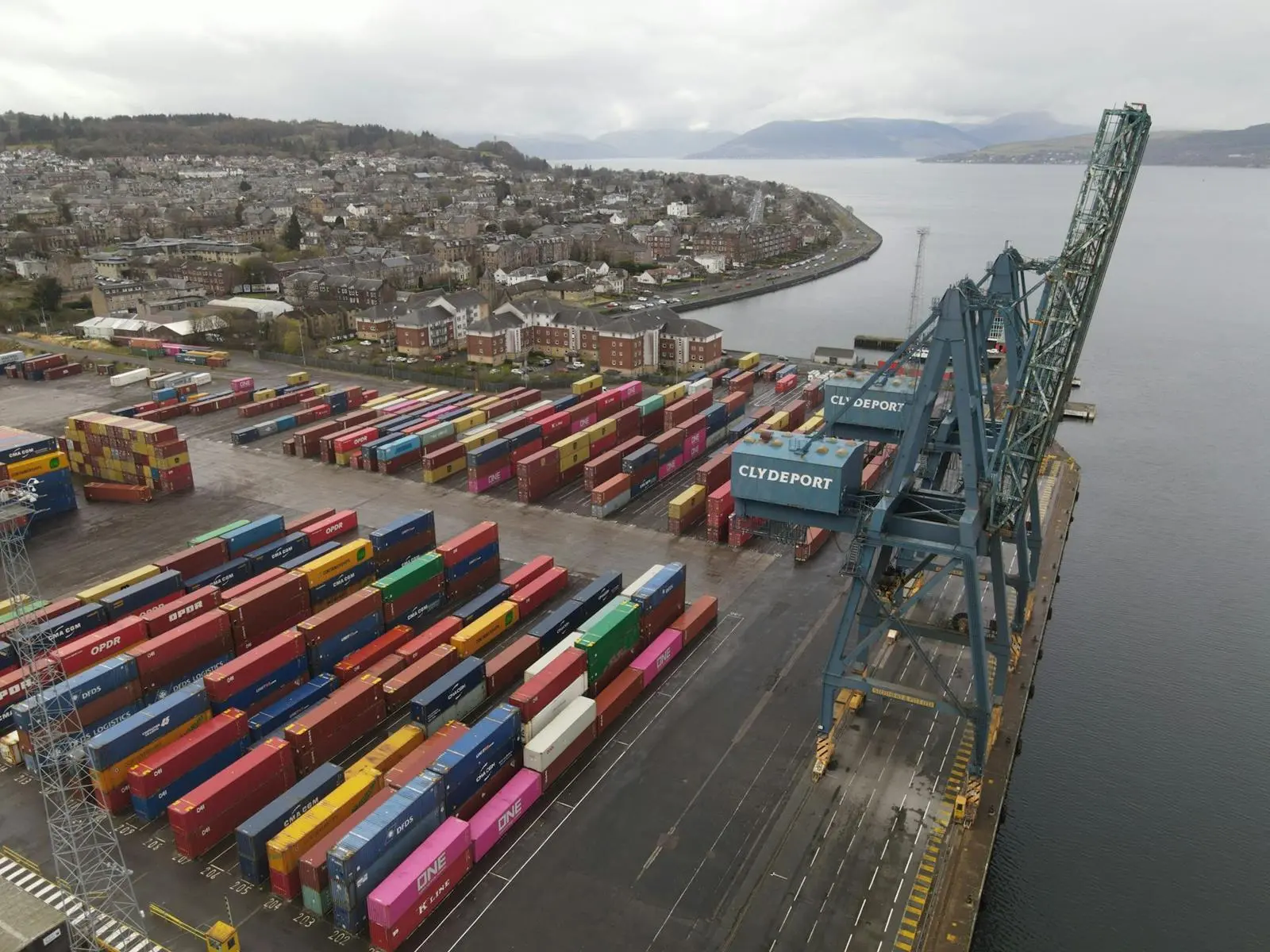
“This means ports can use temporary power to charge electric or hybrid vessels where permanent charging infrastructure doesn’t yet exist. Mobile charging stations can also be deployed to support maintenance operations, cargo handling, or vessel construction.
“These temporary solutions offer flexibility across locations and seasons, helping ports reduce emissions and supporting the shift towards electrification. As these technologies evolve, supporting smaller craft with low- or zero-emissions, off-grid energy sources will be just as important as meeting the needs of larger vessels.”
Containerised batteries as energy storage are also on the agenda, Finning says.
Cost and installation
The cost of using temporary shore power can vary depending on the size of the installation, how long it’s deployed for, and the specific power needs, says Sneddon.
“However, temporary systems can typically be deployed far more cost effectively than waiting for permanent infrastructure,” she says. “A 2023 study by DNV, which assessed shore power readiness across seven major UK ports, found that grid connection upgrades could take up to 10 years and cost over £16 million (€18.4 million).
“By comparison, temporary solutions from Finning can typically be deployed within days and require no long-term capital investment. They are also available on a rental basis, can be scaled as needed, and operators don’t need to be locked into a single, permanent solution while they finalise long-term infrastructure.
“There are also operational savings. Running a vessel’s auxiliary engines at low load while docked is less efficient and leads to increased engine wear and maintenance due to carbon fouling and incomplete combustion. Stage V generator sets are designed for these load profiles, helping reduce fuel consumption and service intervals.
“Temporary shore power may also help ports and operators ahead of the planned UK Emissions Trading Scheme, which will include domestic shipping from 2026. This will place a direct cost on emissions generated while ships are docked.”
Installation, she says, is quick and straight forward: once a site assessment has been carried out to check space, power demand and ventilation needs, the generators are delivered by truck and set on a level surface, or skid.
They are then connected to the vessel electrically via switchgear or distribution panels. The fuel tanks are either onboard the generator or are externally connected, and any exhaust or noise mitigation, such as acoustic enclosures, can then be installed before the entire set-up is verified to ensure compliance, grounding and emissions performance.
Other possibilities
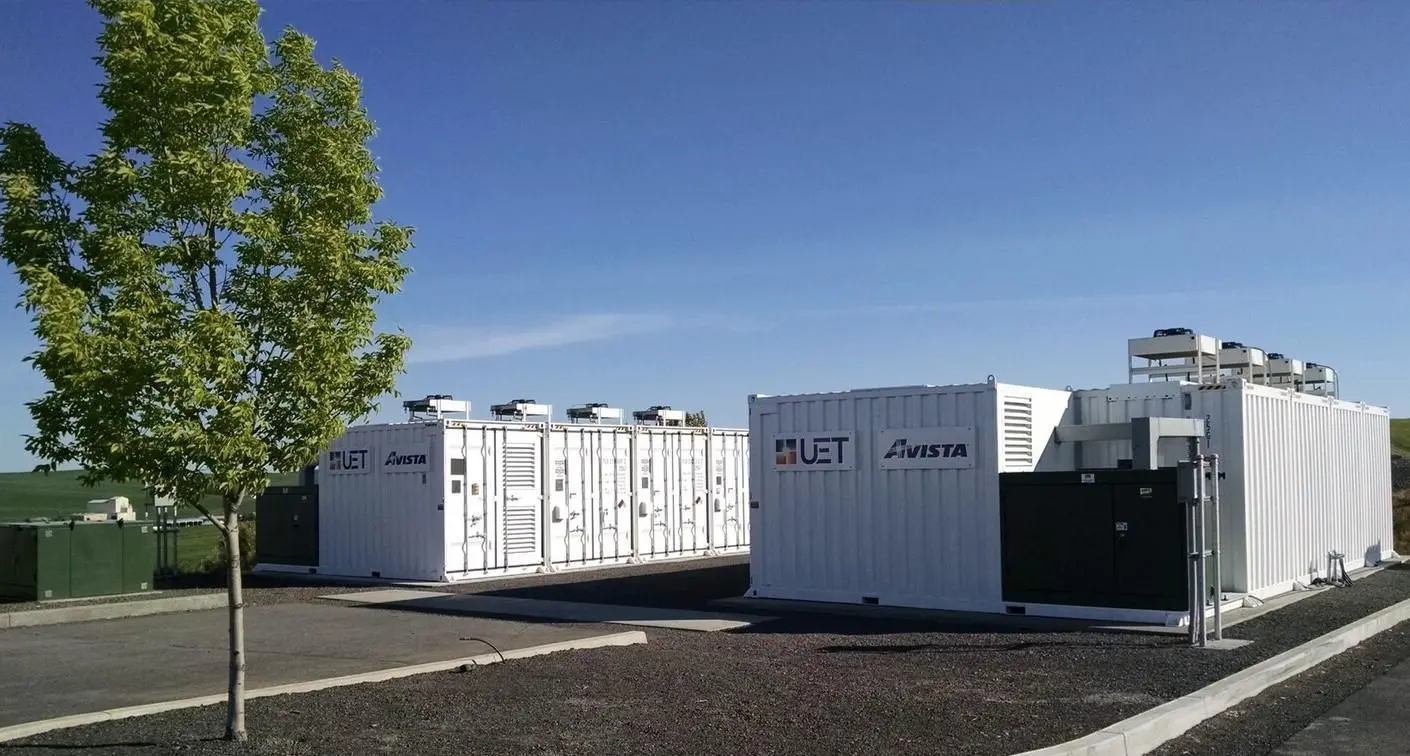
Finning is also planning on trialling modular battery energy storage systems for shore power, building on similar pilot schemes in Europe.
These systems can be quickly deployed where fixed shore power is unavailable, offering rapid discharge when needed. They can be trickle charged at cheaper tariffs when grid capacity is lower, and operate silently, which is an advantage in urban or residential dock areas that often have noise limits during night-time hours.
Hydrogen is another area of interest and, although Caterpillar has engine options available that can run on up to 100 per cent hydrogen, the fuel still has its challenges, including storage, handling and safety requirements, which are more complex than diesel.
“Most ports also don’t have the infrastructure needed to run hydrogen,” Sneddon says.
“On top of these proposals, planned new regulations such as the UK Emissions Trading Scheme for domestic shipping start in 2026, so the pressure is growing for action,” said Derek Wendel, general manager for Energy & Transportation Aftermarket and Power Rental at Finning UK & Ireland.
“Temporary shore power can be a key stepping stone to permanent solutions, without locking operators into any single technology.”
Related Articles
 FEATURES & VIDEOS
 ENVIRONMENT
 OTHER NEWS