![MaritimeJournal[Seawork]](https://www.maritimejournal.com/wp-content/uploads/2026/09/MaritimeJournalSeawork.svg)




Headwinds and tailwinds in offshore wind: Report
The global offshore wind sector experienced a year of mixed outcomes in 2024, as rapid innovation, shifting market dynamics and policy reforms shaped the sector.
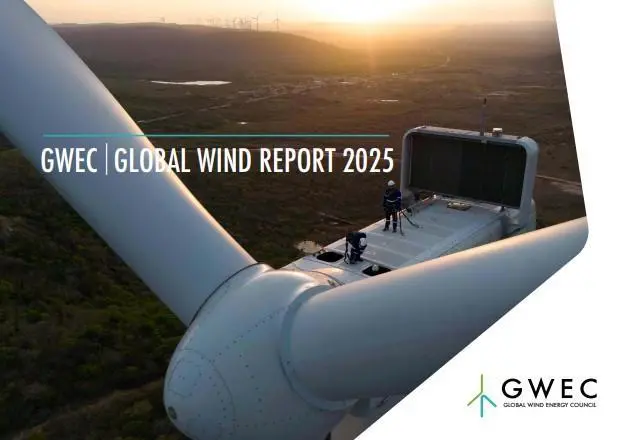
But while global offshore wind additions fell significantly from the previous year, the long-term outlook remains bullish, with annual growth forecast of 8.8% to 2030, according to a Global Wind Energy Council (GWEC) report.
Where onshore wind continued to soar, reaching 109GW in new installations, up from 105GW in 2023, offshore the new capacity fell to 8GW from 11GW the year before. This is a 26% drop year-on-year and the lowest since 2021. However, total global offshore wind capacity reached 83.2GW by the end of 2024.
China maintained its dominance, adding 4GW of offshore capacity for the seventh consecutive year. Europe followed with 2.7GW of new offshore installations across four markets, the UK leading the continent with 1.2GW, Germany bringing 730MW of offshore wind capacity online and France commissioned 658MW.
Economic turbulence
Even without the Donald Trump administration’s aversion to offshore wind, the industry faced significant headwinds in 2024 in the US, where a combination of inflation, rising capital costs, permitting delays, and grid challenges led to project cancellations and renegotiations. This was also true of Europe.
The Levelised Cost of Energy (LCOE) for US offshore wind rose by 50% from 2021 to 2023, causing financial strain and eroding investor confidence.
The long development timelines and complex financial requirements of offshore wind projects, typically requiring two to three years to reach final investment decisions after contract awards, exacerbated vulnerabilities.
Developers, constrained by rigid auction mechanisms and lack of safeguards against market volatility, often bore the brunt of fluctuating costs in commodities, labour and logistics.
In the US, misinformation further fuelled public scepticism, the report says. Claims linking offshore wind developments to whale strandings along the east coast, though unsupported by scientific evidence, gained traction. Experts cite vessel strikes and fishing gear entanglement as more plausible causes, but public opinion has been slow to align with the facts, the report says.
Innovation, scaling up and auctions
Technological advancements continue to drive the wind industry forward, especially offshore. Chinese manufacturers such as Dongfang Electric, Goldwind and Mingyang introduced turbines with capacities exceeding 20MW. Goldwind’s deep-sea 22MW turbine, featuring a 300-metre rotor, exemplifies the rapid upscaling trend.
Yet the report says this surge in innovation brings growing pains: many turbine design standards are now outdated, unable to accommodate the stresses of ultra-large turbines; and blade fractures, vortex-induced vibrations and hybrid tower instability have emerged as pressing engineering challenges.
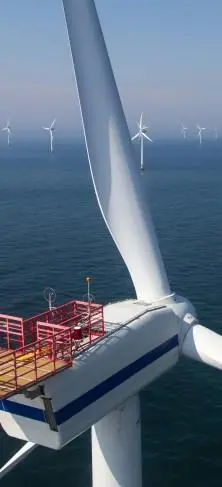
Despite economic turbulence and fewer installations, offshore wind did see a record year for auctions.
In 2024, 56.3W of offshore capacity was awarded globally, 38.9GW of it via auctions outside China.
Germany and the Netherlands led with 8GW and 4GW through aggressive negative bidding strategies, while the UK and France opted for contracts-for-difference (CfDs).
Countries like Poland and Australia emerged as case studies in effective policy making, the report says. Poland’s 2020 Offshore Wind Act and its National Reconstruction Plan facilitated a surge in investment by offering flexible incentives for local supply chains and port infrastructure.
Australia, meanwhile, finalised six offshore wind area declarations and awarded multiple feasibility licenses, signalling a strong regulatory commitment to offshore development.
The UK: Renewed momentum
Following a new government in mid-2024, the UK reinforced its commitment to wind energy, setting ambitious targets of 50GW offshore and 30GW onshore capacity by 2030.
Wind energy outpaced gas in 2024 for the first time, supplying 30% of the nation’s electricity. The National Energy System Operator’s new grid connection reforms and policy changes are expected to unlock up to £15 billion (€17.5 billion) in offshore wind investments.
Thirteen UK offshore wind projects are already eligible to bid in the 2025 allocation round, totalling 7.3GW in capacity – two years after a bidding round that did not attract a single bid.
The UK’s proactive regulatory environment and commitment to international partnerships, such as the formation of a Global Clean Power Alliance, position it as a global leader in clean energy.
Floating wind and future growth
Floating wind continues to gain traction, with 1.9GW awarded globally in 2024.
Projects in France, South Korea, and the UK highlight growing confidence in this nascent technology. Experts believe floating wind and emerging power-to-X solutions could unlock previously inaccessible offshore resources and drive the next phase of growth.
GWEC’s five-year forecast predicts offshore wind will grow at a CAGR of 27%, with annual installations expected to quadruple by 2030.
China and Europe will remain dominant, though the US and Asia-Pacific markets are set to pick up steam by the end of the decade.
While 2024 presented undeniable challenges for the global wind sector, particularly in offshore deployment, the long-term outlook remains resolutely positive, the report says.
It believes with smart policy frameworks, strategic innovation and growing international collaboration, wind energy remains a cornerstone of the global transition to a low-carbon future.
Related Articles
 FEATURES & VIDEOS
 ENVIRONMENT
 OTHER NEWS