![MaritimeJournal[Seawork]](https://www.maritimejournal.com/wp-content/uploads/2026/09/MaritimeJournalSeawork.svg)




INTERVIEW: Just half of Europe’s offshore wind target met
Figures released by WindEurope last week show that offshore wind is being developed far more slowly than it needs to be to meet EU 2030 targets.

According to the trade association’s estimates, just 2.3GW of new offshore wind energy was installed in Europe in 2024, and added to onshore instalments of 13GW, the 15GW total is half what the continent should be building if it is to reach 30GW a year.
“Wind generated 20% of all electricity consumed in Europe – and 19% in the EU,” says WindEurope. “The EU wants this share to grow to 34% by 2030 and more than 50% by 2050.”
But if developers cannot see the return or benefit, can this happen?
In an interview with Maritime Journal, WindEurope CEO Giles Dickson talked about the hurdles facing developers and governments in the sector, although he ultimately says there is optimism, and a new EU law introduced to address some of the problems had yet to bear fruit.
Permitting obstacles
A revised text of the EU Renewable Energy Directive in 2023 listed applications to install renewable energy projects, including offshore wind, as ‘overriding public interest’ – which means they have legal strength in the case of appeals against them.
“For many years you could get a permit for a wind farm and those who don’t want it could challenge the permit in the courts, for various reasons, but classically they would invoke EU biodiversity law,” says Dickson. “They would say it went against the Birds Directive, or the Habitats Directive, which are the two key pieces of EU biodiversity legislation. The judge would listen to the arguments and there was no balance to it, so he had to rule against the wind farm.
“Now, there is a legal principle enshrined in EU law that building wind, solar or storage is a matter of overriding public interest, and the judge has that to balance against the biodiversity obligation – two equally important policy goals.”
However while in Germany, where this legal principle has been applied and wind farm permitting has taken off, other countries have not applied it, Dickson says.
“We need to say to these governments – come on, pull your finger out. This doesn’t cost any public money, it’s just a question of putting three words in your statute book.”
As an ex-member of the EU, which means the legal principle has no effect, the UK scenario has instead been a case of a lack of bidders. That was addressed last year, when the price cap was raised, but while last year’s auction round did receive bids, the number was still low and Dickson believes the rise did not go far enough.
The weakest link
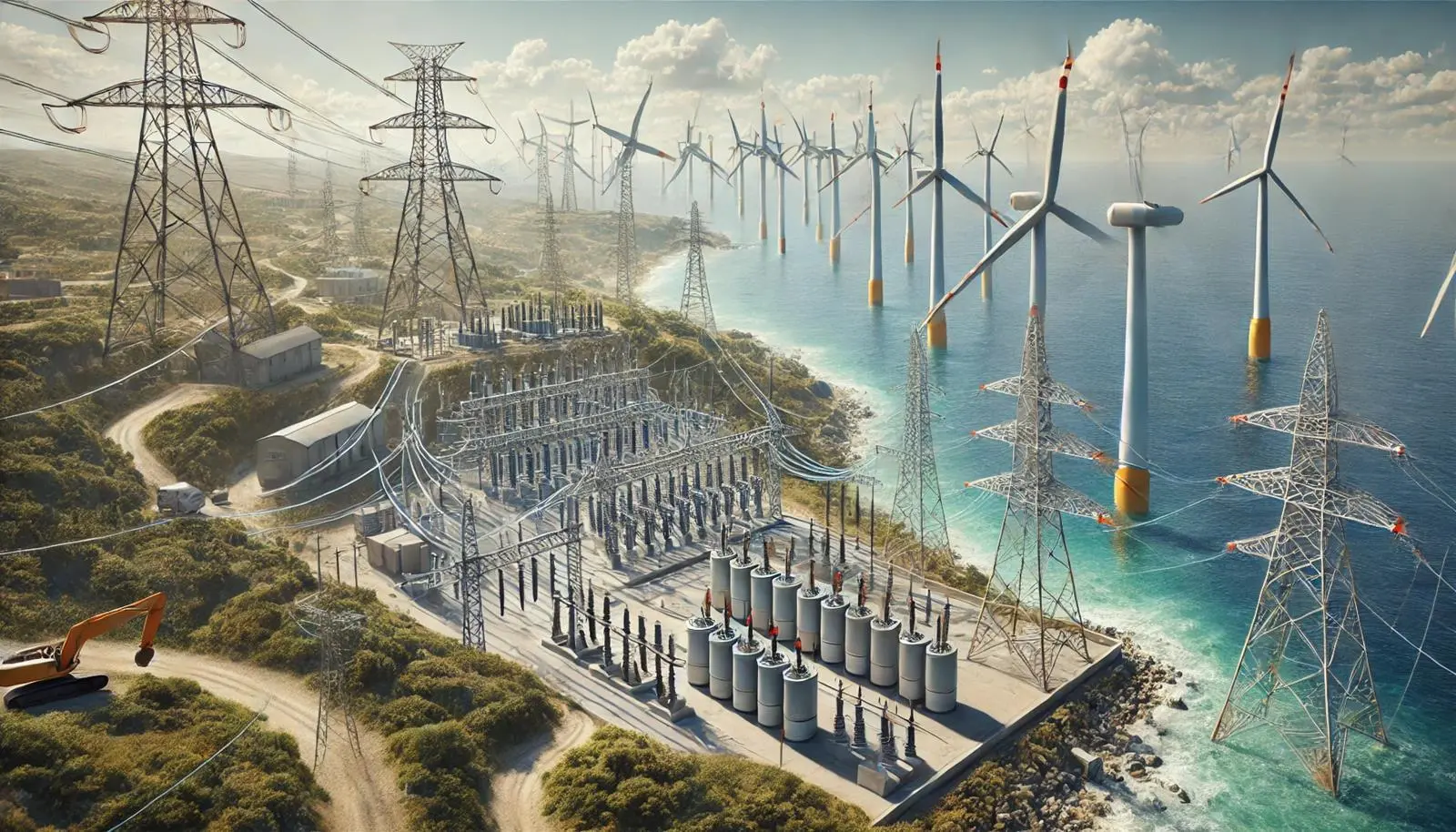
The second hold-up in the offshore wind sector, believes Giles Dickson, is grid connectivity – or lack of it.
There have been cases, such as Germany’s Borkum Riffgrund 3 offshore wind farm, in which turbines have to stand idle because of delays in grid connection. It’s a costly timing error for wind farm developers, whose mammoth machines are not generating a return on their investment because there is nowhere to send their electricity.
“Borkum Riffgrund in Germany was built – auctioned by the German government a few years ago,” Dickson says. “The German government was very clear and said the grid would be ready on time, so people bid and won the right to develop and build that wind farm, legally, at huge expense to themselves – and now they’ve been let down because the grid is not there to be connected.”
Transmission System Operator TenneT announced that the grid connection would not be completed until December 2025, which means connection will not be possible until the first part of 2026, leaving 83 wind turbines with a power generation capacity of 900MW standing inert in the German North Sea.
Delays in grid building, which needs to be accelerated in every country, Dickson says, are also caused by a lack of common sense.
“This is public money. They should prioritise those things that are in the strategic national interest. Grid operators in too many countries are applying a very methodical, chronological, first-come-first-served approach to the processing of grid connection applications, treating every applicant equally,” he says. “It means that the grid operators’ systems are clogged up processing projects that aren’t going to be built.
“Everybody knows that some of the applicants’ projects are more speculative than others. Everybody knows that some of those projects are strategically more important than others and more likely to be realised, so the sensible thing is to filter grid applications accordingly.”
In the UK, Energy secretary Ed Miliband has blocked all new energy projects joining the National Grid because the National Energy System Operator (NESO) had been overwhelmed by applications, with potential delays, says a report in the Daily Telegraph, of up to 14 years to build connections – twice the time needed to build a large wind farm.
“Grid connections applications have continued to grow over the last year to the point that it is no longer possible to deliver connections reforms in parallel with the existing connections process,” says NESO. ”In 2023/24 alone, NESO received over 1,700 applications to connect to the national electricity transmission system, leaving more projects already in the queue than are required for the energy system in 2030 or even 2050.”
Vessel shortage and value chain
One of the major hold-ups in offshore wind is the lack of available vessels.
“It’s still a problem, there are not enough,” Dickson says. “All the vessel operators – Van Oord, Cadeler, Fred OIsen, Seaway7 – are investing in new vessels, but not enough of them and not quickly enough.
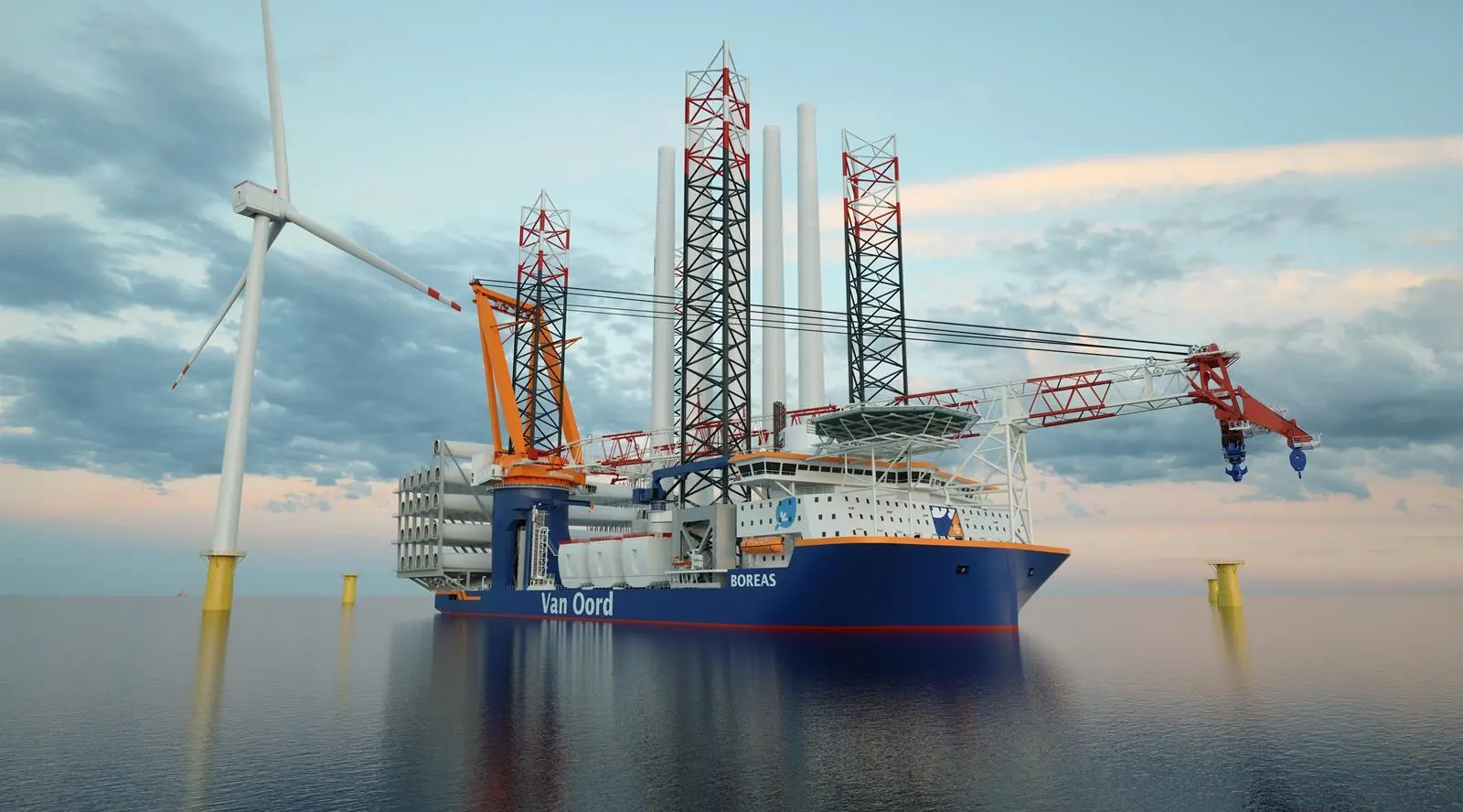
“Van Oord has just taken delivery of its latest installation vessel, Boreas, which has been built at a shipyard in China – fine, but that won’t be operational until the end of this year at the earliest. And this is a bottleneck.
“If targets aren’t met, you run the risk of a lot of money being wasted, planning and developing new offshore wind farms. There’s a lot of money spent on these projects before you get to the stage where you’ve actually got to order your vessel to install the turbines.
“If you then come to that moment where you’ve got to contract your vessel and there’s no vessel – these things need to run in sync, and it doesn’t work if one crucial part of the value chain is not pulling its weight.
“You know, we’re investing €10 billion at the moment to build new factories to make offshore wind turbines, and we’re doing that because governments have told us that their targets are serious and they’re serious about meeting them. So we do our part and you’re relying on everybody else and the value chain to do their bit as well.”
The Trump question
The US president elect Donald Trump, who takes office in less than a week’s time, has long been scathing about offshore ‘windmills’.
But Dickson claims that in Trump’s first presidency, the number of onshore wind farms rocketed, and the expansion, he says, was led by Republican states.
While Donald Trump is renowned for being a ‘drill baby, drill’ oil fan and a ‘windmill’ critic, at the same time, he is pro-industry.
“Who knows what’s going to happen,” says Dickson. “Offshore is different, not least because the federal authorities have the power to stop it going ahead.

“States are keen – there’s strong competition between them, they have a supply chain – and there’s serious industrial interest now around offshore wind who are going to be saying to the new administration, look, there are huge jobs and growth in this, and it’s good for our energy security.”
Indeed, at the time of writing, a $128 million deal had just been signed between the state of Delaware and US Wind for final approval to connect to the onshore grid. (Delaware is a Democrat state.)
However after a recent Trump outpouring in which he said windmills would be ended ‘on day one’, the shares in major energy companies fell and some projects, such as the TotalEnergies 3,000MW development south of New York, were shelved.
For European companies who have form in offshore wind, the fledgling US market could hold massive potential, if it weren’t for the Jones Act, which prohibits vessels from working in the domestic market if they are not US-built.
Maritime Journal recently reported on a special delegation from the EU that seeks to change, if not abolish, the act, to allow firms more leeway in the US market.
“Ensuring free, fair and open markets for European companies is a core component of the European Union’s long-standing work in the United States, including in the realm of maritime services,” Adriana Brassart, a spokesperson for the Europe External Action Service, told Maritime Journal. “Maritime market access services were a topic of negotiation in the Transatlantic Trade and Investment Partnership and European companies continue to have a strong interest in this field. We have a long history of conducting outreach in the U.S. on this issue.”
“Our members care about this, and they know how to work with it – the work-arounds, etc – but there are costs of doing offshore wind in the US and if there are ways of building it without the Act, I’m sure everybody would welcome it,” says Dickson, who despite all of the hurdles, remains optimistic about the offshore wind sector in Europe.
Related Articles
 FEATURES & VIDEOS
 ENVIRONMENT
 OTHER NEWS