![MaritimeJournal[Seawork]](https://www.maritimejournal.com/wp-content/uploads/2026/09/MaritimeJournalSeawork.svg)





Is Sweden getting cold feet over offshore wind?
Sweden has rejected 11 out of 13 applications for offshore wind projects because of national defence considerations, the government says.
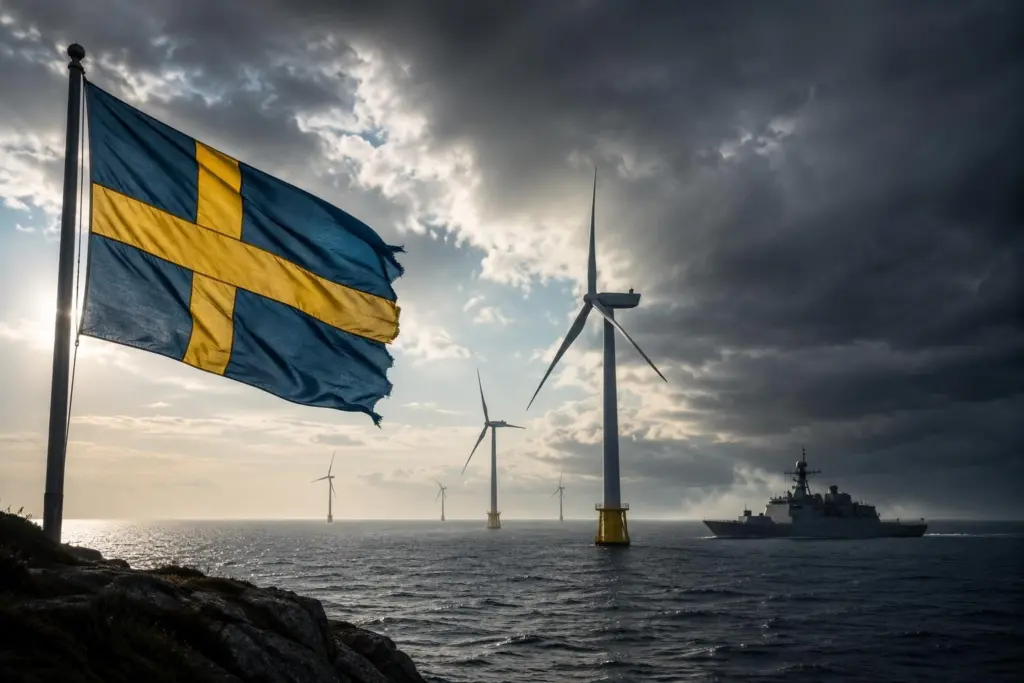
It announced last week that it had completed decisions on all outstanding applications within its Exclusive Economic Zone, and just two were given the green light: Fyrskeppet Offshore in the southern Bothnian Sea and Vidar in the northern Skagerrak.
Together, they are expected to generate up to 18.8TWh of electricity a year, with Fyrskeppet Offshore producing an estimated 8-11TWh and Vidar up to 7.8TWh. Both projects must be completed within 10 years and will require separate permits for export cables before construction can begin, according to the government statements.
At the same time, ministers refused consent for 11 proposed offshore wind farms: Bothnia Offshore Lambda North, Bothnia Offshore Sigma, Eystrasalt Offshore, Gretas Klackar 1, Gävle Öst Havsvindpark, Mareld, Najaderna, Olof Skötkonung, Polargrund Offshore, Sylen and Västvind.
In its announcement, the Government said the rejected projects would have ‘an unacceptable impact on Sweden’s defence capability. However it also said the affected sea areas could be reconsidered in the future through the country’s planned auction system for offshore wind development.
The latest decisions follow a series of measures taken by the Swedish Government in which national security has become a central consideration in offshore wind planning.
The government has consistently said applications are assessed on their individual merits, taking account of energy policy, environmental considerations and defence interests. In the latest announcement, it said the approved projects had been judged compatible with those requirements, while the rejected developments were not.
West coast refusals
The rejections have not just been made in the Baltic Sea, where the Russian threat could be considered more acute. Among the highest-profile projects to be refused is Mareld, a proposed floating offshore wind farm off Sweden’s west coast.
Developer Hexicon describes Mareld as a project capable of delivering up to 12TWh of renewable electricity a year, with an installed capacity of up to 2.5GW. The company says the wind farm would have been located approximately 40km west of Orust and could have supplied electricity equivalent to the annual consumption of around two million households.
Just weeks before the government’s decision, Hexicon said it had bought the remaining 50% stake in Mareld from its former joint venture partner, Mainstream Renewable Power, becoming sole owner of the project.
Hexicon’s second Swedish offshore wind proposal, Västvind, was also rejected because of their impact on Sweden’s defence capability, the government said.
The latest decisions build on earlier Government statements emphasising the importance of safeguarding military operations and surveillance capabilities when considering offshore wind applications.
For the successful developers behind Fyrskeppet Offshore and Vidar, attention will now turn to obtaining the remaining permits required before construction can begin, including approval for the export cable connections needed to bring electricity ashore.
The Swedish government has not changed its stated support for offshore wind as part of the country’s future electricity system. Instead, the latest decisions underline that each project will continue to be assessed individually, with national defence remaining a determining factor alongside energy and environmental considerations.
At the time of writing the government had not responded to Maritime Journal’s request for more information.
Related Articles
 FEATURES & VIDEOS
 ENVIRONMENT
 OTHER NEWS