![MaritimeJournal[Seawork]](https://www.maritimejournal.com/wp-content/uploads/2026/09/MaritimeJournalSeawork.svg)




Joint venture set up to clinch obsolete OSW farm market
A joint venture has been signed by two Dutch engineering firms with an eye on the future of today’s offshore wind farms.

Sif Group and Ballast Nedam have signed the agreement to start preparing for when the offshore wind farms installed in the early 2000s are due to be either repowered or ripped out.
Ballast Nedam will take care of all offshore operations, while Sif will receive and process decommissioned components for further re-use and recycling.
Product strategy director Michel Kurstjens, with Sif Group, spoke to Maritime Journal about an emerging industry that will breathe new life into jack-up vessels and older fleets that are now not suitable for installing today’s mammoth turbines.
The joint venture, called BNS Decom, will offer the complete package, removing and either re-using or recycling all wind farm components.
“Some companies are doing some part of the puzzle but I haven’t seen a joint venture or company or organisation that tackles the whole thing,” says Kurstjens. “I think we are the first to have a holistic approach for the full decommissioning of the complete wind farm.
“Decommissioning has happened but on a very limited scale – maybe one or two foundations or up to eight have been pulled out – but when it’s 50 or 60 it becomes a lot more complex.”
New extracting technology
The majority of the work done offshore is kind of reverse engineering, Kurstjens says.
“You unbolt it all from 30 years ago apart from the foundation, and getting that out is really the trick. There is no technology that is foolproof and always working that can do that, and that is what this joint venture is going to develop. It’s the missing piece of the puzzle – the rest is straightforward and proven technology.”
BNS Decom is working on some new technology that can be used for extracting the steel monopiles from the seabed – into which they are hammered up to 25 metres – without ‘causing havoc’ to the marine life that has been happily growing and often thriving on them and the scour protective rocks for quarter of a century.
Without giving details of the monopile removal technology the JV intends to patent, Kurstjens says they have been working on it for about three years.
“We do want to get the whole foundation out in an economically and ecologically viable way,” he says. “If you were to pull out the foundation with a huge amount of force, the havoc that you would create underwater for marine life would be enormous. We need to engineer our way around two contradictory things – you need force and you need to be gentle.”
Somewhat ironically, he says, permits for offshore wind farms usually state that on decommissioning, the seabed must be returned to its original state.
Because of fishing activities, Kurstjens says, this original state would often be as devoid of life as the Sahara desert and this is something BNS Decom hopes to address with asset owners and governments as the market is shaped for future decommissioning activities.
“Part of the JV will be this debate with stakeholders,” he says. “We will ask them which is better, to leave it like a desert as before or only pull out as much as we need to pull out?”
End-of-life balancing act
When an offshore wind farm reaches the end of its contract life, there are three main options: be completely decommissioned; be repowered, in other words replace old turbines with new, updated ones; or in some cases simply extend the life of the contract.
“It’s a balancing act between the cost of decommissioning and how much better and economical a new wind farm would be,” says Kurstjens. “If you look at the early wind farms it’s unlikely that the wind farm owner or the government will want to use the seabed for the same purpose.
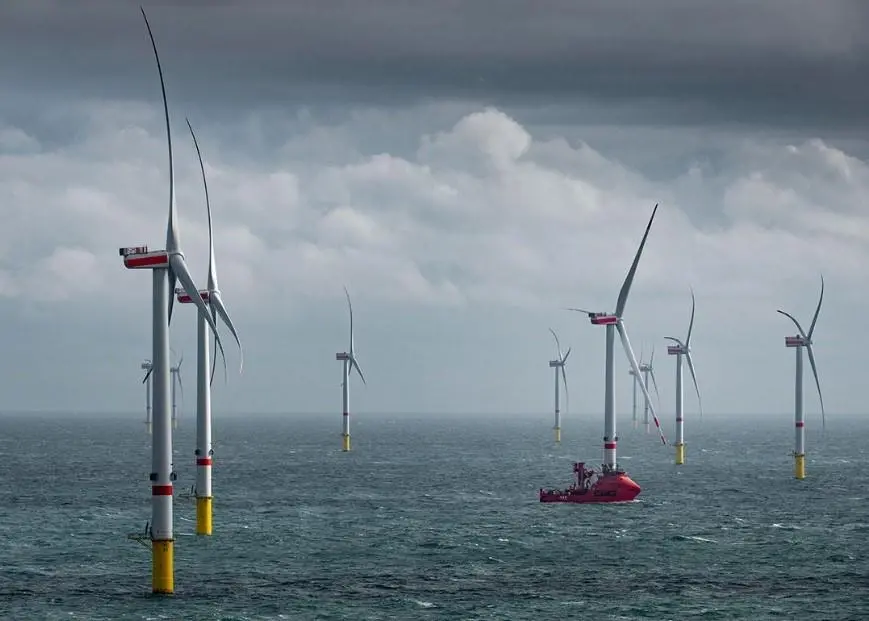
“If the wind farm is still spinning around comfortably, you could ask the government for a permit extension, which would help the operator from an economical point of view, and it would also help the government from a green capacity point of view – if it’s behind on its offshore wind targets, tearing down an older wind farm will reduce the capacity that it has to achieve.
“Governments may be inclined to extend permits, so I do not think that all wind farms will be commissioned at the end of permit. It’s an ongoing debate.
“Over time there are more elements to it because older wind farms are probably too close to the coast where you have less wind, so it’s unlikely the same seabed plots will be used.
“It’s only countries like Belgium, that have little seabed, that may need to put new wind farms on old sites because the total amount of seabed is limited. There’s no need around the UK, for instance.”
Repowering existing wind farm sites is also tricky because of the rapid growth in the physical size of the turbines.
“In the old days we were installing three 3MW turbines. Now there are 15MW turbines which you can’t put on top of the old foundations. Repowering means you have to put in the same capacity you had, so they will be more efficient turbines with improved aerodynamics, magnets and other technologies to slightly improve your output.
“We are in open discussion with all our customers and we’re also learning. End-of-life extension, repowering or decommissioning are the three main options and we would like to be part of the debate.”
Second life for older vessels
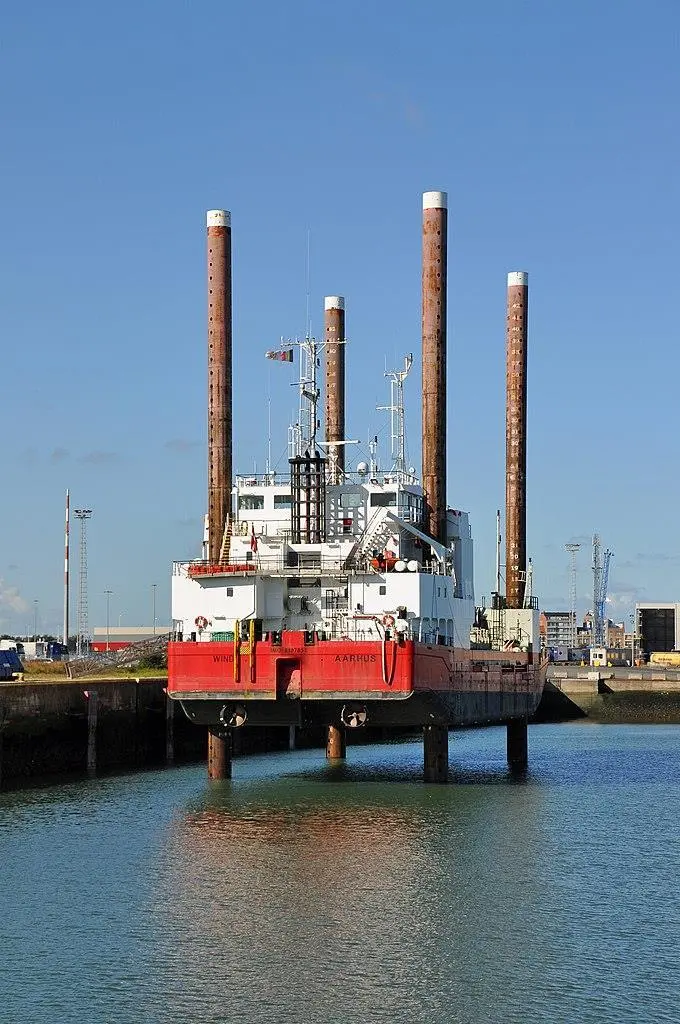
A lot of the Jack up vessels that were used to install the original offshore wind farms are now obsolete when it comes to installing the new ones.
When decommissioning starts, they will be brought back to life, says Kurstjens.
“We will be using the existing fleet of offshore vessels that installed the wind farms 25 years ago,” he says. “Another difference between installation and decommissioning is timing.
Installation has to be done as quickly as possible to get those blades turning to generate electricity because that’s where the money is.
“Decommissioning might not be so cost related and we are using less expensive vessels that can only do it when weather conditions allow. So we can choose vessels with a lower work ability from a weather point of view, but also a cheaper day rate.
“We don’t own the vessels so that we can choose the best ones for any particular job – however we will still need some of the current supply of CTVs and OSVs or what have you, so there will be scope for the newer vessels as well.”
Next steps
WindEurope estimates there will be around 700MW of offshore wind decommissioning potential by 2030.
However, says press and communicatiopns manager Christoph Zipf, these assumptions are to be taken with a pinch of salt.
”Onshore wind has shown that regular service and maintenance can increase the lifetime of wind turbines way beyond 25 years,” he says.
”On the other hand there is an economic case for decommissioning today’s offshore wind turbines at some point. They are built on the best (most windy, closest to the coast) sites. It makes economic sense to have the most modern and most powerful turbines generate electricity on these sites.”
When it comes to floating wind, the journey has only just begun, says Kurstjens.
“We still need to see the deployment of full-scale, large quantities of that,” he says. “It will be 30 to 40 years before they will need to be commissioned so we are not targeting that market.”
The first offshore wind farms to be decommissioned are more than likely going to be in the Netherlands’ waters, for several reasons – one being that Sif and its partners are based in and around Rotterdam, the other that they will have reached the end of their permit life in the next five years or so.
“We see that this is a market that will emerge some time in the future,” Kurstjens says. “It’s not going to be booming business for us in the near future but we want to be part of the journey, shape the market, and be ready when it becomes really significant, which we believe will be in the 2030s.”
Related Articles
 FEATURES & VIDEOS
 ENVIRONMENT
 OTHER NEWS